Biochemistry: The Chemical Reactions of Living Cells, Volume 3 - D. Metzler 1980
Metabolism of Nitrogenous Compounds
Metabolism of Aromatic Compounds
Synthesis of Ubiquinones, Plastoquinones, Tocopherols, and Vitamin K
Radioactive carbon 14C-shikimate is efficiently incorporated into the Quinones and tocopherols discussed in this section. These chemically related redox agents (Chapter 10, Section D) are also related biogenetically, a pathway most thoroughly elucidated for ubiquinone synthesis in Bacteria. In bacteria, p-hydroxybenzoate is formed directly from chorismate (Fig. 14-17), whereas in plants it can be derived from Tyrosine and p-coumarate, as shown in Fig. 14-19. The same figure illustrates The conversion of p-hydroxybenzoate into ubiquinones. A polyprenyl group is transferred to the ortho-position relative to the hydroxyl group (Chapter 12, Sections 3 and 4). Subsequently, a series of successive hydroxylation and Transmethylation reactions (utilizing SAM) leads directly to The formation of ubiquinones. Several quinones capable of serving as ubiquinone precursors have been isolated from bacteria. Two such quinones are depicted as intermediates in Fig. 14-19; however, chemical considerations suggest that both methylation and hydroxylation should occur on the reduced dihydroxy derivatives. A similar pathway, likely proceeding via the CoA derivative of p-hydroxybenzoic acid, is utilized in the synthesis of ubiquinone within The inner mitochondrial membrane of the Liver [115].
As demonstrated by labeling experiments, in chloroplast plastoquinones as well as in tocopherols, one methyl group (marked with an asterisk in Fig. 14-19) originates from chorismate. It is hypothesized that homogentisate, a dihydroxy compound, serves as an intermediate in this process [116]. In animal organisms, homogentisate is a common catabolite of tyrosine (Fig. 14-20). The final Stages of the synthesis of both plastoquinones and tocopherols require prenylation and methylation reactions involving SAM.
Class="center">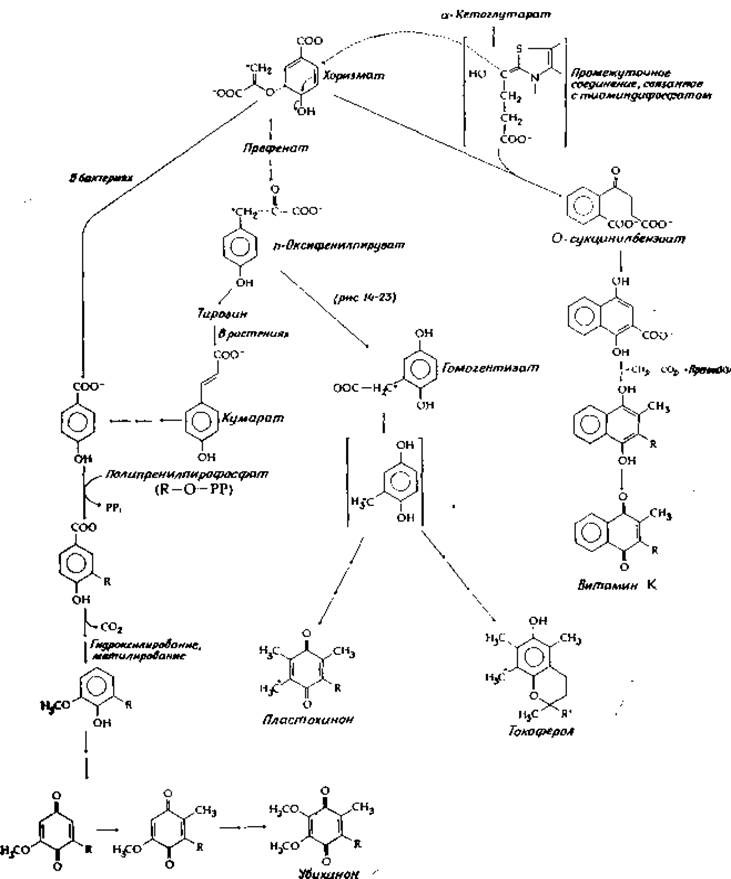
FIG. 14-19. Biosynthetic pathways of ubiquinones, plastoquinones, tocopherols, and vitamin K.
Vitamin K and other naphthoquinones are most likely formed from o-succinylbenzoate [117] (Fig. 14-19), the synthesis of which from chorismate and α-ketoglutarate may proceed via an intermediate tightly bound to Thiamine diphosphate, as indicated in Fig. 14-19. The hypothetical Condensation leading to o-succinylbenzoate is analogous in type to the putative conversion of chorismate to anthranilate. The remaining decarboxylation, methylation, and prenylation reactions (Fig. 14-19) are similar to those leading to ubiquinone synthesis.
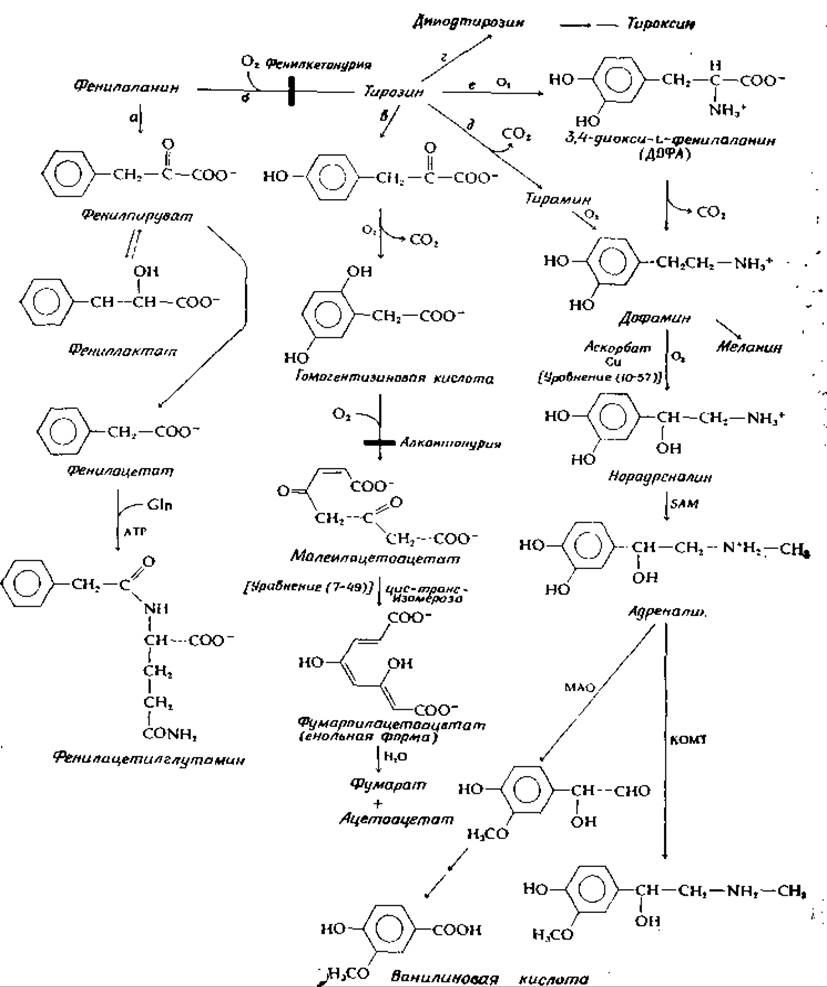
FIG. 14-20. Selected pathways of Phenylalanine and Tyrosine METABOLISM in animals.
Last update: 06/08/2026
Editorial and Educational Adaptation: This material has been compiled based on the primary/original source text. The project team performed an editorial review, corrected technical inaccuracies, structured sections, and adapted the content for an educational format.
What was processed:
- elimination of formatting defects (OCR errors, structural breaks, corrupted characters);
- editorial organization of content;
- standardization of terminology in accordance with academic sources;
- verification of factual statements against the original source text.
All mentions of the author, publication year, and origin of the primary text have been preserved in accordance with the source.