Human Biochemistry, Volume 1 - Murray R. 1993
Structure and Functions of Proteins and Enzymes
Enzymes: Kinetics
Collision Theory
The kinetic theory, or collision theory, is based on two key principles.
1. For a reaction to take place, molecules must collide with one another, i.e., approach each other closely enough for bonds to form.
2. For a collision to be productive (i.e., resulting in a reaction), the reacting molecules must possess sufficient energy to overcome the energy barrier.
It follows that if the reacting molecules have sufficient energy, any factors that increase their collision frequency will increase the reaction rate. Conversely, factors that decrease the frequency of molecular collisions or their kinetic energy will reduce the reaction rate.
If not all molecules in a population possess enough energy to react, then raising the Temperature—which increases the kinetic energy of the molecules—will lead to an increased reaction rate. These concepts are schematically illustrated in Fig. 8.4. In case A, none of the molecules; in case B, a fraction; and in case C, all of the molecules possess sufficient kinetic energy to overcome the energy barrier.
Class="center">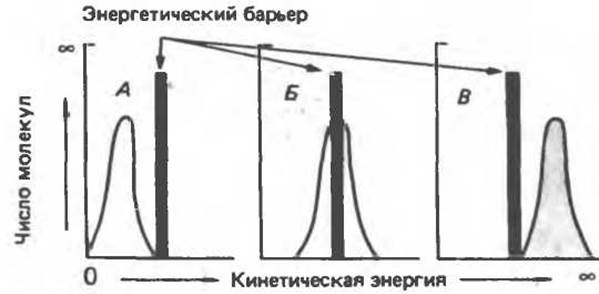
Fig. 8.4. METABOLISM/2.html">THE CONCEPT OF the chemical reaction energy barrier.
Without Enzymes, many Chemical Reactions proceed extremely slowly at temperatures characteristic of living Cells. However, even at these temperatures, molecules are in motion and collide with one another. Yet, they cannot react rapidly because most of them lack sufficient kinetic energy to overcome the energy barrier. With a sufficiently large increase in temperature (i.e., an increase in kinetic energy), the reaction will proceed faster. The fact that the reaction occurs at all (i.e., proceeds spontaneously) follows from the condition ∆G < 0, though it proceeds slowly at low temperatures. Enzymes accelerate reactions that occur spontaneously under conditions prevailing in living cells.
Last update: 06/08/2026
Editorial and Educational Adaptation: This material has been compiled based on the primary/original source text. The project team performed an editorial review, corrected technical inaccuracies, structured sections, and adapted the content for an educational format.
What was processed:
- elimination of formatting defects (OCR errors, structural breaks, corrupted characters);
- editorial organization of content;
- standardization of terminology in accordance with academic sources;
- verification of factual statements against the original source text.
All mentions of the author, publication year, and origin of the primary text have been preserved in accordance with the source.