Human Biochemistry Volume 1 - Murray R. 1993
Bioenergetics and Carbohydrate and Lipid Metabolism
Metabolism of the Major Hexoses
Uronic Acid Pathway
In addition to the major glucose-6-phosphate metabolic pathways described above, there is another pathway known as the "uronic acid pathway", through which glucose is converted into glucuronic acid, ascorbic acid, and pentoses. This serves as an alternative oxidative pathway for glucose METABOLISM, but, much like the Pentose Phosphate Pathway, it does not yield ATP.
Glucuronic acid is produced from glucose via the uronic acid pathway through the reactions illustrated in Fig. 21.1. Glucose-6-phosphate is first converted into glucose-1-phosphate, which then reacts with uridine triphosphate (UTP) to form the active nucleotide uridine diphosphate glucose (UDP-glucose). This final reaction is catalyzed by the enzyme UDP-glucose pyrophosphorylase. The preceding steps are characteristic of hepatic Glycogenesis (see Fig. 19.1). UDP-glucose is oxidized at the C-6 position to yield glucuronate in a two-stage process. The oxidation step, catalyzed by NAD-dependent UDP-glucose dehydrogenase, yields UDP-glucuronate.
UDP-glucuronate serves as the "active" form of glucuronate in reactions that incorporate glucuronic acid into Proteoglycans, as well as in conjugation reactions where glucuronate binds to substrates such as Steroid Hormones, certain drugs, or bilirubin (Fig. 33.13).
Through an NADPH-dependent reaction, glucuronate is reduced to L-gulonate (Fig. 21.1), which acts as the direct precursor of ascorbic acid in animals capable of synthesizing this vitamin. Humans, other primates, and guinea pigs lack The ability to synthesize ascorbic acid. Gulonate is oxidized to 3-keto-L-gulonate, which then undergoes decarboxylation to form L-xylulose.
Xylulose participates in The pentose phosphate pathway as the D-isomer, whereas the L-isomer is formed from ketogulonate, as shown in Fig. 21.1. Linking these two metabolic pathways requires The conversion of L-xylulose into the D-isomer. This is accomplished via an NADPH-dependent reduction of L-xylulose to xylitol, which is subsequently oxidized to D-xylulose in an NAD-dependent reaction. D-Xylulose is then phosphorylated to yield D-xylulose-5-phosphate, which enters the pentose phosphate pathway.
Class="center">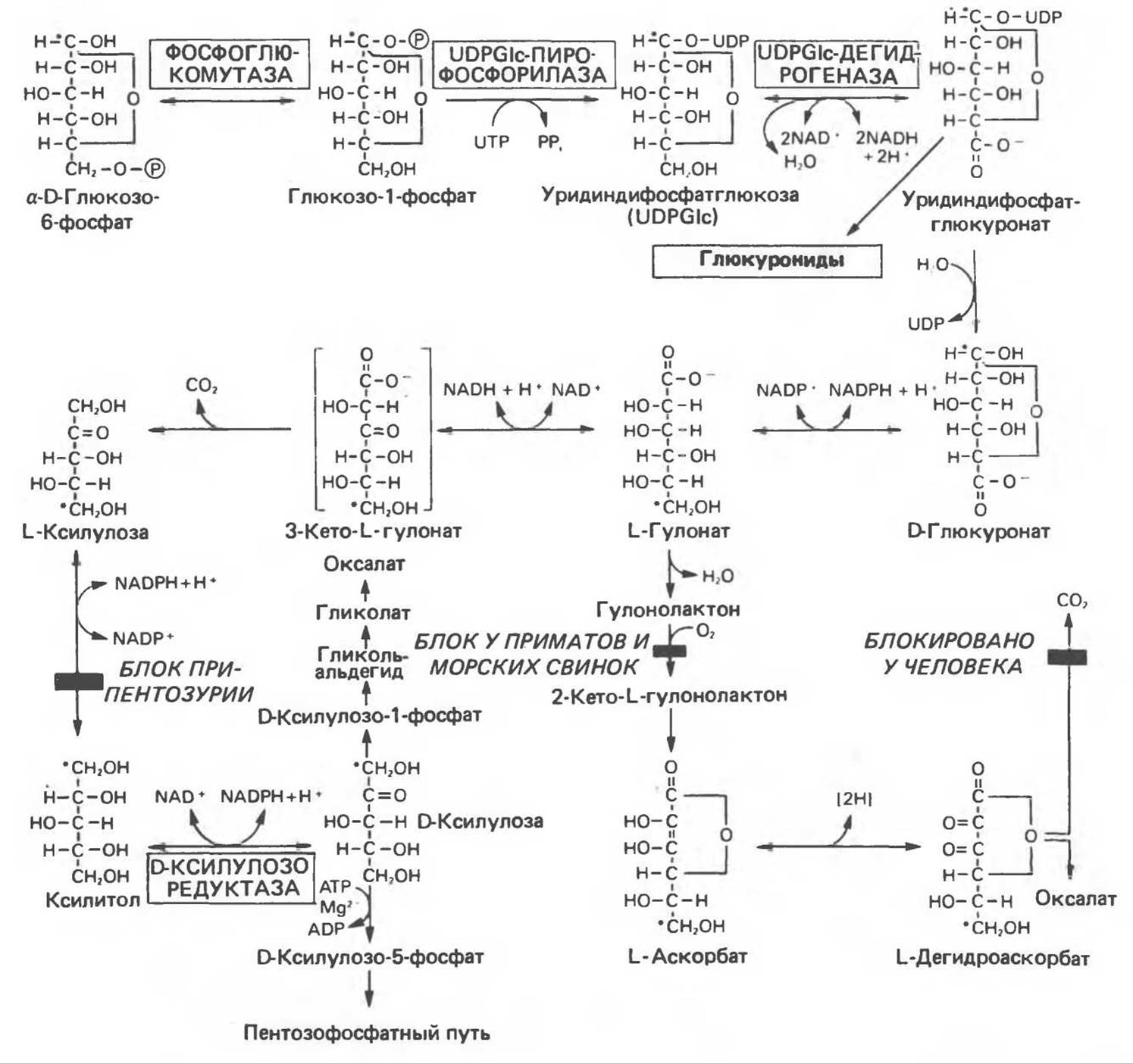
Fig. 21.1. The uronic acid pathway. The asterisk indicates The Fate of the carbon atom at the C-1 position of glucose; 
Clinical Aspects
In a rare inherited disorder known as essential pentosuria, large amounts of L-xylulose appear in the urine. This condition is currently believed to result from a deficiency of the enzyme required to reduce L-xylulose to xylitol in pentosuric patients. Meanwhile, parenteral administration of xylitol can lead to oxalosis, a condition characterized by the deposition of calcium oxalate in the Kidneys and Brain. Oxalate is derived from D-xylulose, with xylulose-1-phosphate, glycolaldehyde, and glycolate serving as intermediates (see Fig. 21.1).
Various pharmacological agents significantly enhance The rate of glucose conversion via the uronic acid pathway. For instance, administering barbital or chlorobutanol to rats dramatically increases the rate at which glucose is converted into glucuronate, L-gulonate, and ascorbate. A similar stimulatory effect on L-ascorbic acid Biosynthesis is exerted by many other drugs, including various barbiturates, aminopyrine, and antipyrine. Notably, the latter two compounds also increase L-xylulose excretion in patients with pentosuria.
Last update: 06/08/2026
Editorial and Educational Adaptation: This material has been compiled based on the primary/original source text. The project team performed an editorial review, corrected technical inaccuracies, structured sections, and adapted the content for an educational format.
What was processed:
- elimination of formatting defects (OCR errors, structural breaks, corrupted characters);
- editorial organization of content;
- standardization of terminology in accordance with academic sources;
- verification of factual statements against the original source text.
All mentions of the author, publication year, and origin of the primary text have been preserved in accordance with the source.