Biochemistry and Molecular Biology - Belyasova N.A. 2002
Structure and Functions of Cellular Components
Cellular Polysaccharides
Reserve Polysaccharides
Most reserve Polysaccharides in organisms are Homopolysaccharides dominated by a(1→4)-glycosidic bonds. These substances serve as sources of carbon and energy for Cells during periods of starvation, so their Structure meets a fundamental requirement: accessibility to the hydrolytic Enzymes that break them down. The molecules of starch and Glycogen—the most prevalent reserve polysaccharides in the living world—feature loose, branched structures that are accessible for enzymatic Cleavage at numerous sites.
Starch. This reserve homopolysaccharide is predominant in the cells of plants, microalgae, and some Bacteria. Starch consists of two components: a-amylose and amylopectin. a-Amylose is a polymer of D-glucose whose residues are linked by a(1→4)-glycosidic bonds. This configuration provides a high degree of rotational freedom around the 1С—О and О—4С bonds, allowing the chain to form a stable helix with six glucose residues per turn. Iodine molecules are precisely sized to fit into the central cavity of this helix, forming a complex responsible for the dark blue color that a-amylose solutions develop in the starch-iodine test.
Amylopectin consists of poly(D-glucose) chains with a(1→4)-glycosidic bonds, from which side branches emerge, attached to the main chain by a(1→6)-glycosidic bonds. These branches are short a(1→4)-glucoside chains that prevent the main chain from forming a helix. Amylopectin has a bush-like structure and, together with a-amylose, forms a complex network. Amylopectin molecules contain hundreds of thousands of glucose residues, making them some of the largest natural molecules known.
Glycogen. This homopolysaccharide is prevalent in the cells of animals, Fungi, and certain bacteria. Its structure closely resembles that of amylopectin, but in glycogen, the side branches attached to the main chain via a(1→6) linkages are significantly more frequent than in amylopectin (Fig. 5.2). Glycogen lacks a helical structure. Consequently, glycogen molecules are even more branched and "open" to enzymatic action overall.
In addition to the intracellular reserve polysaccharides described above, some organisms (primarily bacteria and Yeasts) produce extracellular reserve substances that form capsules and slimes. In most cases, these structures consist of polysaccharides. A prominent example is capsule polysaccharides—dextrans—produced by the lactic acid bacteria Leuconostoc mesenteroides and certain streptococcal species. Dextrans are polyglucans dominated by a(1→6)-glycosidic bonds. Dextran chains can be linear or branched at positions 4 or 3 (a strain-specific trait).
Class="center">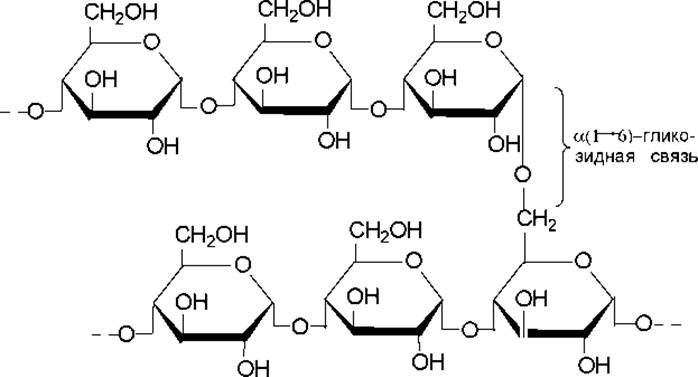
Fig. 5.2. Fragment of a glycogen molecule
Dextrans are synthesized by bacteria under conditions of high carbon availability (primarily sucrose) and can be degraded by extracellular enzymes into glucose during periods of starvation. This glucose then enters the cells and is utilized as a carbon and energy source. Studies have shown that capsular polysaccharides can protect cells from pH fluctuations, toxic factors, and short-term desiccation. Certain capsular polysaccharides (which lack antigenic properties) protect pathogenic microorganisms from phagocytosis, thereby increasing their virulence in animals and humans—a phenomenon that enabled Griffith to discover genetic transformation in pneumococci (Chapter 1).
Capsular polysaccharides have various Practical Applications in human industry. In particular, dextrans are used to produce Sephadex, a type of molecular sieve. These are obtained by cross-linking linear dextran chains using specific agents. The degree of cross-linking determines the pore size and, consequently, the size of the molecules that can be fractionated. Additionally, dextrans are widely used as Blood Plasma substitutes and in medicine to create a hydrophilic layer over burned surfaces (to absorb fluid exudates). Among other capsular polysaccharides utilized in the medical, food (in puddings, creams, and ice cream), and pharmaceutical industries, xanthan, alginate, and pullulan have become widely adopted.
Last update: 06/08/2026
Editorial and Educational Adaptation: This material has been compiled based on the primary/original source text. The project team performed an editorial review, corrected technical inaccuracies, structured sections, and adapted the content for an educational format.
What was processed:
- elimination of formatting defects (OCR errors, structural breaks, corrupted characters);
- editorial organization of content;
- standardization of terminology in accordance with academic sources;
- verification of factual statements against the original source text.
All mentions of the author, publication year, and origin of the primary text have been preserved in accordance with the source.