Practical Protein Chemistry - A. Darbre 1989
Chemical Fragmentation of Polypeptides
Cleavage at Tryptophan Residues
Cleavage at Tryptophan Residues with o-Iodosobenzoic Acid
According to the proposed method, the protein in 80% acetic acid is treated with o-iodosobenzoic acid in the presence of 4 M guanidine-HCl [120]. The reaction proceeds selectively with a yield of 70–100%. However, subsequent studies showed that the method is not as specific and the yield is not as high as originally reported [51–54, 99, 198]. In terms of product yield, this Procedure is comparable to other Methods involving Cleavage at Tryptophan Residues; in addition, Cleavage at Tyrosine residues occurs as a side reaction. More detailed investigations revealed [52, 53] that under these conditions (80% acetic acid, 4 M guanidine-HCl), Oxidative Halogenation of the tryptophan indole ring and the tyrosine benzene ring takes place, accompanied by simultaneous peptide bond cleavage. If halogen is excluded from the reaction mixture, peptide bond cleavage does not occur. The reaction mechanism is likely analogous to other reactions employing halogenating Reagents (including N-Bromosuccinimide). It has been suggested that upon incubation of o-iodosobenzoic acid in an acidic medium in the presence of halogens, several equilibrium reactions take place, yielding a series of intermediate halogenating species, including free halogen [equation (2.16)]. Consequently, the oxidative halogenation leading to cleavage at tryptophan and tyrosine is driven by The properties of the o-iodosobenzoic acid – 4 M guanidine-HCl system rather than by reagent impurities such as o-iodoxybenzoic acid [121, 122]. In practice, reagent purity is verified using various tests [52, 53]. To minimize tyrosine cleavage, The addition of p-cresol to the reaction mixture has been proposed [52, 122]. With these modifications, the method is well suited for the cleavage of Proteins at tryptophan residues.
Class="center">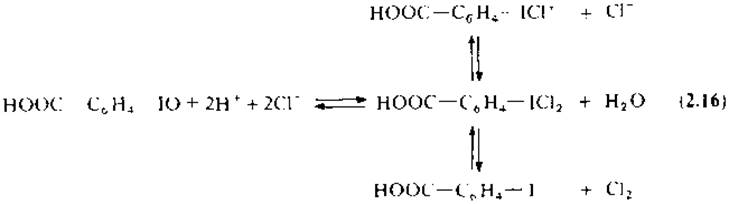
2.5.5.1. Procedure [122]. Dissolve 10 mg of o-iodosobenzoic acid in 80% acetic acid containing 4 M guanidine-HCl and 20 µL of p-cresol, and incubate at 20 °C for 2 h. Then, add the protein sample (5 mg) and incubate in the dark at 20 °C for 24 h. The peptide fragments are isolated by Gel filtration on Sephadex.
Last update: 06/08/2026
Editorial and Educational Adaptation: This material has been compiled based on the primary/original source text. The project team performed an editorial review, corrected technical inaccuracies, structured sections, and adapted the content for an educational format.
What was processed:
- elimination of formatting defects (OCR errors, structural breaks, corrupted characters);
- editorial organization of content;
- standardization of terminology in accordance with academic sources;
- verification of factual statements against the original source text.
All mentions of the author, publication year, and origin of the primary text have been preserved in accordance with the source.