ZOOLOGY OF INVERTEBRATES IN THREE VOLUMES - BOOK 2 - H.Y. Shcherbak - 1996
PHYLUM ARTHROPODA
SUBPHYLUM CHELICERATA
CLASS ARACHNIDA
SUBCLASS ARANEAE (SPIDERS)
Spiders are a remarkably successful group of arachnids that have colonized terrestrial habitats ranging from polar regions and high mountains to arid steppes and scorching deserts. Spiders inhabit the soil, where they dig burrows or occupy natural crevices; the forest floor, moss, and grass; caves, as well as the burrows and nests of other animals; human dwellings and outbuildings; intertidal zones along sea coasts; and the margins of freshwater bodies, across the surfaces of which they run freely. However, only a single species is truly aquatic—the diving bell spider (Argyroneta aquatica). It breathes air, which it stores within a silken dome constructed underwater. Approximately 3,500 species have been described, with over 400 found in Ukraine.
Body length in spiders ranges from 0.8 mm to 11 cm. Many species are brightly colored, often featuring complex patterns; some display golden or silver spots, or possess a metallic, iridescent sheen.
The body of a spider consists of a cephalothorax connected by a narrow pedicel to a typically unsegmented abdomen (Fig. 200).
Class="center">
Fig. 200. Female Araneus diadematus:
a - dorsal view; b, c - ventral views of the cephalothorax and abdomen, respectively; 1 - pedipalps; 2 - chelicerae; 3 - cephalothorax; 4 - sclerotized cuticular areas; 5 - abdomen; 6 - walking legs; 7 - terminal claw-like segment of chelicera; 8 - gnathobases (maxillary lobes) of pedipalp coxae; 9 - coxae of second walking legs; 10 - attachment site of pedicel; 11 - book lung opercula; 12 - stigma of right lung; 13 - tracheal spiracle; 14 - spinnerets; 15 - anal tubercle
The cephalothorax is covered by a hard carapace, which typically bears eyes (usually four pairs) on its anterior region. The eyes of different spider groups function variously: in some, they perceive light intensity and direction while detecting the movement of various objects; in others, they form distinct images. Jumping spiders track their prey visually, utilizing specialized Muscles to move their eyes.
The chelicerae of spiders are small, two-segmented appendages comprising a basal segment and a fang, which opens into the duct of the venom gland (Fig. 200, b). Spiders use their chelicerae to capture, kill, and, when necessary, tear apart their prey; to dig soil; and to carry egg cocoons. In some cases, males use their chelicerae to hold females during mating. The pedipalps are leg-like, six-segmented appendages whose coxae are expanded into gnathobases that bound the preoral cavity, while their covering of setae Functions in food filtration. The primary function of the pedipalps is sensory, with a high concentration of sensory hairs, or sensilla, located on their terminal segment. In males, the terminal segments are modified into copulatory Organs (Fig. 201).

Fig. 201. Diagram of The Structure of a spider's copulatory organ:
1 — Alveolus; 2 - spermatophore; 3 - sperm reservoir; 4, 5 - upper and lower folds of the copulatory organ, respectively; 6 - modified tarsus of pedipalp
Spider legs are seven-segmented. The tarsi of all legs typically bear two sickle-shaped, pectinate (comb-like) claws, between which lies an unpaired appendage—the empodium—either claw-like or pad-shaped in appearance (Fig. 202, a). Relative leg length varies according to lifestyle. The legs are multi-functional, serving for locomotion, burrow excavation, and the manipulation of prey and egg cocoons. Spiders also use their legs to spin and tear silk, as well as to groom themselves. The entire body and legs are covered with numerous hairs and bristles that act as mechanoreceptors and chemoreceptors.

Fig. 202. Silk-spinning apparatus of Araneus diadematus:
a - tip of leg tarsus; b - external view of spinnerets; c - individual silk tubule; 1 - paired and 2 - unpaired pectinate claws; 3 - serrated spines; 4 - hairs; 5 - outer and 6 - inner spinnerets; 7 - anal tubercle
The cephalothorax is separated from the abdomen by a narrow pedicel (Fig. 200, c), which in most spiders is unsegmented. Only rarely, in more primitive spiders, do all abdominal segments bear terga, accompanied by transverse furrows on the ventral side. On the ventral surface, near the anterior end of the abdomen, lies the genital opening, which is covered by a pair of appendages (known as the epigyne). Flanking the genital opening to the right and left are slit-like spiracles—the openings of the pulmonary sacs (book Lungs). Further posteriorly lie two to three pairs of spinnerets, which are covered with numerous (up to 600) short tubules where the ducts of various silk glands open (Fig. 202, b, c). The secreted fluid hardens rapidly upon contact with the air, forming silk threads. A single strand of spider silk is composed of multiple micro-fibers that cement together.
Silk plays a critically important role in the lives of spiders: it is used to construct orb webs, wrap prey before feeding, line the walls of burrows and fashion trapdoor lids, and build egg cocoons. Silk is also utilized for aerial dispersal of spiderlings, among other functions. This versatile employment of silk is made possible by the existence of multiple types of silk glands (producing dry, wet, corrugated, adhesive, and other threads). In its Chemical Composition and physical properties, spider silk is very similar to the silk of silkworms, yet it is considerably more elastic and durable. Undoubtedly, the evolution of silk glands served as a key prerequisite for the progressive radiation of this animal group.
All spiders are voracious predators, feeding primarily on insects, which they consume by extra-oral Digestion (sucking out Body Fluids). They obtain food through various tactics: by ambushing prey, actively hunting (with wandering species often subduing prey in a mesh of silk), or employing diverse trapping devices ranging from simple warning threads of silk to complex snares.
Spiders respire using book lungs (in tetrapulmonate spiders), a combination of book lungs and tracheae (in dipulmonate spiders), or solely via tracheae (in certain tropical species).
Sexual Dimorphism is pronounced in spiders. As a rule, males are smaller than females, sometimes even dwarfed; they often exhibit brighter coloration, specialized modifications of certain leg pairs, and other distinguishing features.
Spiders do not form spermatophores. Before mating, the male weaves a small, specialized web upon which he deposits a droplet of seminal fluid. He then uses this fluid to fill his copulatory organs, which we mentioned earlier when discussing the pedipalps. Guided by his SENSE OF SMELL, the male—now with his copulatory organs fully charged with sperm—actively sets out to find a female. Mating is sometimes preceded by prolonged and characteristic courtship movements, and male combat over females has also been documented.
During copulation, the male inserts his copulatory organs into the female's seminal receptacles. The fertilized eggs are laid into cocoons spun from silk and are frequently guarded until the young hatch, closely resembling miniature adults. In some spider species, after
emerging from the cocoon, the spiderlings climb onto the mother's back and remain there for several days.
The Practical significance of spiders remains insufficiently studied, but it is clear that they play a positive ecological role by destroying significant quantities of agricultural and forest insect pests. However, spiders whose venom affects warm-blooded animals, including humans, are much more widely known. The venom of certain species has a strictly local effect, causing tissue necrosis and degeneration at the bite site, whereas the venom of others affects the entire Organism, particularly The Nervous system. For instance, the venom of spiders of the genus Mastophora, found in Peru, frequently affects vineyard workers; the bite causes sharp pain immediately, followed by Swelling and subsequent tissue necrosis that can expose Internal Organs. Large spiders of the family Aviculariidae (reaching up to 10 cm in size), commonly known as tarantulas, are widely recognized and often kept in captivity. While most of them are not dangerous to humans, the bite of certain species can be fatal.
Two species of venomous spiders are particularly well-known in Ukraine. The South Russian tarantula (Lycosa singoriensis) inhabits the steppe and forest-steppe zones as well as Crimea. Growing 3–4 cm long, this spider has a yellowish-brown body with roughly triangular cephalothorax and an elongated, oval abdomen (Fig. 203). Its bite causes only localized inflammation in humans. Another species belongs to the genus Latrodectus, whose representatives possess a potent systemic venom. The Mediterranean black widow, or karakurt (Latrodectus tredecimguttatus), is found in Crimea and certain areas of the steppe zone. Karakurts are relatively small in size (females are 10–20 mm, males 4–7 mm) and black in color; males and juveniles of both sexes feature red spots on the abdomen (see Fig. 189, g). Sexually mature females are the most dangerous. In severe cases, if medical assistance is not provided, death occurs within a day or two following the bite. Livestock also suffer from karakurt bites, with camels and horses being particularly sensitive and frequently perishing.
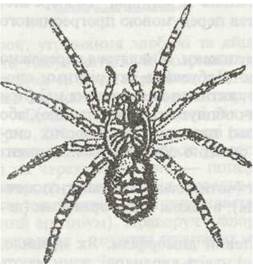
Fig. 203. Spider (South Russian tarantula Lycosa singoriensis)
In the Americas, an equally venomous species of the same genus, L. mactans, commonly known as the "black widow," is widespread.
Last update: 13/08/2026
Editorial and Educational Adaptation: This material has been compiled based on the primary/original source text. The project team performed an editorial review, corrected technical inaccuracies, structured sections, and adapted the content for an educational format.
What was processed:
- elimination of formatting defects (OCR errors, structural breaks, corrupted characters);
- editorial organization of content;
- standardization of terminology in accordance with academic sources;
- verification of factual statements against the original source text.
All mentions of the author, publication year, and origin of the primary text have been preserved in accordance with the source.