INVERTEBRATE ZOOLOGY IN THREE VOLUMES - VOLUME 2 - G.Y. Shcherbak - 1996
PHYLUM ARTHROPODA
SUBPHYLUM BRANCHIATA OR CRUSTACEA
CLASS MAXILLOPODA
SUBCLASS BRANCHIURA
Branchiurans are a small group (about 130 species) of fish ectoparasites, with 3 species found in Ukraine. The body is dorsoventrally flattened and divided into anterior and posterior regions (Fig. 81). The anterior region consists of the syncephalon, covered by a carapace, on the DORSAL SIDE OF which are a pair of compound eyes and 1—3 naupliar eyes. Antennules and antennae are shortened. The antennules bear a hook-like appendage for attachment to the host fish. The mandibles are modified into a piercing-sucking proboscis; the first maxillae are transformed into a fixing organ—a sucker; the second maxillae are uniramous and also serve for attachment; a pair of maxillipeds is present.
Class="center">
Fig. 80. Females of parasitic Copepoda from freshwater fish:
a - Ergasilus peregrinus; b - Achteres
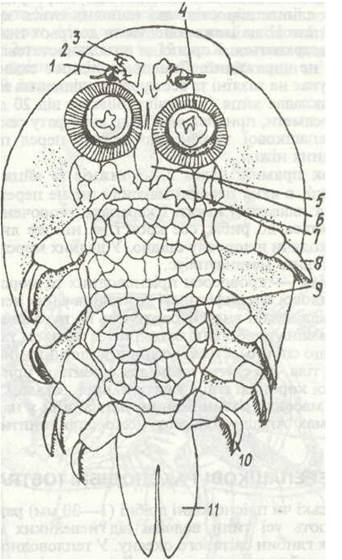
Fig. 81. Diagram of The Structure of a female branchiuran:
1 - compound eye; 2 - antenna; 3 - antennule; 4 - attachment disc (first Maxilla); 5 - proboscis; 6 - second maxillae; 7 - basal plate of maxillipeds; 8 - first thoracic limbs; 9 - egg mass; 10 - fourth thoracic limbs; 11 - abdomen
The posterior half of the body consists of the Thorax and abdomen; all its segments are freely movable relative to one another. The thorax comprises 4 segments, each bearing a pair of swimming appendages; the abdomen includes two limbless segments and a telson. The body size of fish lice does not exceed 10 mm. Fish lice are capable of swimming freely, temporarily leaving their hosts.
Circulatory and respiratory systems are absent; the midgut possesses numerous blind caeca that fill with the host's Blood. The fish louse can fast for up to three weeks until the blood is fully digested. Fish lice are gonochoric (dioecious); Sexual Dimorphism is not pronounced. The male fertilizes the female while she is on the host feeding on blood; Fertilization is internal. The female deposits eggs (from 20 to 250 in Argulus foliaceus) on submerged objects, gluing them to the substrate with secretions from the so-called shell gland, located anterior to the first pair of thoracic limbs.
Development is direct: after 3—5 weeks, young crustaceans hatch from the eggs, in which the anterior maxillae are not yet transformed into suckers, while the swimming legs and carapace are shortened. The juveniles attach to a fish, feed on blood, and undergo five molts on the host before reaching the adult stage. In some marine species, a metanauplius hatches from the egg.
Fish lice are blood-sucking parasites of freshwater and marine fish, showing no strict host Specificity. Some more specialized species parasitize tadpoles and cuttlefish. Fish lice locate their hosts through scent and Water vibrations, which are detected by sensory setae On the surface of their bodies. Vision serves solely for orientation while swimming. The damage inflicted on fish by fish lice is generally minor; however, during mass outbreaks, *Argulus foliaceus*—common in our freshwaters—can cause the death of fry.
Last update: 13/08/2026
Editorial and Educational Adaptation: This material has been compiled based on the primary/original source text. The project team performed an editorial review, corrected technical inaccuracies, structured sections, and adapted the content for an educational format.
What was processed:
- elimination of formatting defects (OCR errors, structural breaks, corrupted characters);
- editorial organization of content;
- standardization of terminology in accordance with academic sources;
- verification of factual statements against the original source text.
All mentions of the author, publication year, and origin of the primary text have been preserved in accordance with the source.