GENERAL MICROBIOLOGY - T.P. Pyrog - 2004
14. TYPES OF FERMENTATION
14.6. BUTYRIC ACID AND ACETONE-BUTANOL FERMENTATION. CLOSTRIDIA
14.6.3. Fermentation of substrates other than glucose by clostridia
Ethanol and acetate. Clostridium kluyveri is capable of fermenting a mixture of ethanol and acetate into butyrate and molecular hydrogen (Fig. 14.7). Acetate serves as an additional hydrogen acceptor and is produced during the Fermentation process. ATP is synthesized exclusively via the acetate kinase reaction.
Class="center">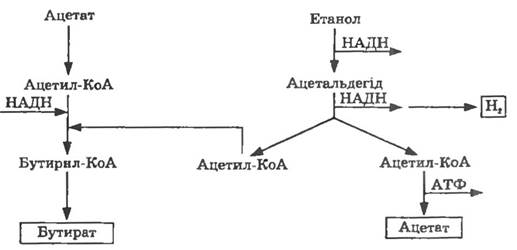
Fig. 14.7. Fermentation of Ethanol and acetate by Clostridium kluyveri
Glutamic acid. The fermentation of glutamic acid is carried out by Clostridium tetanomorphum. This fermentation pathway attracted significant scientific attention because its investigation revealed The biochemical function of vitamin B12. The Catabolism of Glutamate yields butyrate, acetate, ammonia, CO2, and molecular hydrogen (Fig. 14.8). The catabolic pathway of glutamate involves several unusual reactions, notably The formation of methylaspartic acid, which requires a coenzyme derivative of vitamin B12. Deamination occurs in the subsequent step during the formation of methylfumarate. Methylmalate is then cleaved into acetate and Pyruvate. Acetate is released, whereas pyruvate is converted into CO2 and butyrate, as illustrated in Fig. 14.6.

Fig. 14.8. Fermentation of glutamate by Clostridium tetanomorphum
Coupled fermentation of Two Amino Acids (Stickland reaction). Peptolytic clostridia hydrolyze Proteins and subsequently utilize the resulting amino acids. Most amino acids are fermented not individually, but in pairs. As discovered by the American scientist L.H. Stickland (1934), Clostridium sporogenes ferments a mixture of Alanine and Glycine, yet cannot metabolize either of these amino acids on its own. The End products of this fermentation are acetate, ammonia, and CO2. Alanine acts as the hydrogen donor, while glycine serves as the acceptor. The donor amino acid is deaminated and converted into an oxo acid, which then undergoes oxidative decarboxylation to form a fatty acid. This stage is coupled with phosphorylation and represents the primary energy-yielding reaction of the process.
Last update: 12/08/2026
Editorial and Educational Adaptation: This material has been compiled based on the primary/original source text. The project team performed an editorial review, corrected technical inaccuracies, structured sections, and adapted the content for an educational format.
What was processed:
- elimination of formatting defects (OCR errors, structural breaks, corrupted characters);
- editorial organization of content;
- standardization of terminology in accordance with academic sources;
- verification of factual statements against the original source text.
All mentions of the author, publication year, and origin of the primary text have been preserved in accordance with the source.