GENERAL MICROBIOLOGY - T.P. Pyrog - 2004
14. TYPES OF FERMENTATION
14.1. GENERAL CHARACTERISTICS OF THE FERMENTATION PROCESS
Of the three fundamentally possible ways of ATP regeneration (Respiration, Fermentation, and Photosynthesis), fermentation is the simplest.
Fermentation is a metabolic process in which ATP is regenerated, and the breakdown products of an organic substrate can serve simultaneously as both hydrogen Donors and acceptors. The General scheme of fermentation is shown in Fig. 14.1. The organic substrate serves as a source of energy and carbon. The ATP synthesis reactions are oxidation reactions. The Cell gets rid of oxidized carbon by releasing CO2. Individual oxidation steps represent dehydrogenation, during which hydrogen is transferred to NAD. The acceptors of hydrogen, present in the form of NADH, are intermediate products of substrate breakdown. At the expense of NADH, these intermediate products are reduced, and the reduction products are excreted from the cell.
Class="center">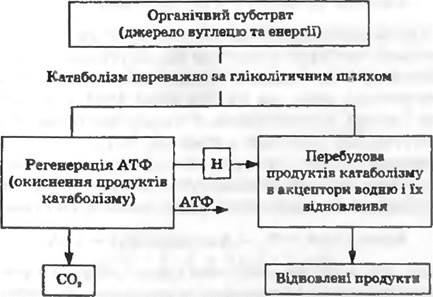
Fig. 14.1. General scheme of fermentation
During the fermentation of CARBOHYDRATES and other substrates, products such as ethanol, lactate (lactic acid), propionate, formate, butyrate, succinate, acetate, n-butanol, 2,3-butanediol, acetone, 2-propanol, CO2, and H2 are formed (either individually or as a mixture). Depending on the predominant products formed, alcoholic, lactic acid, butyric acid, propionic acid, formic acid, and acetic acid fermentations are distinguished. Molecular oxygen does not take part in fermentation processes. Most microorganisms that carry out fermentation are obligate anaerobes or facultative aerobes capable of growing both in the presence and absence of oxygen. At the same time, oxygen inhibits fermentation, shifting it to respiration.
Last update: 12/08/2026
Editorial and Educational Adaptation: This material has been compiled based on the primary/original source text. The project team performed an editorial review, corrected technical inaccuracies, structured sections, and adapted the content for an educational format.
What was processed:
- elimination of formatting defects (OCR errors, structural breaks, corrupted characters);
- editorial organization of content;
- standardization of terminology in accordance with academic sources;
- verification of factual statements against the original source text.
All mentions of the author, publication year, and origin of the primary text have been preserved in accordance with the source.