Fundamentals of Molecular Biology - V.I. Rezyapkin 2009
DNA Repair
Excision Repair
During excision repair, damaged segments are first removed from the DNA strand (the term "excision repair" comes from the English word excision), after which the original Introduction/20.html">DNA Structure is restored. There are two types of excision repair. Option 1.
Special Enzymes called glycosylases play a crucial role in this type of excision repair. Glycosylases can recognize damaged bases and cleave the glycosidic bonds between the modified nitrogenous base and deoxyribose. Their action results in The formation of AP sites. At the next stage, the AP site is recognized by an AP endonuclease, which makes a break in the DNA strand. Next, phosphodiesterase comes into play. This enzyme removes the sugar-phosphate group from which the glycosylase has removed the base. DNA polymerase inserts the missing nucleotide, complementary to the nitrogenous base on the opposite strand, into the resulting single-nucleotide gap in the DNA strand. Finally, DNA ligase seals the nick in the DNA strand (Fig. 3.6). As a result, the damage is repaired.
Class="center">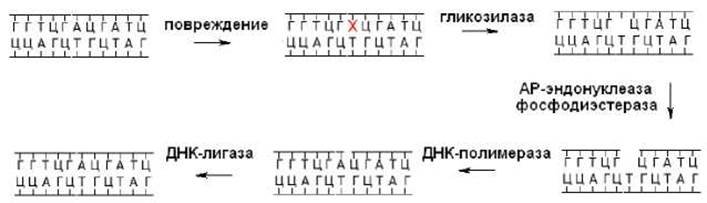
Fig. 3.6. DNA Repair involving glycosylase
Option 2.
This variant of excision repair involves the removal of extended segments of DNA. The process can be divided into four stages (Fig. 3.7):
1) recognition of the damaged DNA region;
2) introduction of single-stranded breaks in the DNA on both sides of the damaged region and its removal;
3) Filling of the resulting gap by DNA polymerase;
4) ligation of the single-stranded DNA break.
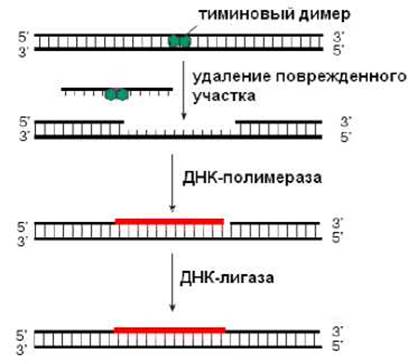
Fig. 3.7. Excision repair involving the removal of extended DNA segments
Last update: 12/08/2026
Editorial and Educational Adaptation: This material has been compiled based on the primary/original source text. The project team performed an editorial review, corrected technical inaccuracies, structured sections, and adapted the content for an educational format.
What was processed:
- elimination of formatting defects (OCR errors, structural breaks, corrupted characters);
- editorial organization of content;
- standardization of terminology in accordance with academic sources;
- verification of factual statements against the original source text.
All mentions of the author, publication year, and origin of the primary text have been preserved in accordance with the source.