Molecular Biotechnology: Principles and Applications - Glick, B., Pasternak, J. 2002
Molecular Biotechnology of Microbiological Systems
Gene Therapy
In Vivo Gene Therapy
In vivo Gene Therapy involves delivering a "therapeutic" gene directly into the Cells of a specific patient tissue (Fig. 21.6). Although retroviral vectors enter only dividing target cells, the majority of cells in many Tissues targeted by gene therapy are non-dividing. Consequently, a variety of viral and non-viral vector delivery systems have been developed to accommodate the wide range of potential target tissues (Skin, Muscle, Lungs, Brain, colon, Spleen, Liver, and Blood Cells) and their locations within The Human Body. An "ideal" delivery system should ensure high-efficiency uptake of the "therapeutic" gene by target cells, minimal intracellular degradation during transport to The Nucleus, and a level of expression sufficient to alleviate the patient's condition.
Class="center">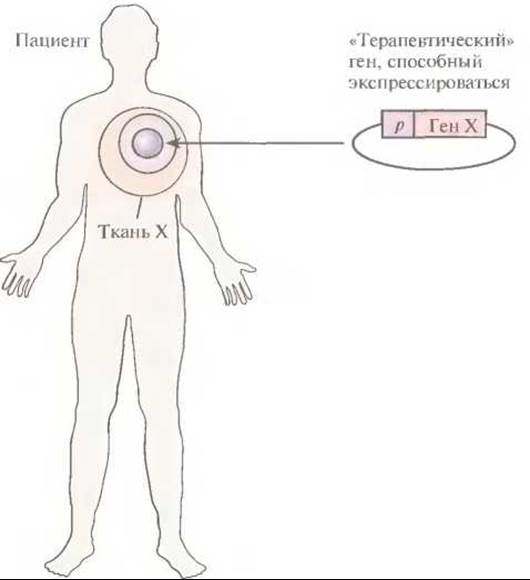
Fig. 21.6. Schematic Overview of in vivo gene therapy. The cloned "therapeutic" gene (Gene X) encodes a protein that corrects the genetic defect. This gene is delivered to and expressed within the cells of a specific tissue in a patient with a genetic disorder. The promoter p, which drives METABOLISM/31.html">Transcription, is tissue-specific.
Last update: 11/08/2026
Editorial and Educational Adaptation: This material has been compiled based on the primary/original source text. The project team performed an editorial review, corrected technical inaccuracies, structured sections, and adapted the content for an educational format.
What was processed:
- elimination of formatting defects (OCR errors, structural breaks, corrupted characters);
- editorial organization of content;
- standardization of terminology in accordance with academic sources;
- verification of factual statements against the original source text.
All mentions of the author, publication year, and origin of the primary text have been preserved in accordance with the source.