Orthopedics - Oleksa A.P. 2006
Joint Diseases
Infectious Arthritis of Known Etiology
Purulent Arthritis
The vast majority of infectious arthritides are local manifestations of a systemic infection. Others result from wound suppuration following traumatic joint injuries and surgeries, as discussed in the textbook "Traumatology" (Oleksa A.P., 1996, p. 81).
Purulent Arthritis develops when the body's immune function is compromised and microflora enters the joint, where it multiplies and triggers an acute inflammatory process. This typically occurs in septic conditions (such as umbilical Sepsis), metaepiphyseal Osteomyelitis, periarticular Phlegmon, and similar conditions. The CAUSATIVE AGENT OF purulent arthritis of any localization is most frequently staphylococcus. Fig. 317 illustrates a diagram (after J. Crawford Adams and D.I. Hamblen, 1990) of purulent arthritis and its potential sequelae.
Purulent arthritis begins acutely with elevated body Temperature, local hyperthermia (38–39 °C), and severe pain that makes any movement in the affected joint impossible. Upon examination, the joint is swollen and sometimes hyperemic. The limb assumes a semi-flexed and adducted position due to a protective antalgic contracture. Palpation reveals such extreme tenderness that the patient may not allow the joint to be touched.
In the early stage of purulent arthritis, joint aspiration yields a turbid exudate with flecks of fibrin, while later stages produce thick pus which, when drawn into a syringe with procaine solution, may retain the shape of the needle lumen like a "little worm."
Joint aspiration serves as both a diagnostic and therapeutic Procedure, as it allows the joint cavity to be lavaged with antiseptic and antibiotic solutions, while puncture decompression helps relieve pain.
The first portion of the aspirated joint fluid should be subjected to cytological and bacteriological analysis to identify the type of microflora and its susceptibility to antibacterial agents.
Class="center">
Fig. 317. Schematic drawing of the potential consequences of purulent arthritis: 1 - restoration of normal joint function, 2 - fibrous ankylosis, 3 - bony ankylosis.
Treatment of seropurulent arthritis involves immediate drainage of the dependent recesses of the joint with continuous drip irrigation of its cavity through the anterior upper pouch using a 1:5000 furatsilin solution with Antibiotics, a 1% dioxidine solution, or even a 25% dimethyl sulfoxide (DMSO) solution. Continuous flow-through lavage of the joint helps minimize the microbial load and resolve the inflammatory process. The limb should be immobilized with a plaster cast in a functionally advantageous position.
Detoxification and antibacterial therapy must be initiated from the first day of treatment. Broad-spectrum antibiotics are prescribed initially, followed by the intramuscular administration of typically two antibiotics once the microbial susceptibility is determined. The patient should receive a balanced, vitamin-rich diet.
Promptly initiated treatment for seropurulent arthritis leads to the resolution of the inflammation, and The Use of rehabilitation measures restores joint function.
In cases of purulent arthritis, the patient's general condition is extremely severe, necessitating both local and systemic intensive therapy. Alongside the infusion of detoxification solutions, arthrotomy in the dependent areas with joint drainage is mandatory, and a continuous irrigation system with antibacterial drugs must be established. The limb is immobilized in a plaster cast in a functionally advantageous position, as the purulent process can lead to joint destruction and ankylosis. Occasionally, purulent dissolution of the joint may occur (Figs. 318–319). Patients are prescribed intramuscular antibiotics based on microbial sensitivity, and when necessary, antibiotics are administered via continuous intravenous infusion or even regional intra-arterial injection.
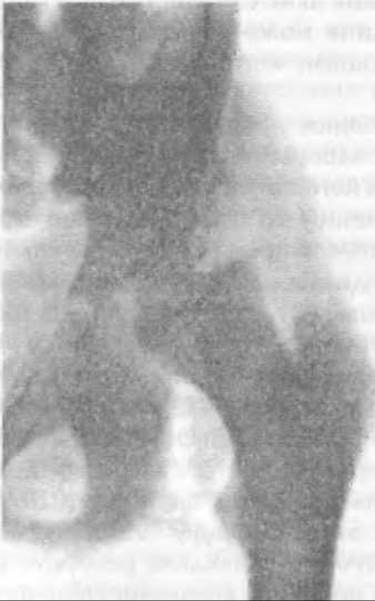
Fig. 318. Acute purulent coxitis with destruction and subluxation of the Femur.
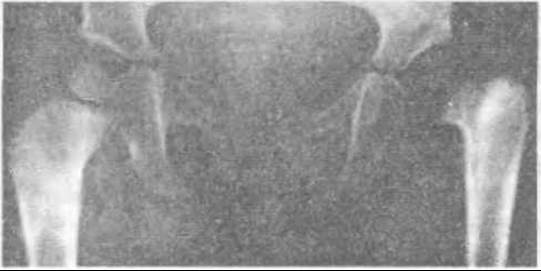
Fig. 319. Radiograph of the hip joints of a child with a history of umbilical sepsis complicated by left-sided purulent coxitis.
If treatment fails and a septic condition develops, only a timely amputation can save the patient's life. There are numerous clinical cases where delayed amputation or refusal to perform the procedure resulted in a fatal outcome.
If a contracture develops in a functionally unfavorable position of the distal limb segment relative to the affected joint, rehabilitation treatment is administered, and arthrodesis is performed if necessary.
Last update: 10/08/2026
Editorial and Educational Adaptation: This material has been compiled based on the primary/original source text. The project team performed an editorial review, corrected technical inaccuracies, structured sections, and adapted the content for an educational format.
What was processed:
- elimination of formatting defects (OCR errors, structural breaks, corrupted characters);
- editorial organization of content;
- standardization of terminology in accordance with academic sources;
- verification of factual statements against the original source text.
All mentions of the author, publication year, and origin of the primary text have been preserved in accordance with the source.