Human Anatomy - Kotsan I. Ya. 2009
The Study of Muscles (Myology)
Names of Muscles
Muscle names, like their Classification, are not strictly standardized and are therefore somewhat arbitrary. A variety of criteria are used to name Muscles.
Some muscles are named after their external shape: the deltoid muscle (m. deltoideus), rhomboid muscle (m. rhomboideus), quadratus muscle (m. quadratus), trapezius muscle (m. trapezius), serratus muscle (m. serratus), soleus muscle (m. soleus), piriformis muscle (m. piriformis), lumbrical muscles (mm. lumbricales), orbicular muscle (m. orbicularis), pyramidalis muscle (m. pyramidalis), and teres muscle (m. teres) (Fig. 89).
Other muscles are named According to the function they perform: flexor (m. flexor), extensor (m. extensor), abductor (m. abductor), adductor (m. adductor), pronator (m. pronator), supinator (m. supinator), levator (m. levator), depressor (m. depressor), tensor (m. tensor), masseter (m. masseter), and sphincter (sphincter) (Fig. 90).
Still other muscles are named based on their Structure, number of heads, or bellies (Fig. 91). A muscle can have one, two, or more heads. Each HEAD originates from a separate bone or from different points on the same bone. Upon merging, the heads form a common belly. Depending on the number of heads, muscles are classified as: biceps (biceps), triceps (triceps), and quadriceps (quadriceps). In some cases, the muscle belly may be divided into two parts by an intermediate tendon, forming a digastric muscle (m. digastricus).
Class="center">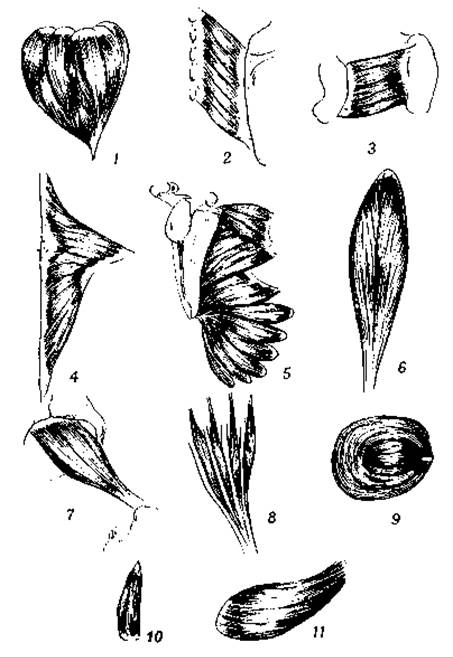
Fig. 89. Muscle names based on their external shape (after M. F. Ivanitsky)
1 — deltoid muscle, 2 — rhomboid muscle, 3 — quadratus muscle (of thigh), 4 — trapezius muscle, 5 — serratus muscle (serratus anterior muscle), 6 — soleus muscle, 7 — piriformis muscle, 8 — lumbrical muscles, 9 — orbicularis muscle (orbicularis oculi), 10 — pyramidalis muscle, 11 — teres muscle (teres major muscle)
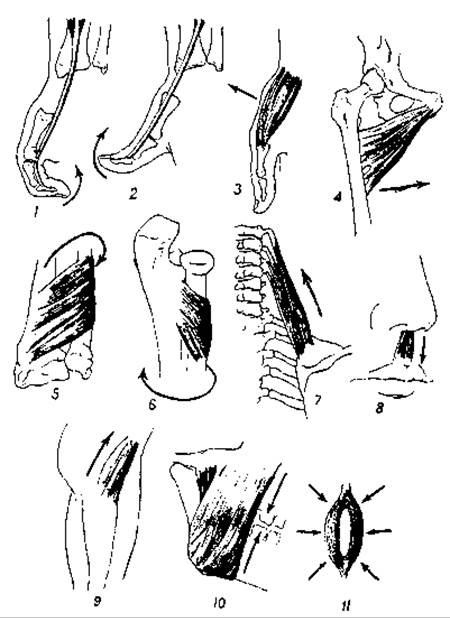
Fig. 90. Muscle names based on their Functions (after M. F. Ivanitsky)
1 — flexor (flexor pollicis longus muscle), 2 — extensor (extensor pollicis longus muscle), 3 — abductor (abductor pollicis brevis muscle), 4 — adductor (adductor brevis muscle of thigh), 5 — pronator (pronator quadratus muscle of forearm), 6 — supinator (supinator muscle of forearm), 7 — levator (levator scapulae muscle), 8 — depressor (depressor septi nasi muscle), 9 — tensor (tensor fasciae latae muscle), 10 — masseter (masseter muscle of head), 11 — sphincter (external anal sphincter)
A certain group of muscles is named according to their site of origin or their sites of origin and insertion. Examples include the pectineus muscle, brachioradialis muscle, and sternocleidomastoid muscle (Fig. 92).
Some muscles are named according to the direction of their fibers: rectus, oblique, transverse (for example, rectus abdominis muscle, external oblique muscle of abdomen, transverse abdominis muscle) (Fig. 93).
A specific subset of muscles is named according to their Location (for example, intercostal, popliteus, pectoral muscles, etc.). Some muscles are named after incidental characteristics based on remote associations, such as the gemelli muscles or the procerus muscle.
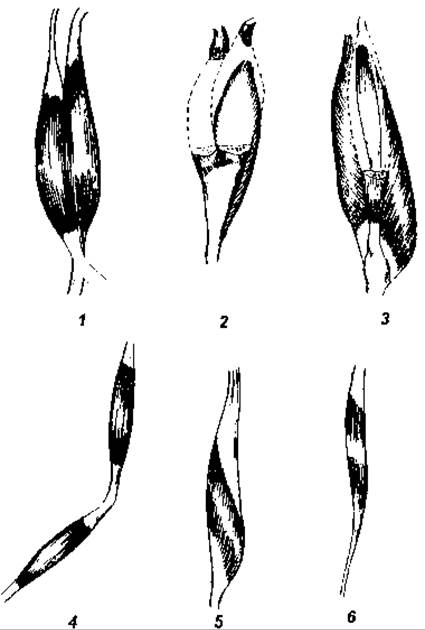
Fig. 91. Muscle names based on their structure, number of heads, and bellies (after M. F. Ivanitsky)
1 — biceps muscle (of arm), 2 — triceps muscle (triceps surae), 3 — quadriceps muscle (of thigh), 4 — digastric muscle, 5 — semimembranosus muscle, 6 — semitendinosus muscle

Fig. 92. Examples of muscle names based on their origin or their origin and insertion (after M. F. Ivanitsky)
1 — by origin (pectineus muscle), 2 — by origin and insertion to two bones (brachioradialis muscle), by origin and insertion to three bones (sternocleidomastoid muscle)
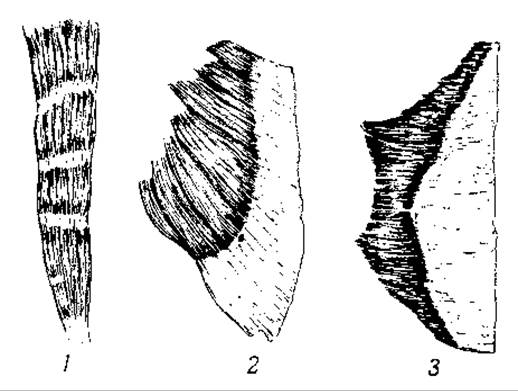
Fig. 93. Examples of muscle names based on the direction of muscle fibers
1 — rectus (rectus abdominis muscle), 2 — oblique (external oblique muscle of abdomen), 3 — transverse (transverse abdominis muscle)
Muscles that perform the same movements—meaning they are located on the same side of a joint's axis—are called synergists, while muscles involved in opposing movements (such as flexion and extension) are called antagonists. The coordination of synergistic and antagonistic muscle groups is achieved through The regulation of their contraction by The Nervous system.
Last update: 08/08/2026
Editorial and Educational Adaptation: This material has been compiled based on the primary/original source text. The project team performed an editorial review, corrected technical inaccuracies, structured sections, and adapted the content for an educational format.
What was processed:
- elimination of formatting defects (OCR errors, structural breaks, corrupted characters);
- editorial organization of content;
- standardization of terminology in accordance with academic sources;
- verification of factual statements against the original source text.
All mentions of the author, publication year, and origin of the primary text have been preserved in accordance with the source.