Human Anatomy, Part 1 - K. A. Dyubenko, A. K. Kolomiysev, Yu. B. Chaykovsky 2002
General Part
General Information on Human Body Structure
Lines, Planes, and Body Regions
To facilitate orientation in the Location and projection of Internal Organs onto the external surface of The Human Body, a series of vertical lines are conventionally drawn (Fig. 13A, B) across the anterior, lateral, and posterior surfaces of the trunk, dividing it into regions. The main body lines and planes are as follows:
|
Linea mediana anterior |
Anterior median line |
|
Linea stematis |
Sternal line |
Class="center">
Fig. 13. Reference lines on the anterior (A) and posterior (B) surfaces of the chest:
1 - median line; 2 - sternal line; 3 - parasternal line; 4 - midclavicular line; 5 - posterior median line; 6 - paravertebral line; 7 - scapular line
|
Linea parastemalis |
Parasternal line |
|
Linea medioclavicularis |
Midclavicular line |
|
Linea mamillaris |
Mammary line |
|
Linea axillaris anterior |
Anterior axillary line |
|
Linea axillaris media |
Mid-axillary line |
|
Linea axillaris posterior |
Posterior axillary line |
|
Linea scapularis |
Scapular line |
|
Linea paravertebralis |
Paravertebral line |
|
Linea mediana posterior |
Posterior median line |
|
Planum subcostale |
Subcostal plane |
|
Planum transpyloricum |
Transpyloric plane |
|
Planum supracristale |
Supracristal plane |
When studying organ anatomy and their surface projections (holotopia), the human body is divided into regions, regiones corporis (Fig. 14A, B):

Fig. 14. Regions of the human body:
A - anterior view: 1 - parietal region; 2 - frontal region; 3 - orbital region; 4 - oral region; 5 - mental region; 6 - anterior cervical region; 7 - lateral cervical region; 8 - clavicular region; 9 - palm of hand; 10 - anterior forearm region; 11 - anterior cubital region; 12 - posterior arm region; 13 - axillary region; 14 - pectoral region; 15 - hypochondriac region; 16 - epigastric region; 17 - umbilical region; 18 - lateral abdominal region; 19 - inguinal region; 20 - pubic region; 21 - medial thigh region; 22 - anterior thigh region; 23 - anterior knee region; 24 - anterior leg region; 25 - posterior leg region; 26 - anterior ankle region; 27 - dorsum of FOOT; 28 - calcaneal region; 29 - dorsum of hand; 30 - anterior forearm region; 31 - forearm; 32 - posterior forearm region; 33 - posterior cubital region; 34 - posterior arm region; 35 - anterior arm region; 36 - mammary region; 37 - deltoid region; 38 - clavipectoral triangle; 39 - infraclavicular fossa; 40 - sternocleidomastoid region; 41 - nasal region; 42 - temporal region
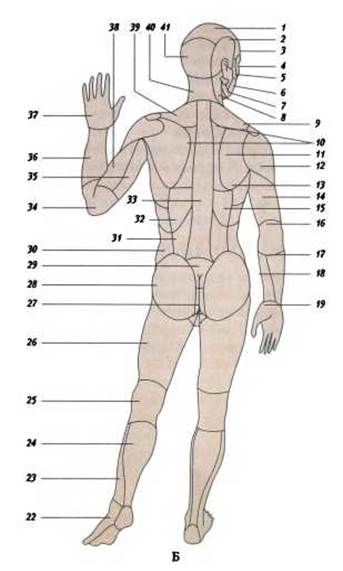
Fig. 14. Regions of the human body (Continued):
B - posterior view: 1 - parietal region; 2 - temporal region; 3 - frontal region; 4 - orbital region; 5 - zygomatic region; 6 - buccal region; 7 - submandibular triangle; 8 - sternocleidomastoid region; 9 - acromial region; 10 - interscapular region; 11 - scapular region; 12 - deltoid region; 13 - lateral chest region; 14 - posterior arm region; 15 - hypochondriac region; 16 - posterior cubital region; 17 - posterior forearm region; 18 - anterior forearm region; 19 - palm of hand; 20 - calcaneal region; 21 - sole of foot; 22 - dorsum of foot; 23 - anterior leg region; 24 - posterior leg region; 25 - posterior knee region; 26 - posterior thigh region; 27 - anal region; 28 - gluteal region; 29 - sacral region; 30 - lateral abdominal region; 31 - lumbar region; 32 - subscapular region; 33 - vertebral region; 34 - posterior cubital region; 35 - posterior arm region; 36 - posterior forearm region; 37 - dorsum of hand; 38 - anterior arm region; 39 - suprascapular region; 40 - posterior cervical region; 41 - occipital region
- HEAD regions, regiones capitis;
- facial regions, regiones faciales;
- neck regions, regiones cervicales;
- chest regions, regiones pectorales;
- Abdominal Regions, regiones abdominales;
- back regions, regiones dorsales;
- perineal region, regio perinealis;
- upper limb regions, regiones membri superioris;
- lower limb regions, regiones membri inferioris.
Body regions will be discussed in detail during The Study of individual body parts (see chapter "Myology").
Last update: 08/08/2026
Editorial and Educational Adaptation: This material has been compiled based on the primary/original source text. The project team performed an editorial review, corrected technical inaccuracies, structured sections, and adapted the content for an educational format.
What was processed:
- elimination of formatting defects (OCR errors, structural breaks, corrupted characters);
- editorial organization of content;
- standardization of terminology in accordance with academic sources;
- verification of factual statements against the original source text.
All mentions of the author, publication year, and origin of the primary text have been preserved in accordance with the source.