FISHES OF THE FAMILY CYPRINIDAE IN THE WATER BODIES OF UKRAINE - V. V. Zamorov - 2015
GENUS MINNOW (MINNOW) - PHOXINUS RAFINESQUE
A genus comprising 25–30 species, widely distributed in Europe, Asia, and North America. One species is known in the Water bodies of Ukraine.
Eurasian minnow (гольян обыкновенный) - Phoxinus phoxinus (Linnaeus)
Morphological features: D III 7-8; А III (6)7(8); Р І (12)13- 16(17); VI 6-7 (8); Squ (58, 59) 60-95 (97-99); l. l. (38-40) 41-80 (81-90); Squ1 (11)12-19(20); Squ2 (8)9-14(15); vert. (35) 36-42 (43); sp. br. (5)6-10 (11); d. f 2.5-4.2 (86,1%), 2.5-4.1 (4,6%), 1.5-4.2 (2,7%), 2.4-4.2 (5,8%),
1.4-4.2 (0.8%). Maximum length 8.1 cm and body weight 9.5 g, lifespan up to 5 years (Fig. 42).
Class="center">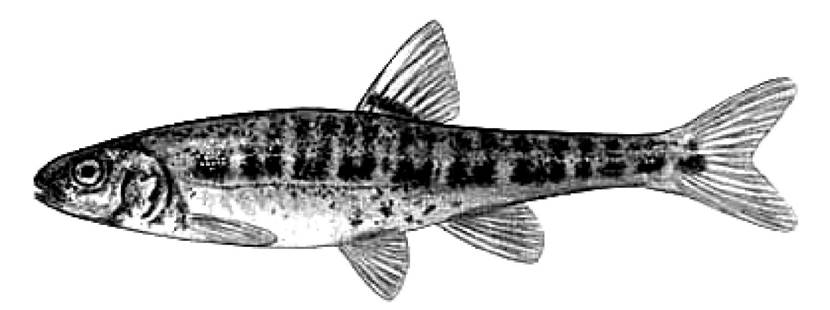
Fig. 42. Eurasian minnow Phoxinus phoxinus
Body elongated, slightly compressed laterally, sometimes nearly fusiform, moderately deep, with the maximum body depth being 18.3–26.0% (average 20.7) of standard length and significantly exceeding body thickness. The dorsal profile is smooth, occasionally with a subtle hump originating behind the occiput. The ventral profile is gently and smoothly convex. The caudal peduncle accounts for 22.8–30.0% (average 25.7) of standard length, being longer than the maximum body depth and HEAD length, and occasionally equal to the head length.
The thickness of the caudal peduncle (at its base) is usually equal to or slightly less, and rarely slightly greater than the minimum body depth. The minimum body depth averages 31.2–36.8% (23.8–43.7) of the caudal peduncle length, while the maximum body depth is correspondingly 77.7–87.3% (58.8–113.5). The dorsal and anal fins are truncated, sometimes slightly rounded at the tips; paired fins are rounded at the tips; the caudal fin has a distinct notch, with its lobes slightly pointed. The dorsal fin originates behind the Base of the pelvic fins, which almost reach the anus. The pectoral fins are long, exceeding half the pectroventral distance, and elongate nearly to the base of the pelvic fins during the spawning season. Scales are very small, covering 1/4 to 3/4 of the belly, predominantly in its posterior part,
while near the gills there are sometimes several rows (6–7) of scales as well. In younger individuals, scales cover a smaller portion of the belly (1/4–1/3) than in adults (1/3–1/4). The lateral line is almost always interrupted and runs slightly below the longitudinal axis of the body. The head is relatively small, with its length exceeding the maximum body depth. The snout is short, rather blunt, on average shorter than the upper jaw. The Mouth is small, terminal or nearly subterminal, obliquely cut, with its tip at the level of the lower margin of the eye. Eyes are small, their diameter fitting three times into the head depth at the occiput and more than twice into the postorbital distance. The forehead is relatively narrow and flat. Gill rakers are short and sparsely distributed. Pharyngeal Teeth are biserial, slightly compressed laterally, with tips hooked. The head bears lateral line Organs arranged in several rows.
In Ukraine, it is distributed in the basins of mountain rivers and reservoirs of Zakarpattia, Bukovyna, in Crimea (Salgir, Burulcha, Biyuk-Karasu rivers), as well as in the Dnieper basin (Teteriv, Uzh rivers) and Polissya (small streams in the Shatsk Lakes area); it has also been recently recorded in the Siversky Donets basin (Velyka Kamianka, Skelevata rivers, etc.) and on the Donets Ridge (upper reaches of the Mius River).
Last update: 07/08/2026
Editorial and Educational Adaptation: This material has been compiled based on the primary/original source text. The project team performed an editorial review, corrected technical inaccuracies, structured sections, and adapted the content for an educational format.
What was processed:
- elimination of formatting defects (OCR errors, structural breaks, corrupted characters);
- editorial organization of content;
- standardization of terminology in accordance with academic sources;
- verification of factual statements against the original source text.
All mentions of the author, publication year, and origin of the primary text have been preserved in accordance with the source.