FISHES OF THE FAMILY CYPRINIDAE IN THE WATER BODIES OF UKRAINE - V. V. Zamorov - 2015
GENUS ALBURNOIDES (SCHEMER) - ALBURNOIDES JEITTELES
Key for identification of species of the genus Alburnoides
1(4). Anal fin typically with (12) 13-16 (17, 18) branched rays.
2 (3). Pharyngeal Teeth mostly 2.5 - 4.2. Danube basin (Transcarpathia, Bukovina), spirlin - A. bipunctatus
3 (2). Pharyngeal teeth mostly 2.5 - 5.2. Basins of the Dniester, Southern Bug, Dnieper, and the Northern Azov region, Russian spirlin - A. rossicus
4 (1). Anal fin typically with 11-13 (14) branched
rays. Water bodies of Crimea, Crimean spirlin - A. maculatus
Spirlin (Schiemer) - Alburnoides bipunctatus (Bloch)
Morphological features: D III 7-9 (10); A III (12) 13-16 (17); PI (II)
12-15 (16); VI 7-8 (9); l. l. (45) 46-52 (53,54); Squ1 (8) 9-10 (11), Squj (3) 4-5 (6); vert. (38) 39-42 (43), sp. br. 6-10 (11, 12), d. f 3.5-4.2 (0,9%), 3.4-3.2 (0,9%), 2.5-4.3 (0,9%), 2.5-4.2 (72,2%), 2.5-4.1 (6%), 2.53.2 (1,7%), 2.5-2.3 (0,9%), 2.4-5.2 (0,9%), 2.4-4.2 (6%), 2.4-4.1 (0,9%), 2.4-3.2 (0,9%), 2.3-4.2 (0,9%), 1.5-4.2 (2,6%), 1.5-4.1 (1,7%), 1.5-3.2 (1,7%), 1.4-4.2 (0,9%). Maximum body length 13 cm, maximum weight 50 g, lifespan about 8 years (Fig. 33).
Body moderately elongated, laterally compressed, relatively deep. Its maximum body depth is 21.0-29.2%, averaging 24.7% of the total body length. The dorsal and ventral profiles are evenly convex. The caudal peduncle makes up 16.4-24.6% of the body length.
Class="center">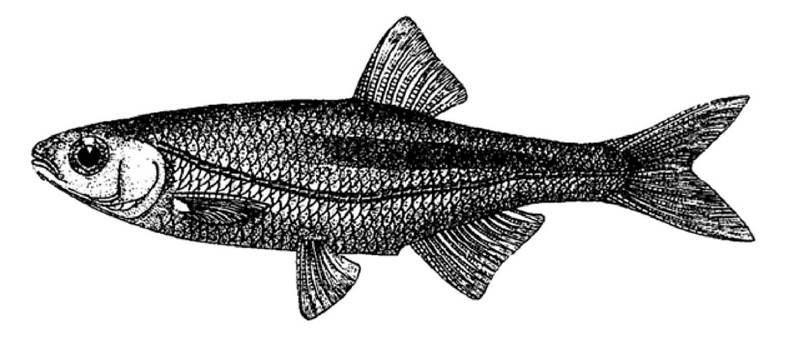
Fig. 33. Spirlin Alburnoides bipunctatus
Dorsal fin obliquely truncated, slightly rounded at the top, anal fin slightly emarginate, paired and caudal fins rounded, the latter with a well-defined notch. The dorsal fin originates behind the vertical line passing through the posterior end of the pelvic fin base or almost directly above it. The first unbranched ray of the dorsal fin is short, sometimes nearly rudimentary. Pectoral fins are quite long, exceeding half of the pectoral-pelvic distance, while pelvic fins fall slightly short of the anus. At the Base of the pelvic fins on the outer side, there is an elongated scale. A keel, devoid of scales all the way to the anus, is present between the pelvic and anal fins; occasionally, this keel is scaled for nearly 1/3 of its length (closer to the pelvic fins). Scales are medium-sized, thin, and easily shed upon Touch, yet adhere somewhat more firmly than those of the bleak. The lateral line is continuous, occasionally with minor gaps spanning one to three scales, and curves downward toward the belly. The HEAD is small, its length slightly exceeding the distance between the paired fins. Snout is short, noticeably protruding over the lower jaw. Mouth is small, terminal or subterminal, and obliquely cut. Its apex is located slightly below the longitudinal axis of the eye, with the corners of the mouth situated nearly on the vertical line of the anterior margin of the eye. Eyes are of moderate size, with their diameter typically slightly exceeding the snout length. Forehead is fairly broad and convex, its width averaging 30.1% of the head length. Gill rakers are short and sparsely distributed. Pharyngeal teeth are weak, arranged in two rows, unitthed (smooth), with a small hook at the tip. The Abdominal cavity is usually yellowish-brown.
In Ukraine, it occurs in the rivers of Transcarpathia (Tisza basin), Bukovina (Prut and Siret basins), and very rarely in the lower Danube.
Russian spirlin - Alburnoides rossicus Berg
Morphological features: D III 8-9; A III (13, 14) 15-17 (18); P I (12) 13-15 (16); VI (7) 8; l. l. (41, 42) 43-49 (50); Squ1 7-9 (10), Squ2 34; vert. (37) 38-43 (44), sp. br. 6-11 (12); d. f 2.5-5.3 (0,9%), 2.5-5.2 (50,5%), 2.5-5.1 (5,7%), 2.5-5.0 (1,9%), 2.4-5.2 (3.7%), 2.3-5.1 (0,9%), 1.5-5.2 (3,7%), 2.5-4.2 (23.4%), 2.5-3.2 (0,9%), 2.4-4.2 (3,7%), 2.4-4.1 (1,9%), 1.5-4.1 (0,9%). Maximum length 12-13 cm, weight up to 40 g, lifespan about 5-6 years (Fig. 34).

Fig. 34. Russian spirlin Alburnoides rossicus
In external Morphology, it is nearly indistinguishable from the common spirlin, differing primarily in the shape of its pharyngeal teeth.
In Ukraine, it occurs in the basins of the Dniester, Southern Bug, Dnieper, Seversky Donets, and rivers of the Northern Azov region (Obitochna, Berda). It is a rather rare, low-Abundance fish species and is listed in the Red Data Book of Ukraine.
Crimean spirlin Alburnoides maculatus (Kessler)
Morphological features: D III 7-9; A III 11-13 (14); P I 12-14 (15); VI 6-7 (8); l. l. 48-56 (57, 58); Squ1 9-12, Squ2 4-5 (6); vert. (37) 3841 (42, 43); sp. br. 6-9 (10); d. f 2.5-4.3 (2,5%), 2.5-4.2 (73,8%), 2.5-4.1 (8,8%), 2.5-4.0 (1,2%), 2.4-4.2 (2,5%), 1.5-4.2 (7,5%), 1.5-4.1 (1,2%), 1.4-4.2 (2,5%). Maximum length 12-13 cm, weight 40-45 g, lifespan about 4-5 years (Fig. 35).

Fig. 35. Crimean spirlin Alburnoides maculatus
The body is elongated, laterally compressed, and relatively deep, with its maximum depth ranging from 27.8% to 32.2% (averaging 29.78%) of the standard body length. The dorsal and ventral profiles are evenly and slightly convex. The dorsal fin is obliquely truncated, sometimes rounded at the top; the anal fin features a slight notch; the paired fins and the caudal fin are rounded, with the latter being deeply forked. The Origin of the dorsal fin is situated slightly behind the vertical line of the pelvic fin base or directly above it. The length of the pectoral fins significantly exceeds half the distance between the pectoral and pelvic fins; the latter, equipped with an elongated scale on their outer base, reach the anus. The scales are thin, of medium size, and detach quite easily upon touch, yet adhere more firmly than those of the bleak. The lateral line is complete and strongly deflected ventrally—extending from the upper margin of the operculum to the end of the anal fin base; it sometimes appears wavy and often falls short of the scale cover's posterior edge by one to two scales. The head is small, slightly exceeding the length of the caudal peduncle. The snout is short, projecting slightly beyond the lower jaw, with a length less than the interorbital width. The mouth is small, terminal or subterminal, and obliquely cut, with its tip aligned with the middle of the eye. The corners of the mouth fall just short of the vertical of the anterior eye margin. The eyes are moderate in size, their diameter fitting twice into the postorbital distance. The forehead is slightly convex and fairly broad, averaging 30.6% of the head length. The pharyngeal teeth are rather weak, arranged in two rows, unserrated, and slightly hooked at the tips. The abdominal cavity is dark in coloration.
In Ukraine, it is found in the Crimean rivers Chorna, Belbek, Kacha, Alma, and Salgir, as well as in the Alma, Bakhchisarai, Taigan, and other reservoirs.
Last update: 07/08/2026
Editorial and Educational Adaptation: This material has been compiled based on the primary/original source text. The project team performed an editorial review, corrected technical inaccuracies, structured sections, and adapted the content for an educational format.
What was processed:
- elimination of formatting defects (OCR errors, structural breaks, corrupted characters);
- editorial organization of content;
- standardization of terminology in accordance with academic sources;
- verification of factual statements against the original source text.
All mentions of the author, publication year, and origin of the primary text have been preserved in accordance with the source.