FISHES OF THE FAMILY CYPRINIDAE IN WATER BODIES OF UKRAINE - V. V. Zamorov - 2015
GENUS GUDGEON - GOBIO CUVIER
Identification key to the species of the genus Gobio
1 (2). Body low, not laterally compressed, nearly cylindrical. Barbels
very long, extending well beyond the posterior margin of THE EYE AND usually reaching the rear edge of the preoperula. The least body depth fits into the caudal peduncle length more than 3.4 times. Danube gudgeon - G. uranoscopus
2 (1). Body deep, laterally compressed. Barbels relatively short, not reaching the anterior margin of the eye, extending beyond it, or reaching the middle or rear edge of the eye. The least body depth fits into the caudal peduncle length usually no more than 2.9 times.
3 (6). Scales on the belly usually reach the interbranchial space (breast and throat fully scaled), sometimes (up to 3-6% of individuals) reaching only the posterior ends of the pectoral fin bases or slightly further forward (i.e., the breast and throat may be partially or almost entirely naked).
4 (5). Barbels relatively short, usually not reaching or barely reaching the anterior margin of the eye; their length fits into the HEAD length 6.0 (5.0-7.7) times. Eye diameter averages 5.5 times in the head length and 1.4 (1.3-1.4) in the interorbital width (Crimea, Chorna River). Delyamure's gudgeon, Black River gudgeon - G. delyamurei
5 (4). Barbels relatively long, usually reaching the anterior margin
of the eye, extending past it, reaching the middle of the eye, occasionally even the posterior edge of the eye, or falling short of its anterior margin. Their length fits into the head length 3.8 (2.9-6.0) times. Eye diameter averages 5.1 times in the head length and 1.3 (1.2-1.5) in the interorbital width. Water bodies of Crimea (except the Chorna River). Crimean gudgeon - G. krymensis
6 (3). Scales on the belly usually reach only the posterior ends of the pectoral fin bases (breast and throat completely naked). Sometimes (up to 1-2% of individuals) they extend in one or two to three rows forward to the middle of the bases of these fins and, exceptionally, cover the belly up to the interbranchial space.
7 (8). Forehead wide, its width averaging 3.5-3.7 times in the head length. Eyes relatively small; their horizontal diameter averages 1.4-1.5 (1.3-1.7) times in the interorbital width. Danube basin. Carpathian gudgeon - G. carpathicus
8 (7). Forehead narrow, its width averaging 3.9-4.5 times or more in the head length. Eyes relatively large, their horizontal diameter averaging 1.7-1.4 (1.0-1.4) times in the interorbital width.
9 (10). Barbels long, averaging 3.6 (2.6-4.6) times in the head length and 1.6 (1.4-1.7) in the snout length. Dniester basin. Dniester gudgeon - G. sarmaticus
10 (9). Barbels short or very short, averaging 4.3-6.3 (2.8-7.7) times in the head length and 1.9-2.7 (1.5-3.1) in the snout length.
11 (12). Barbels short, averaging 4.3-4.7 (2.9-7.4) times in the head length and 2.0-2.1 (1.9-2.5) in the snout length, usually falling slightly short of, reaching, or extending beyond the anterior margin of the eye, but not reaching the middle of the eye. Caudal peduncle thickness fits into its length on average 2.4-2.6 times. Basins of the Western and Southern Bug and the Dnieper. Gudgeon - G. gobio
12 (11). Barbels very short, averaging 4.9-6.3 (3.5-7.7) times
in the head length and 2.7 (2.5-2.8) in the snout length, falling well short of the eye (usually reaching the nostrils or barely extending past them). Caudal peduncle thickness fits into its length on average 2.7 times. Siversky Donets basin, rivers of the Northern Azov region. Short-barbeled gudgeon - G. brevicirris
Danube gudgeon - Gobio uranoscopus (Agassiz)
Morphological features: D (II) III 7(8); A II (III)(5)6-7(8); P I 12-14; V (I)II 7; C I 17 I; l. l. (39)41-43(45); vert. 36; d. f 3.5-5.3. Maximum body length 11-12 cm, weight up to 30 g, lifespan about 4-5 years (Fig. 7).
Class="center">
Fig. 7. Danube gudgeon Gobio uranoscopus
Body elongated, broad, low, subcylindrical, not laterally compressed. Its maximum body depth H fits into the body length l (5.0) 6.2-6.7 times and is only slightly greater than the maximum thickness. Dorsal profile slightly convex, ventral profile almost horizontally straight. Caudal peduncle long, low, rounded in cross-section. Its length fits 4.0-4.2 times into the body length l, is 1.5-1.6 times greater than the maximum body depth, and 3.4-3.9 times greater than the least body depth, which equals or is slightly less than the caudal peduncle thickness. The anus is located somewhat closer to the base of A than to the base of V. Fins relatively large. The base of V lies under the Origin of the base of D or slightly anterior to it. Antedorsal and anteventral distances almost reach half of l, and the anteanal distance equals 2/3 of l. P reaches the tip of V. The margin of D is slightly emarginate. Caudal fin with a noticeable notch, its lobes slightly rounded at the tips, equal in length or the upper slightly longer than the lower. The head is slightly shorter than the caudal lobes and fits into the body length l 3.2-3.7 times. Breast and throat covered with scales. Snout long, pointed, its length averaging about 40% of the head length and exceeding the postorbital distance. Eyes small, pupils directed somewhat upwards; eye diameter fits 5.0-5.5 times into the head length and 0.9-1.0 into the interorbital width. Barbels very long, bulbous and thickened at the base. Barbel length fits into the head length (1.3) 1.5-1.7 times, reaching the posterior margin of the preoperula with its tip.
In Ukraine, single specimens have been recorded both in the Tysa River itself and in its basin - the Rika, Borzhava, Teresva, Tereblia, Shopurka, Latorytsia, and Uzh rivers (Transcarpathia), as well as in the Siret River (Bukovina). A rather rare, low-Abundance fish. Listed in the Red Data Book of Ukraine.
Delyamure's gudgeon - Gobio delyamurei Freyhof et Naseka
Morphological features: D III (6) 7 (8); A II-III 6-7; P I 13-16; VII 6-8; l. l. 37-42; Squ1 6-8, Squ2 4-6; sp. br. 8-2; d. f 3.5-5.3, 2.5-5.2. Maximum body length 13 cm, weight up to 45 g, lifespan about 4 years (Fig. 8).
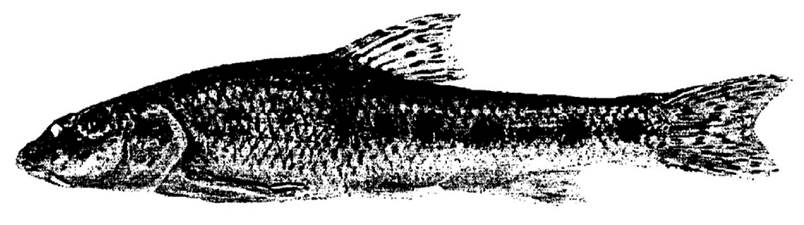
Fig. 8. Delyamure's gudgeon Gobio delyamurei
Body elongated, not very high (maximum body height fits 4.5 (4.3-4.9) times into body length), moderately compressed laterally. Chest and throat fully covered with scales, sometimes they can be partially or almost completely naked. Caudal peduncle laterally compressed, relatively short (caudal peduncle length fits 4.7 (4.5-5.0) times into body length), its height exceeds thickness at the level of the last ray of the anal fin and fits 2.2-2.3 times into the caudal peduncle length. Snout quite long (2.1-2.5 times in head length). Forehead broad (3.9 (3.7-4.4) times in head length). Eyes small, their diameter averages 5.3 (5.0-5.7) times in head length and 1.4 (1.3-1.4) in forehead width. Barbels short, 6.0 (5.0-7.7) times in head length, usually not reaching the posterior margin of the eye. Anus located closer to the anal fin than to the ventral one. General Background coloration silvery-gray, darker on the upper part of the head and trunk. On the sides of the body there are 7-11, usually 8-9 rounded dark spots, well separated from each other. On the dorsal, caudal, and pectoral fins, there are faint dark dots forming several dark rows. In sexually mature males, the body and fins are dark gray, the belly is covered with numerous dark-gray spots. Biology has not been specially studied, but apparently differs little from the biology of the Crimean gudgeon and other species.
In Ukraine, it is found in the lowland part of the Chorna River (Autonomous Republic of Crimea).
Crimean gudgeon - Gobio krymensis Banarescu et Nalbant
Morphological features: D ІІ-ІІІ (6) 7 (8); А ІІ-ІІІ (5) 6; Р І 1416; VII 6-7; І. І. 37-42; Squ1 6-8, Squ2 4-6; sp. br. 8-12; d. f 2.5-5.2, 3.55.2, 3.5-5.3. Maximum body length 13 cm, weight
up to 45 g, lifespan about 4 years (Fig. 9).
Body elongated, relatively high, moderately compressed laterally.
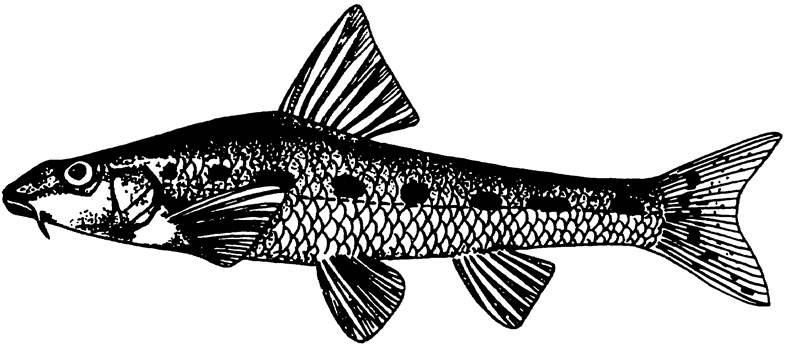
Fig. 9. Crimean gudgeon Gobio krymensis
Chest and throat are fully covered with scales; sometimes (up to 3-6% of individuals) the scales on the belly reach only the posterior ends of the pectoral fin bases or slightly further forward (i.e., both the chest and throat can be partially or almost completely naked). The caudal peduncle is laterally compressed, relatively short, its height exceeds its thickness at the level of the last ray of the anal fin and fits 2.3 (1.9-2.5) times into the caudal peduncle length. Barbels are long, fitting 3.8 (2.9-6.0) times into the head length, usually reaching the anterior margin of the eye, extending beyond it, reaching the middle of the eye, rarely even the posterior margin of the eye, or falling short of its anterior margin. Eyes are relatively small, their diameter averages 5.1 (4.0-7.0) times in the head length and 1.3 (1.2-1.5) in the forehead width. The anus is located closer to the anal fin than to the ventral fin. In coloration, it resembles the Black River and Carpathian gudgeons, though its coloration may be somewhat lighter.
In Ukraine, it is found in the Crimean rivers Alma, Kacha, Salgir, Burulcha, Biyuk-Karasu, etc., in the Alma, Bakhchisaray, Simferopol, Bilohirsk, and other reservoirs, in ponds, etc.
Carpathian gudgeon - Gobio carpathicus Vladykov
Morphological features: D III 6-8; A II-III 5-7; P I 14-16; V II 8; C I 17 I; l. l. 37-42; Squ1 5-8; Squ2 4-6; vert. 36-40; sp. br. 8-12; d. f. 2.5-5.2, 3.5-5.3, 2.5-5.3, 3.5-5.2 (1.5-5.1, 1.5-5.3). Maximum body length 13 cm, weight 40-45 g, lifespan about 5 years (Fig. 10).
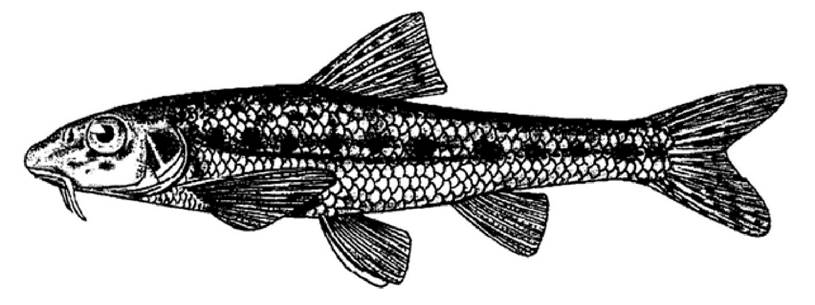
Fig. 10. Carpathian gudgeon Gobio carpathicus
Body short, high, thickened, barrel-shaped. Its maximum height, according to average indicators in Ukrainian water bodies, ranges from 20 to 23% of body length l and exceeds body thickness by 1.3-1.4 times. The edges of the back and belly are rounded. The dorsal profile rises in a fairly steep arc behind the nape, then extends almost horizontally to the beginning of the D base, and beyond it gradually slopes down to the upper edge of the caudal fin base. The ventral profile of the body is almost not convex and does not rise sharply towards the Base of the caudal peduncle. The caudal peduncle is somewhat shortened, relatively high. Its length (21.4-22.9% l) is 2.3-2.4 times greater than the minimum body depth. The postdorsal distance is slightly less than the antedorsal one, and the latter is close to the anteventral distance, which constitutes half of l; the anteanal distance makes up 70-71% of l. Fins are relatively large, their tips slightly rounded, without distinct notches. The caudal fin notch is shallow. The length of P fits into the P-V distance 1.2-1.4 times, and the length of V into the V-A distance 1.4-1.5 times. The height of D equals 1/5 of l, the height of A is close to 16% of l. Head length constitutes 26-27% of l. The body is covered with relatively small scales. The throat is naked or partially covered with scales; individuals with a fully scaled throat are encountered (in the Southern Bug, rivers of Crimea). Head measurements are characterized by the following proportions: head height approaches 2/3 of its length or is noticeably smaller. Snout length averages 38-46%, and eye diameter 19-23%. The eye is usually located almost in the middle of the head length, rarely closer to its anterior or posterior edge and close to the upper edge. The interorbital space is large, forehead width reaches a third of the head length. Barbel length averages 25 to 29% of the head length.
In Ukraine, it is found mainly in the basins of the Tysa (Transcarpathia), Siret, Prut (Bukovyna), and more rarely in the lower Danube, including Lake Kitay.
Dniester gudgeon - Gobio sarmaticus Berg
Morphological features: D (II) III 7-8; A (II) III (5) 6-7; P I 13-16; V II 6-7 (8); l. l. (39) 40-42; Squ1 5-6 (7), Squ2 4-5, sp. br. 8-11 (12), d. f. 2.5-5.2, 3.5-5.2, 3.5-5.3, etc. Maximum body length 13 cm, weight up to 45-50 g, lifespan about 5 years (Fig. 11).

Fig. 11. Dniester gudgeon Gobio sarmaticus
Body elongated, slender, relatively high (maximum height fits 5.1 (4.2-5.9) times into body length), moderately compressed laterally, covered with medium-sized scales that reach only the posterior ends of the pectoral fin bases on the belly (chest and throat are completely naked). The caudal peduncle is laterally compressed, relatively short (fits 4.8 (4.3-5.7) times into body length), its height exceeds thickness at the level of the last anal fin ray, fits 12.3 (10.2-18.5) times into body length, and fits 2.4 (2.2-2.6) times into the caudal peduncle length. Head large, with a relatively long snout (fits 2.2 (1.9-2.7) times in head length). Forehead not wide (4.0 (3.3-5.0) times in head length), eyes small (5.1 (4.0-6.8) times in head length and 1.3 (1.1-1.7) in forehead width). Barbels long, averaging 3.6 (2.6-4.6) times in head length and 1.6 (1.4-1.7) in snout length, usually extending beyond the anterior margin of the eye or reaching its middle, sometimes falling short of or reaching the anterior margin of the eye, and occasionally even its posterior margin. The anus is located closer to the anal fin than to the ventral fin. General background coloration is ash-silver with a blue or greenish sheen, darker above the lateral line and lighter toward the yellowish or almost white belly. On the back, there are up to 7-11 faintly expressed small spots; on the sides along the lateral line, there are usually 8-12, sometimes more, distinct rounded dark spots, which sometimes partially merge into a stripe on the posterior part. Dorsal, caudal, and pectoral fins are grayish with several (up to 5-6) transverse rows of dark dots; all other fins are colorless.
In Ukraine, it is found in the Dniester basin. Some researchers believe that it inhabits only the lower Dniester, the Southern Bug, and possibly also the lower Dnieper, which, in our opinion, cannot be accepted.
Gudgeon (пескарь обыкновенный) - Gobio gobio (Linnaeus)
Morphological features: D III (6) 7-8 (9); А II-III 6-8; Р I 1416, II 8; С І 17 I; І. І. (36) 37-46 (48); Squ1 5-8; Squ2 4-6; vert. 35-42 (43); sp. br. (6) 7-12 (13); d. f 2.5-5.2, 3.5-5.3, 2.5-5.3, 3.5-5.2. Maximum body length 13 cm, weight up to 50 g, lifespan about 5 years (Fig. 12).
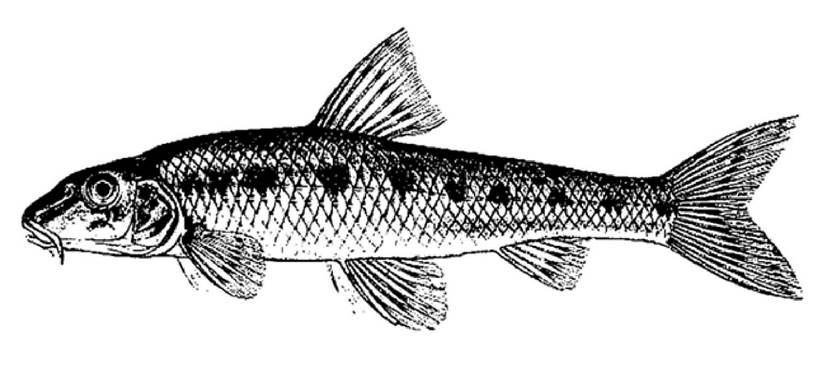
Fig. 12. Gudgeon Gobio gobio
The body is moderately elongated and of moderate depth. Its maximum depth typically goes into the body length l 4.5–5.5 times and is greater than, equal to, or occasionally slightly less than the length of the caudal peduncle. The caudal peduncle is relatively short, fitting 4.1–5.1 times into the body length, and is quite deep. The minimum body depth fits 2.3–2.9 times into the length of the caudal peduncle; in some southern regions (Danube, Dniester, Crimea), it is occasionally only twice (2.0–2.8 in Crimean specimens, 2.0–2.3 in Dniester specimens). The thickness of the caudal peduncle is slightly less than or equal to its depth. The anus is situated significantly forward from THE ORIGIN OF the anal fin A, although THE POSITION OF the anus varies within the V–A distance range. The pectoral fins P do not reach the pelvic fins V; the V fins are located beneath the second or third branched ray of the dorsal fin D, reaching the anus but never extending to A. The upper margin of D is slightly emarginate, while the lower margin of A is straight. The caudal fin C is moderately notched, and the length of its lower lobe is less than the head length. Scales on the body either do not cover the throat or cover it to a greater or lesser extent. The head is somewhat elongated and shallow. The snout is rather long, slightly longer or slightly shorter than the postorbital distance.
The profile of the snout in the nostril region is somewhat tuberculate. The Mouth is inferior, with its tip positioned below the level of the lower margin of the eye; the lower lip is interrupted in the middle and developed only at the corners of the mouth. At these exact corners, There is a single barbel on each side, which does not reach the vertical of the posterior margin of the preoperculo-mandibular region, and sometimes even fails to reach the posterior margin of the eye, which is located at the midpoint of the head length, close to its upper margin. The eyes are fairly large and somewhat horizontally elongated; their diameter fits 1.1–1.5 times into the interorbital width, which markedly exceeds a quarter of the head length. Body coloration is typically brownish, occasionally with a greyish hue. The back is darker, brownish-greenish, the flanks are yellowish, marked with 6–14 (mostly about 10) dark spots along them, which are about the size of the eye or slightly larger. The belly is light. The dorsal and caudal fins are grayish-yellowish with rows of distinct dark dots, while the remaining fins are colorless.
The gudgeon exhibits noticeable variations in traits such as the position of the anus relative to the V–A distance, as well as the length of the snout and barbels. As a rule, the anus is located closer to the origin of A than to the origin of V. However, specimens occur where it is closer to the origin of V (morpha prosopyga Berg), or conversely, significantly closer to the origin of A (m. katapyga Berg). Based on snout length, researchers distinguish long-snouted specimens, in which the snout length is less than the postorbital distance (m. longirostris Berg), and short-snouted specimens, in which it is smaller than this distance (m. obtusirostris Val.). Based on barbel length, there are long-barbeled specimens, where the barbels almost reach the posterior margin of the preoperculum (m. longicirris Berg), and short-barbeled specimens, where they barely reach the anterior margin of the eye (m. brevicirris Berg).
Moving southward, the gudgeon exhibits variation toward the lepidolaemus variety, specifically, a varying number of scales appears in front of the bases of the pectoral fins (however, the scalation does not reach the interbranchial space), and the depth of the caudal peduncle increases.
The gudgeon is distributed almost throughout Europe, excluding its northern and southern parts, as well as in Siberia (including the Far East) and Central Asia. It is absent in Scotland, Norway, northern Finland, and the Kola Peninsula (the northern limit of its range is 61–62° N). It is also absent in the Eastern Transcaucasia, Asia Minor, the Lake Balkhash basin, rivers of the Pacific slope north of the Uda River mouth, and in the Kolyma River and Kamchatka.
In Ukraine, it is found in the basins of the Western Bug, Southern Bug, and Dnieper rivers.
Short-barbeled gudgeon (пескарь короткоусый) - Gobio brevicirris Fowler
Morphological features: D III 7-8; A II-III 6; P I 13-15 (16); V II 7-8; l. l. (40) 41-43; Sgu1 6-7, Sgu2 4-5, sp. br. (6) 7-11, d. f 2.5-5.2, 3.5-5.2, 3.5-5.3, etc. Maximum body length 12.5 cm, weight up to 40 g, lifespan about 5 years (Fig. 13).

Fig. 13. Short-barbeled gudgeon Gobio brevicirris
The body is elongated, rather slender, and relatively deep (the maximum body depth fits on average 4.9–5.9 [4.1–6.6] times into the body length). Scales on the belly reach only the level of the posterior ends of the pectoral fin bases, meaning the chest and throat are completely naked, though in many specimens 1 central row of scales, or 3–4 such rows, may extend forward beyond the origin of the pectoral fin base. The caudal peduncle is laterally compressed, relatively short (fitting on average 4.5–4.8 [4.0–5.8] times into the body length); its depth is greater than its thickness at the level of the last ray of the anal fin and fits 2.5–3.1 times into the length of the caudal peduncle. The head is large, with a relatively long snout (1.8–2.6 times in the head length). The interorbital width fits 3.4–5.8 times into the head length, and the eyes are small (4.2–6.5 times in the head length and 1.0–1.4 times in the interorbital width).
The barbels are very short, fitting on average 4.9–6.3 (3.5–7.7) times into the head length and 2.7 (2.5–2.8) times into the snout length; as a rule, they do not reach the anterior margin of the eye. The anus is situated closer to the anal fin than to the pelvic fin. The general background coloration is grayish-silver with a bluish or greenish sheen, darkening above the lateral line and lightening toward the nearly silvery-white belly. The back features several indistinct small spots, while the flanks along the lateral line typically bear 6–10, sometimes more, distinct rounded dark spots. The dorsal, caudal, and pectoral fins are grayish with several transverse rows of dark dots, while all other fins are colorless.
In Ukraine, it is found in the Siverskyi Donets River and its tributaries, as well as in the rivers of the Northern Azov region, specifically in the Hruzkyi Yalanchyk, Kalmius, and possibly others. Its distribution range within our country requires further clarification.
Last update: 07/08/2026
Editorial and Educational Adaptation: This material has been compiled based on the primary/original source text. The project team performed an editorial review, corrected technical inaccuracies, structured sections, and adapted the content for an educational format.
What was processed:
- elimination of formatting defects (OCR errors, structural breaks, corrupted characters);
- editorial organization of content;
- standardization of terminology in accordance with academic sources;
- verification of factual statements against the original source text.
All mentions of the author, publication year, and origin of the primary text have been preserved in accordance with the source.