PLANT PHYSIOLOGY AND BIOCHEMISTRY
Lecture Notes
7. MINERAL NUTRITION OF PLANTS
Fertilizers
Physiological principles of fertilizer application
In natural biocenoses, compounds absorbed from the soil are partially returned through fallen leaves, branches, and needles. When agricultural crops are harvested, the substances absorbed from the soil are removed. The rate of nutrient uptake depends on the plant species and yield, and for a single crop, it also varies based on soil and climatic conditions. Vegetable crops, potatoes, and perennial grasses utilize more nutrients than cereals. For instance, calcium uptake per ton of produce is 10 kg for cereals, 30–40 kg for potatoes, fodder, and sugar beets, and up to 60 kg for cabbage.
To prevent soil depletion and ensure high agricultural yields, the application of fertilizers is essential.
A fertilizer system is a program for applying fertilizers within a crop rotation, taking into account preceding crops, soil fertility, climatic conditions, biological characteristics of plants and varieties, as well as the COMPOSITION AND PROPERTIES of the fertilizers. This system is designed with consideration for the nutrient cycle and its balance in agriculture. The nutrient balance accounts for inputs into the soil (including fertilizers), total consumption for crop formation, and non-productive losses from the soil. A necessary condition for the functioning of a fertilizer system is the Prevention of environmental pollution by the chemical compounds applied to the soil.
Chemical Methods help determine the mineral composition of soil and plants. They provide a General Overview of the quantity of mineral compounds present in the soil and those absorbed by plants. The bioavailability of essential elements and other related tasks are addressed experimentally using vegetation and field methods.
Under the vegetation method, plants are grown In aqueous solutions of the mineral salts being studied (hydroponics), or the salts are added to sand (sand culture) or soils of varying composition (soil culture). Light conditions, air Temperature, ROOT-zone temperature, humidity, and other parameters are regulated automatically. To study the mechanisms of mineral element absorption, transformation, and transport within the plant, radioactive isotopes of phosphorus (32Р), potassium (86Rb), sulfur (35S), 14СО2, heavy nitrogen (15N), and others are widely used in vegetation experiments. Since these experiments are conducted with a small volume of solution or substrate (up to 10 kg) and a limited number of plants, the results are verified under field conditions (field method), after which they can serve as a basis for agricultural recommendations.
Simultaneously, leaf diagnostic methods for determining plant nutrient requirements are being improved through express analysis of leaf Cell sap and chemical analysis of soil elements.
Classification of fertilizers
Fertilizers are categorized into mineral and organic; industrial (nitrogen, potassium, phosphorus, and micronutrient fertilizers) and local (manure, peat, ash); simple (containing one nutrient element — nitrogen, potassium, boron, molybdenum, manganese) and complex (containing two or more nutrients). Among complex fertilizers, there are compound and mixed types. Compound fertilizers contain two or three nutrients within a single chemical compound, for example, potassium nitrate — KNO3, ammophos — NH4H2PО4, etc. A single granule of mixed fertilizer contains two or three primary nutrients in the form of different chemical compounds (e.g., nitrophos, nitroammophoska, etc.).
Nitrogen fertilizers. The only natural source for accumulating nitrogen reserves in the soil is atmospheric fixation by microorganisms. Nitrogen removed with the harvest is partially returned to the soil via manure. The application of nitrogen fertilizers is of great importance, as they provide the highest crop yield increases.
Nitrogen fertilizers are divided into four groups:
Nitrate fertilizers (nitrates) contain nitrogen in the nitrate form — NaNO3, Ca(NO3)2. These are physiologically alkaline fertilizers, effective on acidic soils.
Ammonium and ammonia fertilizers include ammonium sulfate (NH4)2SO4, liquid anhydrous ammonia (containing 82.2% nitrogen), and aqueous ammonia (a 25% aqueous solution of ammonia — NH4OH). These are effective on neutral and slightly alkaline soils due to their physiological acidity. On acidic soils, simultaneous liming is required.
Ammonium-nitrate fertilizer. The primary nitrogen fertilizer, ammonium nitrate NH4NO3, contains 34% nitrogen; it is physiologically acidic but acidifies the soil less than (NH4)2SO4. On acidic soils, calcium ammonium nitrate (NH4NO3 + CaCO3) is preferred.
Urea (carbamide) CO(NH2)2 contains about 46% nitrogen and slightly alkalizes the soil upon localized application.
To reduce nitrogen losses from urea and ammonia fertilizers, nitrification inhibitors are added to them.
Phosphorus fertilizers. During the growing season, plants absorb an average of 60 kg of P2O5 per hectare from the soil. A large portion of this is not returned to the soil. Reserves of plant-available phosphorus are replenished by applying fertilizers. The Need for phosphorus fertilizers increases when plants are well-supplied with nitrogen. Phosphorus fertilizers are divided into three groups based on their Water solubility.
- Water-soluble: simple superphosphate Ca(H2PO4)2 and double superphosphate Ca(H2PO4)2xH2O with a small amount of free phosphoric acid. The phosphorus in superphosphates is not very mobile in the soil and concentrates at the point of application. Therefore, deeper application of the fertilizer is desirable. The Effect of the fertilizer persists for 2–3 years.
- Fertilizers whose phosphorus is water-insoluble but soluble in weak acids: precipitate, Thomas slag, etc. The phosphorus in these is in a form accessible to the plant.
- Fertilizers insoluble in water and poorly soluble in weak acids: phosphate rock (phosphorite flour), bone meal.
Potassium fertilizers. Plants absorb more potassium than other ash elements. The level of soil potassium supply is indicated by its exchangeable potassium content.
The primary potash fertilizer is potassium chloride (KCl). It is suitable for all soil types and crop varieties. Manure is also a rich source of potassium. Potassium sulfate (K2SO4) is particularly important for chloride-sensitive crops such as potatoes, flax, and citrus. Kalimagnesia (K2SO4xMgSO4x6H2O) is used on sandy and sandy-loam soils deficient in potassium and magnesium.
Potash fertilizers are physiologically acidic, though this acidity only manifests with prolonged use without liming; on chernozems and sierozems, potash fertilizers have no observable effect on soil pH. These fertilizers significantly boost crop yields provided there is an adequate supply of nitrogen and phosphorus. Like phosphorus, potassium has low mobility in the topsoil, so it should be applied at a depth corresponding to The Root System's Location.
Complex fertilizers include ammophos (NH4H2PO4) with a small addition of (NH4)2HPO4. Magnesium ammonium phosphate (MgNH4PO4xH2O) serves as a slow-release complex fertilizer.
Combined fertilizers include:
Nitrophos and nitrophoska, which are double and triple fertilizers. Nitrogen, phosphorus, and potassium are present in soluble compounds (NH4NO3, NH4Cl, KNO3, KCl), while phosphorus exists in the form of dicalcium phosphate and ammonium phosphate.
Nitroammophos and nitroammophoska contain a higher concentration of minerals than nitrophos, with all components (nitrogen, phosphorus, potassium) present in a highly soluble form.
Organic fertilizers—such as manure, peat, poultry manure, and green manure—are beneficial when applied alongside mineral fertilizers. They serve as vital supplementary sources of essential mineral elements and organic matter, while also improving soil Structure and biological efficiency.
Micro-fertilizers. A deficiency in specific micronutrients can act as a limiting factor for crop yields, even when nitrogen, phosphorus, and potassium fertilizers are applied. Plants typically suffer from copper deficiency in peatlands, molybdenum deficiency in acidic soils (sod-podzolic and gray forest soils), boron and molybdenum deficiency in red soils (krasnozems), and manganese, iron, and zinc deficiency in carbonate and sandy soils. Therefore, the application of micro-fertilizers significantly enhances the efficacy of fertilizers containing primary nutrients. For this purpose, complex fertilizers containing two, three, or more primary nutrients along with micronutrients are generally used. The Use of micro-fertilizers is also essential for improving the plant's uptake of primary nutrients. For instance, manganese increases phosphorus mobility in the soil, while cobalt promotes nitrogen uptake. Increasing nitrogen Nutrition levels boosts the intake of not only phosphorus, potassium, and magnesium but also copper, iron, zinc, and manganese.
Bacterial fertilizers. Bacterial fertilizers are preparations containing Bacteria that increase the availability of soil mineral elements for plants. These fertilizers are designed to support soil biological activity. They include:
1. Preparations of bacteria that decompose organic phosphorus compounds in the soil, known as phosphobacterin.
2. Azotogen or azotobacterin, which are Azotobacter preparations that enrich the soil with free-living nitrogen-fixing bacteria.
3. Nitragin, a preparation containing nodule bacteria that facilitate The formation of root nodules in legumes and enhance the fixation of inorganic nitrogen.
4. Silicate bacteria preparations, which break down soil potassium silicates and improve potassium nutrition for plants.
Class="center">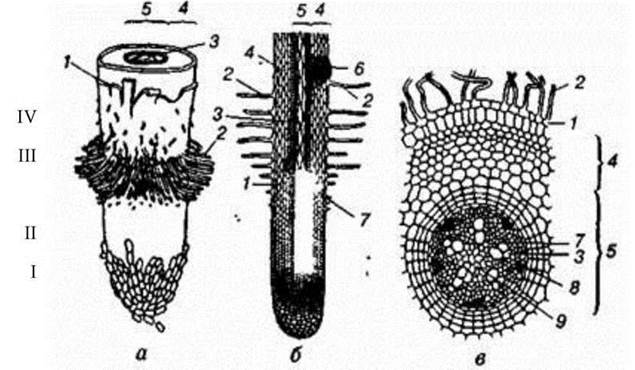
Fig. 20. Root zones and Primary Structure:
a — general view; b — longitudinal section; c — cross-section in the root Hair zone: I — growth zone with root cap; II — elongation and initial Cell Differentiation zone; III — absorption zone; IV — conduction zone; 1 — piliferous layer (epiblema, rhizodermis); 2 — root hairs; 3 — xylem; 4 — root cortex; 5 — central cylinder; 6 — initiation of lateral root growth; 7 — pericycle; 8 — phloem; 9 — pith.
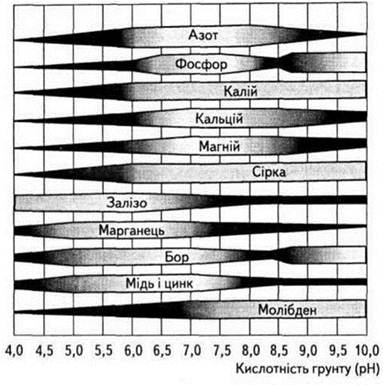
Fig. 21. Effect of pH on the availability of mineral elements to plants.
The width of the horizontal bars indicates the solubility of the compound, which correlates with its availability for plant uptake in ionic form.
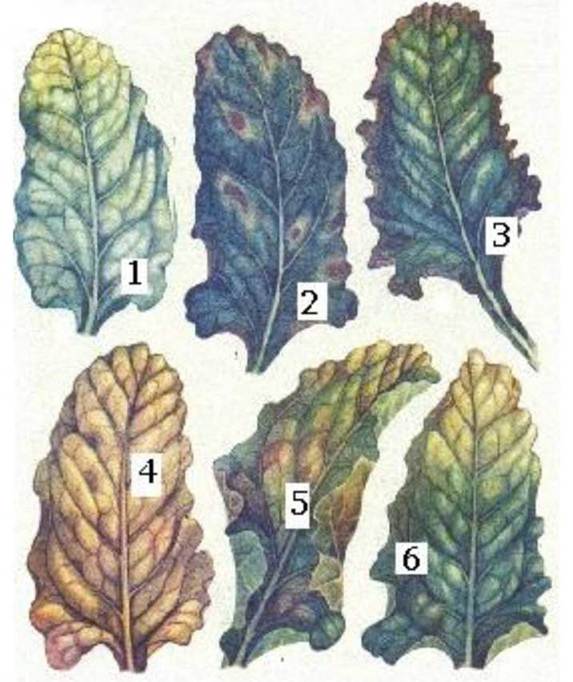
Fig. 22. Deficiency diseases in sugar beets.
Nitrogen starvation, or chlorosis (1), manifests as yellowing of the leaves. They become pale green, chlorotic, and die off rapidly. Phosphorus starvation, or leaf browning (2). Leaves turn dark green with a metallic sheen, and brown spots appear on older leaves, causing so-called interveinal necrosis. Potassium starvation (3) occurs when insufficient potash fertilizers are applied to the soil. A characteristic sign of the disease is the death of leaf tissue; the edges become wavy, thin, and delicate. After some time, dry dark-brown spots appear, which merge to form a brown border. Magnesium deficiency (4). Manganese deficiency (5). Iron deficiency (6).
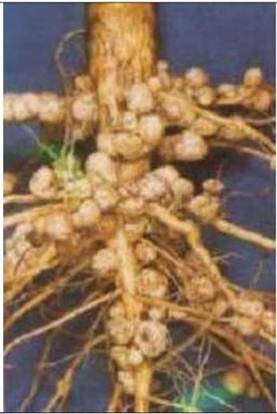
Fig. 23. Root nodules with nitrogen-fixing bacteria on a plant root.
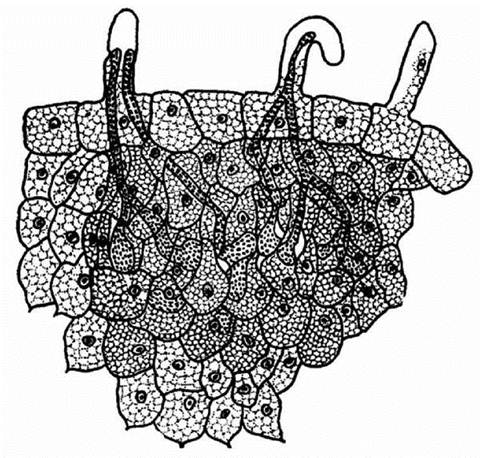
Fig. 24. Diagram of infection thread formation.
Two infection threads are visible in the straight root hair, while a single branched one is seen in the curled root hair.
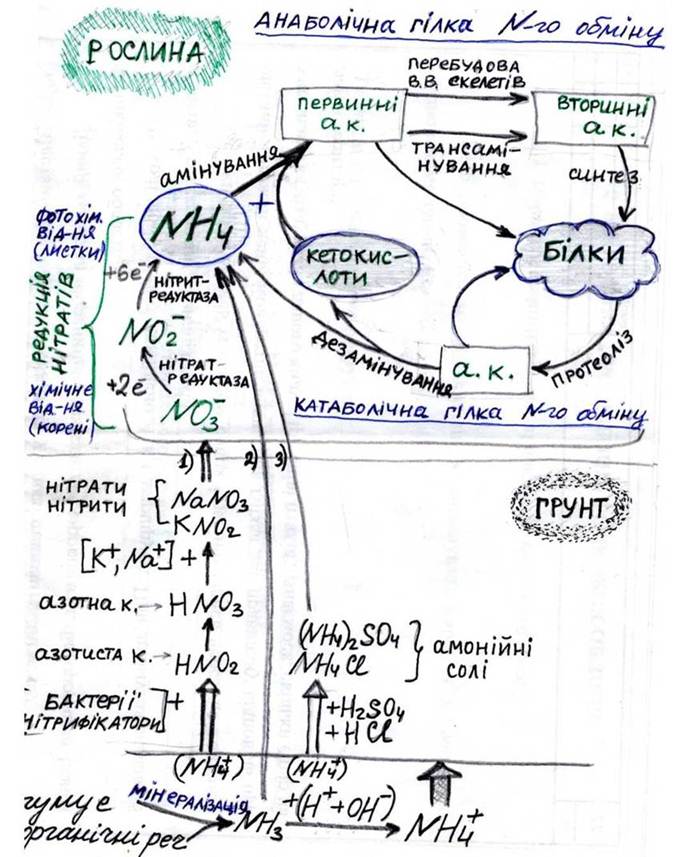
Fig. 25. Autotrophic nitrogen assimilation.
1 Rubidium is used as an element with properties similar to those of potassium.
Last update: 07/08/2026
Editorial and Educational Adaptation: This material has been compiled based on the primary/original source text. The project team performed an editorial review, corrected technical inaccuracies, structured sections, and adapted the content for an educational format.
What was processed:
- elimination of formatting defects (OCR errors, structural breaks, corrupted characters);
- editorial organization of content;
- standardization of terminology in accordance with academic sources;
- verification of factual statements against the original source text.
All mentions of the author, publication year, and origin of the primary text have been preserved in accordance with the source.