BIOLOGY Volume 2 - A Guide to General Biology - 2004
18. THE ANIMAL SKELETOMUSCULAR SYSTEM
18.4. The Muscular System
18.4.7. Slow and Fast Muscle Fibers
There are two distinct types of Skeletal Muscle fibers, each with unique physiological characteristics: slow (tonic) fibers and fast (phasic) fibers. Their Structure, localization, and General Properties are outlined in Table 18.3. Some Muscles consist exclusively of fast or slow fibers, while others contain a specific ratio of both types.
Class="center">Table 18.3. Structure, localization, and General Properties of fast and slow muscle fibers
Slow (tonic) fibers |
Fast (phasic) fibers |
|
Structure |
Numerous Cell/35.html">Mitochondria Poorly developed sarcoplasmic reticulum Red in color due to the presence of Myoglobin and cytochrome pigments Low Glycogen content Close contact between fibers and capillaries to facilitate material exchange |
Few mitochondria Well-developed sarcoplasmic reticulum White in color — myoglobin and cytochrome pigments are sparse or absent Abundant glycogen granules |
Deep layers of limb muscles |
More superficial |
|
Innervation |
Thin nerve fibers (5 μm in diameter). Each muscle fiber has multiple end-plates (known as multiterminal innervation). Conduction velocity is 2–8 m · s-1
|
Thick nerve fibers, 10–20 μm in diameter. Typically one end-plate per muscle fiber (occasionally two). Conduction velocity is 8–40 m · s-1
|
Excitability |
The membrane is not electrically excitable. Each impulse triggers the release of only a small amount of acetylcholine. Consequently, the degree of membrane depolarization depends on the frequency of incoming stimuli |
The membrane is electrically excitable |
Type of Response |
Slow, graded contraction. Slow relaxation (approximately 100 times slower than in fast fibers) |
Rapid contraction (3 times faster than in slow fibers). Fatigues fairly quickly |
Physiological Activity |
ATP source: aerobic Respiration. Many fibers continue to function via anaerobic Glycolysis when 02 is deficient, producing lactic acid and creating an oxygen debt. As respiratory substrates are oxidized, carbohydrate or lipid reserves are mobilized. Heat is dissipated from the muscle as it is generated Equilibrium is established between the demands of the working muscle and the resting muscle |
ATP source: anaerobic processes (glycolysis). Oxygen debt develops rapidly. Glycogen is intensively utilized as a respiratory substrate. Heat is absorbed by the fibers because the Circulatory system cannot dissipate it rapidly enough The muscle continues to contract for some time even when the circulatory system fails to meet the additional oxygen demand |
Function |
Provide sustained Muscle contraction, which is utilized for posture maintenance |
Provide immediate, rapid contraction when the circulatory system is still adjusting to a new level of muscular activity; therefore, they are crucial for locomotion |
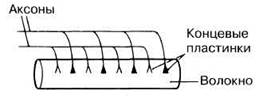

These two fiber types enable the Organism to move and maintain posture. Fast fibers allow muscles to contract at high speeds. Predators possess these fibers in Abundance, ensuring rapid reactions when capturing prey. At the same time, potential prey must also be capable of swift reactions to avoid becoming victims. In both scenarios, an animal's chances of survival depend directly on its agility.
When an animal is at rest, it maintains posture primarily through tonic muscle fibers. They exhibit slower and more sustained contractions while expending less energy than fast fibers.
In humans, all body muscles consist of both fiber types, though one usually predominates. This has clear physiological significance: tonic muscles are capable of slow, sustained contractions and are therefore more abundant in postural extensor muscles, whereas flexors, designed for rapid responses, are dominated by phasic fibers.
Fast muscle fibers are sometimes referred to as white fibers because they contain relatively little of the oxygen-binding red pigment, myoglobin. Slow fibers contain significantly higher amounts and are known as red fibers.
Last update: 06/08/2026
Editorial and Educational Adaptation: This material has been compiled based on the primary/original source text. The project team performed an editorial review, corrected technical inaccuracies, structured sections, and adapted the content for an educational format.
What was processed:
- elimination of formatting defects (OCR errors, structural breaks, corrupted characters);
- editorial organization of content;
- standardization of terminology in accordance with academic sources;
- verification of factual statements against the original source text.
All mentions of the author, publication year, and origin of the primary text have been preserved in accordance with the source.