BIOLOGY Volume 1 - A Guide to General Biology - 2004
8. HETEROTROPHIC NUTRITION
8.6. Herbivores
8.6.2. Cellulose digestion in ruminants
Ruminants, which include deer, giraffes, antelopes, cattle, sheep, and goats, possess a complex digestive tract. Their true Stomach is preceded by several chambers. The first chamber of The Stomach is the rumen (Fig. 8.25). The rumen acts as a fermenter in which food, mixed with saliva, undergoes Fermentation by mutualistic (symbiotic) microorganisms such as Bacteria, Protozoa, and Fungi. Many of these organisms produce the enzyme cellulase, which breaks down Cellulose. The presence of symbionts is absolutely essential for ruminant animals, as they are incapable of synthesizing cellulase on their own. The End products of fermentation are carboxylic acids (specifically acetic, propionic, and butyric acids), carbon dioxide, and methane. These acids are absorbed into the host's bloodstream and used as the primary source of energy for Respiration. In turn, the microorganisms meet their Energy Requirements through these fermentation reactions while benefiting from an optimal environmental Temperature for their survival.
Partially digested food then passes into the reticulum, where it is formed into compact cuds that are regurgitated and thoroughly rechewed. This process is known as "rumination" or "chewing the cud." The food is then swallowed again and, via a narrow groove, passes into the omasum and subsequently into the abomasum, which corresponds to the human stomach (Fig. 8.25). From this section onward, further Digestion proceeds through the action of digestive Enzymes common to all mammals.
Class="center">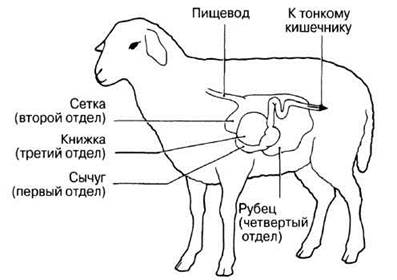
Fig. 8.25. Arrangement of the stomach chambers preceding the Small Intestine in ruminants
Last update: 06/08/2026
Editorial and Educational Adaptation: This material has been compiled based on the primary/original source text. The project team performed an editorial review, corrected technical inaccuracies, structured sections, and adapted the content for an educational format.
What was processed:
- elimination of formatting defects (OCR errors, structural breaks, corrupted characters);
- editorial organization of content;
- standardization of terminology in accordance with academic sources;
- verification of factual statements against the original source text.
All mentions of the author, publication year, and origin of the primary text have been preserved in accordance with the source.