BIOLOGY Volume 1 - A Guide to General Biology - 2004
8. HETEROTROPHIC NUTRITION
8.6. Herbivores
8.6.1. Teeth
The dentition of herbivores is closely adapted to their feeding habits and diet. The sheep serves as a classic example. This animal feeds on grass, and its dental formula is as follows:
Class="center">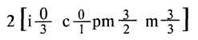
Upper incisors and canines are absent. In their place is a horny pad against which the lower chisel-shaped incisors and canines bite when the sheep shears off grass. A large gap, the diastema, lies between the front and cheek Teeth, allowing the Tongue to maneuver the food so that the grass currently being chewed remains separated from the newly cut portion.
The cheek teeth feature broad grinding surfaces; the surface area of the upper teeth is further expanded by W-shaped folds, while that of the lower teeth is increased by M-shaped folds. The ridges of the teeth are composed of hard enamel, whereas the depressions between them consist of dentine. The jaw joints are very loosely articulated, allowing for forward, backward, and lateral movements. During mastication, the lower jaw moves from side to side, causing the W-shaped ridges of the upper molars to interlock tightly with the grooves between the M-shaped ridges of the lower molars, thereby grinding the food thoroughly. The masseter Muscles, responsible for efficient grinding, are exceptionally powerful, whereas the temporalis muscles, used for shearing grass, are relatively small (Fig. 8.24). (The exact opposite pattern is observed in carnivores, where the temporalis muscles, used for killing prey and tearing flesh, are highly developed, while the masseters are weak.)

Fig. 8.24. Jaws, dentition, and associated muscles in the sheep.
Last update: 06/08/2026
Editorial and Educational Adaptation: This material has been compiled based on the primary/original source text. The project team performed an editorial review, corrected technical inaccuracies, structured sections, and adapted the content for an educational format.
What was processed:
- elimination of formatting defects (OCR errors, structural breaks, corrupted characters);
- editorial organization of content;
- standardization of terminology in accordance with academic sources;
- verification of factual statements against the original source text.
All mentions of the author, publication year, and origin of the primary text have been preserved in accordance with the source.