Pharmacognosy with the Basics of Plant Biochemistry - Kovalyov V. M. 2004
Special Part
Alkaloids
Pseudoalkaloids (Isoprenoid Alkaloids)
Pseudoalkaloids, unlike true Alkaloids, are not synthesized from Amino Acids. They are characterized by the incorporation of nitrogen into an isoprenoid-derived moiety. It is well established that alkaloids of this group are synthesized from mevalonic acid, and the Introduction of O—CH3 and N—СН3 groups into their molecules involves S-adenosylmethionine. The source of the heterocycle nitrogen in The Biosynthesis of pseudoalkaloids remains unclear.
Depending on the number of isoprenoid residues, pseudoalkaloids are classified into monoterpene, sesquiterpene, diterpene, triterpene, and steroidal alkaloids.
Monoterpene alkaloids
In terms of their structural features, monoterpene alkaloids are structurally related to Iridoids. They contain a nitrogen atom embedded within a terpenoid framework. Actinidine possesses a pyridine ring; the alkaloid was isolated from the species Actinidia polygama, Actinidiaceae. It has been found in valerian roots as one of the constituents responsible for its sedative effect. Skytanthine is a monoterpene alkaloid featuring a piperidine core and exhibits hypotensive activity. It was isolated from the species Skytanthus acutus, Apocynaceae.
Class="center">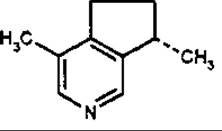
Actinidine
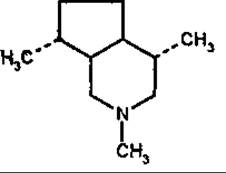
Skytanthine
Sesquiterpene alkaloids
These alkaloids have been insufficiently studied. Their current Classification is based on botanical Taxonomy rather than chemical Structure. Currently known groups include: the nupharidine group from yellow Water-lily and white water-lily (Nuphar luteum and Nymphaea alba, Nymphaeaceae); the orchid group (Dendrobium, Orchidaceae), represented by the alkaloid dendrobine; the patchouli group (Pogostemon patchouli, Lamiaceae), represented by patchoulipyridine; and the fabiana group (Fabiana imbricata, Solanaceae), for instance, fabianine, among others. Sesquiterpene alkaloids of fungal origin are also known to date.
Some of the isolated alkaloids exhibit sedative, antispasmodic, and hypotensive effects. Only the alkaloids of the yellow water-lily have found medical application.
Last update: 06/08/2026
Editorial and Educational Adaptation: This material has been compiled based on the primary/original source text. The project team performed an editorial review, corrected technical inaccuracies, structured sections, and adapted the content for an educational format.
What was processed:
- elimination of formatting defects (OCR errors, structural breaks, corrupted characters);
- editorial organization of content;
- standardization of terminology in accordance with academic sources;
- verification of factual statements against the original source text.
All mentions of the author, publication year, and origin of the primary text have been preserved in accordance with the source.