Biochemistry: The Chemical Reactions of Living Cells, Volume 2 - D. Metzler 1980
Biosynthesis: How New Molecules Are Formed
Polypretyl (Isoprenoid) Compounds
Formation of Symmetrical Terpenes, Squalene, and Phytoene
The HEAD-to-head Condensation of two C15 farnesyl pyrophosphate molecules yields C30 squalene. Similarly, two C20 geranylgeranyl pyrophosphate molecules couple to form C40 phytoene, the precursor of plant carotenoid pigments. Despite their apparent similarity, these two crucial condensation reactions differ significantly in their mechanisms.
The synthesis of squalene involves the Cleavage of both pyrophosphate groups from the precursor molecules, along with the loss of a proton from the C-1 position of one farnesyl pyrophosphate molecule. The remaining three hydrogens at the first carbon atom (C-1) are retained. Simultaneously, a single proton (pro-S) is introduced from NADPH (from the B-face).
Class="center">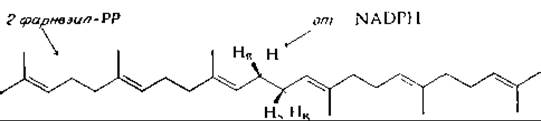
A postulated [82] reaction mechanism is described by equation (12-27).
A nucleophilic group Y-, provided by the enzyme, attacks the double bond adjacent to the pyrophosphate group of one farnesyl pyrophosphate molecule. This initiates a concerted Displacement of the pyrophosphate group from the second farnesyl pyrophosphate molecule [equation (12-27), step a]. The pro-S hydrogen closest to the centrally located double bond in the resulting Structure dissociates as a proton, likely assisted by a basic amino acid residue of the enzyme. The remaining anion then displaces the Y- group to form a cyclopropane ring [equation (12-27), step b]. The product of this reaction, presqualene pyrophosphate, has been isolated from Yeast as the free alcohol [83, 83a]. Subsequently, the cyclopropane ring opens and rearranges into a cyclobutane structure [equation (12-27), step c]. The latter is reduced by NADPH, leading to the elimination of pyrophosphate to yield the final product, squalene [equation (12-27), step d]. A partially purified enzyme catalyzing these sequential reactions has been isolated from yeast membrane fractions [84].
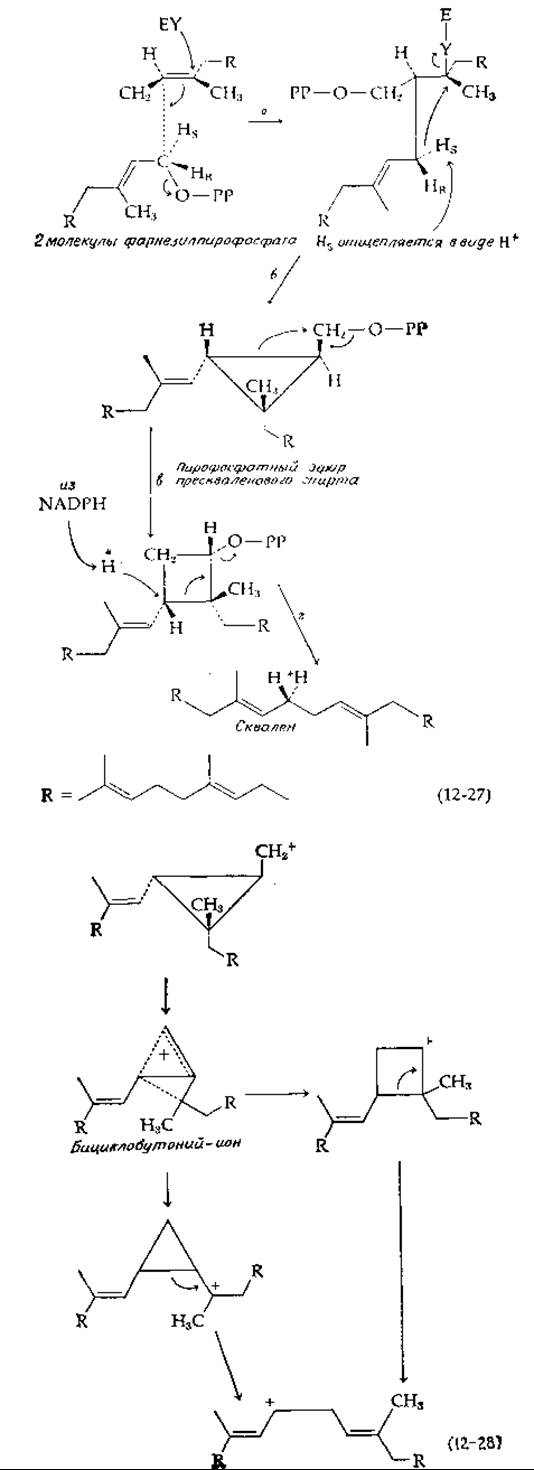
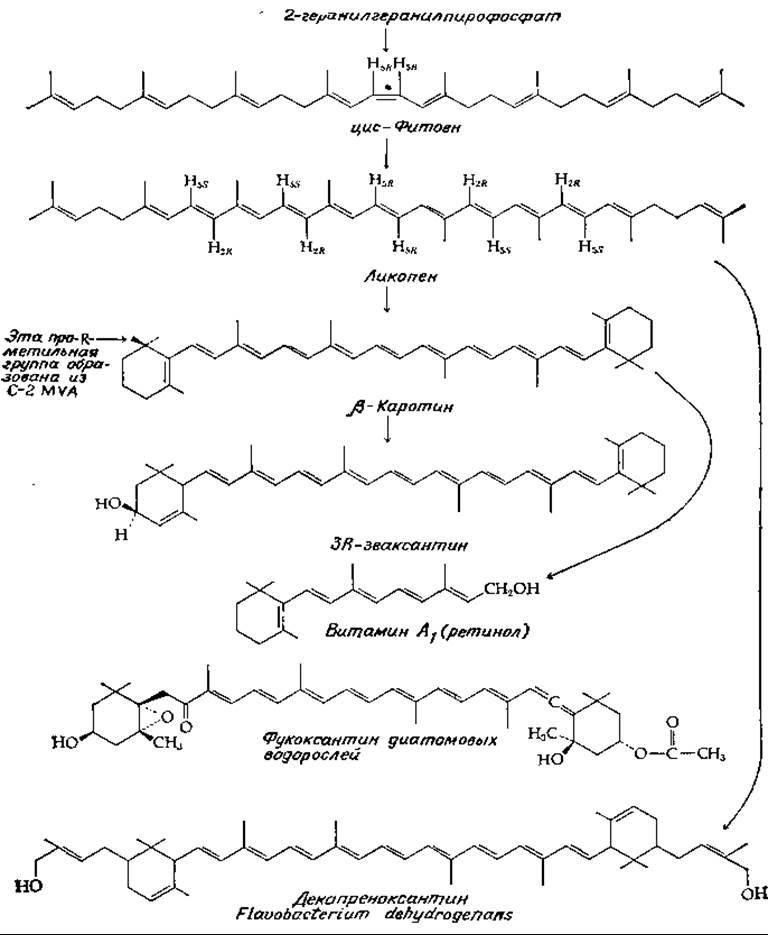
FIG. 12-14. Biosynthesis of carotenoid pigments.
According to an alternative hypothesis [85, 86], the pyrophosphate ester of presqualene alcohol loses its pyrophosphate group [equation (12-28)] to generate a carbocation, which is proposed to have a nonclassical bicyclobutonium ion structure. Two pathways for the rearrangement of this structure are illustrated in equation (12-28). Upon reduction by NADPH, the resulting carbocation-derived product is converted into squalene.
Phytoene is synthesized via a largely analogous pathway, though without the NADPH-dependent reduction of intermediates. It is known that the pro-5R hydrogen of mevalonic acid is retained at the center of cis-phytoene, as depicted in Fig. 12-14. Plants also produce a trans-isomer of phytoene, which contains one hydrogen atom from geranyl pyrophosphate at the pro-S position and another at the pro-R position flanking the central double bond [87].
Last update: 06/08/2026
Editorial and Educational Adaptation: This material has been compiled based on the primary/original source text. The project team performed an editorial review, corrected technical inaccuracies, structured sections, and adapted the content for an educational format.
What was processed:
- elimination of formatting defects (OCR errors, structural breaks, corrupted characters);
- editorial organization of content;
- standardization of terminology in accordance with academic sources;
- verification of factual statements against the original source text.
All mentions of the author, publication year, and origin of the primary text have been preserved in accordance with the source.