Biochemistry, Vol. 3 - A. Lehninger 1985
Selected Aspects of Human Biochemistry
Human Nutrition
Thiamine deficiency remains a nutritional concern
Thiamine deficiency (Fig. 26-8) leads to the neurological disorder known as beriberi (meaning “I cannot, I cannot”), which was widespread in the 19th and early 20th centuries in Eastern countries where rice is a dietary staple (Section 10.4). The disease was unknown until the early 19th century, when rice-milling machinery was introduced. For quite some time, beriberi was believed to be an infectious disease. The first suggestion that it was a nutritional disorder came from the Dutch physician C. Eijkman while working in what is now Indonesia. In 1897, he published research showing that chickens fed polished (white) rice prepared in the same manner as for human consumption developed a Nervous system disorder resembling human beriberi. Conversely, feeding chickens unpolished rice or rice husks and polishings prevented the disease. This finding prompted Japanese naval physicians to feed sailors suffering from beriberi unpolished rice, with results that exceeded all expectations. Today we know that the rice husks removed during milling contain the vast majority of the thiamine. Severe cases of beriberi are no longer as difficult to treat as they once were; however, the disease remains a significant problem in parts of Asia, Indonesia, and the Philippines, where large amounts of rice are consumed, as well as in African countries where the consumption of refined wheat flour increases year by year.
Class="center">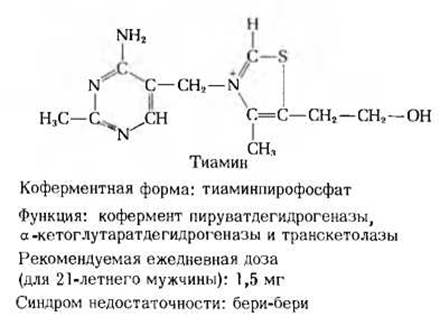
Fig. 26-8. Structure, Functions, and recommended daily allowance of thiamine (vitamin B1). See also Fig. 10-2.
Beriberi is characterized by Muscle weakness, wasting, poor coordination, peripheral neuritis, mental confusion, apathy, a decreased Heart rate, and an enlarged heart. The condition may also be accompanied by Swelling or edema of the extremities. Heart Failure is the most frequent cause of death. Beriberi is particularly severe in infants whose mothers are thiamine-deficient. In patients with beriberi, Blood Pyruvate concentrations rise sharply, confirming The Role of thiamine pyrophosphate as a coenzyme in the pyruvate dehydrogenase complex (Section 16.2). Administering thiamine to animals or children with beriberi leads to a nearly complete recovery within a few hours (Fig. 26-9).
Certain foods are particularly rich in thiamine. Excellent sources include lean meats, legumes, whole grains, and fish. Although human thiamine requirements have been known for a long time, many Americans fail to obtain adequate amounts of this vitamin in their diets. Adults are advised to consume 1.0 to 1.5 mg of thiamine daily (Fig. 26-8, Table 26-2), yet most Americans consume less than 1 mg per day. For this reason, white bread, which is very low in thiamine, is routinely fortified with the vitamin. Refined white flour, pasta, spaghetti, and soda crackers also contain very low levels of thiamine and are therefore frequently enriched with it as well.
Because chronic alcoholics derive the bulk of their calories from alcoholic beverages devoid of thiamine, they are at high risk for deficiency. This characteristic thiamine deficiency in alcoholics, known as Wernicke-Korsakoff syndrome, is accompanied by neurological impairment, psychoses, and memory loss. The cause of this irreversible and usually hospitalization-requiring condition is not alcohol itself, but rather the combination of thiamine deficiency and a potential decrease in The activity of the thiamine-dependent enzyme transketolase (Section 23.21). It has been suggested that the mental deterioration and other symptoms of Wernicke-Korsakoff syndrome could be prevented by adding thiamine to hard liquor, wine, and beer, but no such measures have been undertaken because doing so might encourage increased alcohol consumption.
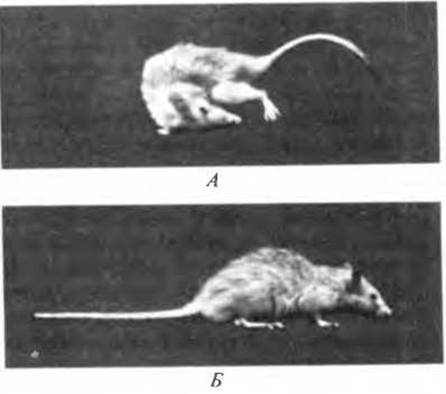
Fig. 26-9. (A) A white rat raised on a thiamine-deficient diet. Thiamine deficiency causes nerve Cell damage, resulting in polyneuritis and paralysis, and the rat loses muscular coordination. (B) Rapid recovery of the same rat just 24 h after being switched to a complete diet with a normal thiamine content.
Last update: 06/08/2026
Editorial and Educational Adaptation: This material has been compiled based on the primary/original source text. The project team performed an editorial review, corrected technical inaccuracies, structured sections, and adapted the content for an educational format.
What was processed:
- elimination of formatting defects (OCR errors, structural breaks, corrupted characters);
- editorial organization of content;
- standardization of terminology in accordance with academic sources;
- verification of factual statements against the original source text.
All mentions of the author, publication year, and origin of the primary text have been preserved in accordance with the source.