Biotechnology - Yu.O. Sazykin 2006
General Biotechnology
Main Stages of the Biotechnological Process
General Characteristics
The biotechnological manufacturing process of pharmaceutical preparations consists of a specific set of components (Fig. 9) and varies in complexity. This complexity is determined by the specific elements of a given biotechnological process, which depend on the producer—the biological object (such as a microorganism, plant, or mammal)—as well as the target end product. If the target product is biomass (for example, living Cells of lactic acid Bacteria), the production line is shorter; if it is a substrate for manufacturing highly purified injectable drugs, the scheme is more complex (and the production line is longer). When the source of the target product is a microorganism (such as in antibiotic production), aseptic conditions, appropriate equipment, and special process preparation are mandatory for cultivation.
Class="center">
Fig. 9. General scheme of a biotechnological manufacturing process
Biotechnological production based on recombinant microorganisms has its own specific features, requiring enhanced control over the Stability of the producer strain, alongside rigorous and continuous compliance with containment measures to prevent the release of this biological agent into the environment. Such measures involve The Use of specialized equipment and strict adherence to specific operating Procedures.
In modern biotechnological manufacturing, the most frequent biological agent (producer) of the target product is a microbial strain cultivated in specialized Fermentation vessels (fermenters or bioreactors) of various types (Fig. 10). The fermenter is equipped with auxiliary systems (known as "piping manifolds") designed to provide optimal conditions for the growth of the biological agent and The Biosynthesis of the target product (these conditions do not always coincide).
Fermentation vessels used in the pharmaceutical industry are predominantly manufactured from corrosion-resistant steel. Their capacity ranges from ten to one hundred cubic meters. Typically, a fermenter installed in a fermentation facility appears as a vertical cylinder with a hemispherical bottom, equipped with a valve for draining the culture broth. The top of the fermenter features a hemispherical HEAD with a series of inlets for the nutrient medium, inoculum, and compressed air (aeration), as well as an exhaust port for air escaping through the culture medium. Located along the vertical axis in the center of the fermenter is an agitator (single- or multi-stage) that ensures mass transfer. Baffles are installed within the interior of the fermenter to prevent The formation of stagnant (dead) zones during agitation. This ensures a uniform concentration of soluble substances and colloidal particles throughout the medium.
Maintaining a constant optimal Temperature within the fermenter is typically achieved using an external jacket through which temperature-controlled Water is circulated. A critical prerequisite for successful fermentation is maintaining process sterility. In practice, achieving sterility is challenging due to the large volume of the fermenter, the complex COMPOSITION OF THE medium, the high volume of air sparged through the system, and the intricate design of the equipment. The entry and proliferation of contaminating Microorganisms in the culture medium during fermentation alter its composition, pH, and rheological properties, ultimately leading to a reduced yield of the target product. Furthermore, undesirable by-products resulting from the METABOLISM of foreign microflora may appear as impurities or trace contaminants.
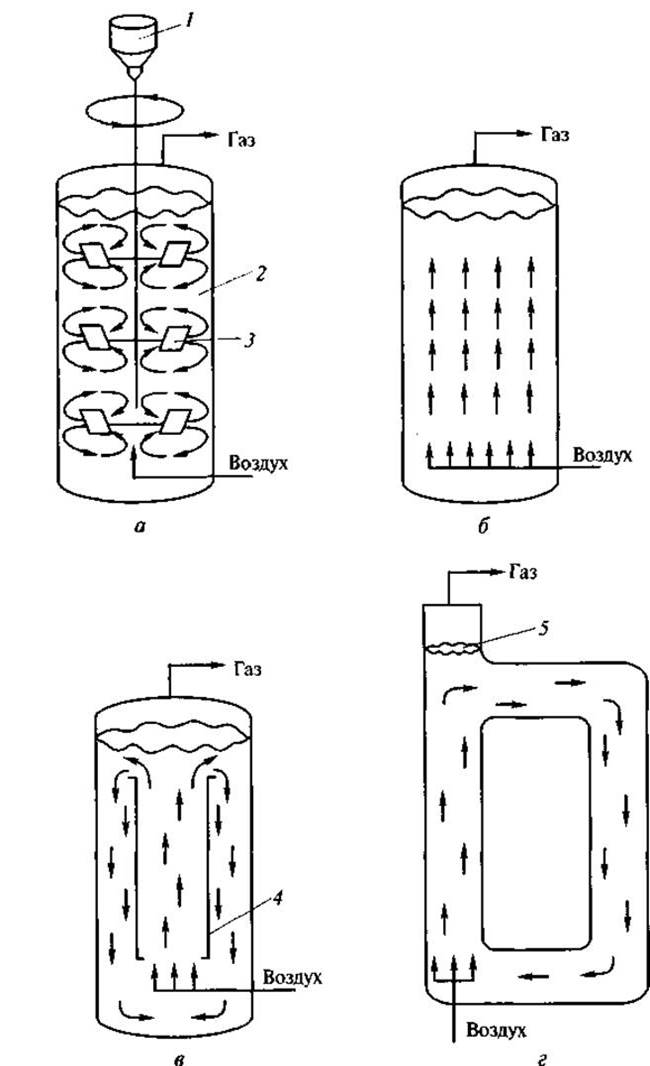
Fig. 10. Types of fermenters (bioreactors):
a — mechanically agitated bioreactor; b — bubble Column bioreactor; c — internal-loop airlift bioreactor; d — external-loop airlift bioreactor; 1 — motor; 2 — culture medium; 3 — impeller blades; 4 — draft tube; 5 — gas-liquid separator; arrows indicate the direction of culture broth flow
Non-sterile fermentations are completely unacceptable. Therefore, prior to each fermentation cycle, sterilization is performed on:
✵ all internal surfaces of the fermenter and its associated piping;
✵ the air introduced into the fermenter (so-called "process air" supplied under pressure);
✵ the nutrient media.
Typically, a fermenter is filled with nutrient medium to only two-thirds of its total capacity. The inoculum introduced into the fermenter must consist of a pure culture of the biological agent, free from contamination by other microorganisms.
It should be noted that if sterility is breached at any single point, the entire system becomes contaminated, and the Contents of the fermenter are—in production jargon—"dumped to the floor," meaning discarded. The complexity of the situation is compounded by the fact that detecting microbial contamination in water, air, and nutrient medium components requires anywhere from 24 hours to several days for the concentration of foreign cells per milliliter to reach the threshold of thousands—the level visible in a microbiological smear.
Last update: 06/08/2026
Editorial and Educational Adaptation: This material has been compiled based on the primary/original source text. The project team performed an editorial review, corrected technical inaccuracies, structured sections, and adapted the content for an educational format.
What was processed:
- elimination of formatting defects (OCR errors, structural breaks, corrupted characters);
- editorial organization of content;
- standardization of terminology in accordance with academic sources;
- verification of factual statements against the original source text.
All mentions of the author, publication year, and origin of the primary text have been preserved in accordance with the source.