BIOCHEMISTRY - Key Regulators and Biological Fluids of the Human Body - 2016
1. ENZYMES
1.1. The Role of Enzymes in Human Vital Processes
Enzymes (from the Latin fermentum meaning leaven and Greek enzume meaning in Yeast) are specialized Proteins that act as catalysts for Chemical Reactions, altering their rates.
Enzymes are involved in all metabolic reactions within The Human Body, enabling these reactions to proceed at extraordinary speeds. Furthermore, enzymes lower the energy barrier of reactions, allowing them to take place at normal human body Temperature (Fig. 1).
Class="center">Fig. 1. Reduction of activation energy in Enzymatic Catalysis: 1 - uncatalyzed reaction; 2 - non-enzymatic catalysis; 3 - enzymatic catalysis

Thus, mediated by enzymes, complex Chemical Reactions of breakdown and synthesis of various compounds within the body occur in a very short time and at a relatively low temperature.
Typically, Enzymes accelerate chemical reactions, though in some instances they may slow them down.
All biochemical processes in the body are regulated by an enzymatic system. Enzymes provide control over the rates of chemical reactions, establishing a balance that is optimal for the Organism.
Enzymes are strictly specific, meaning each possesses The ability to catalyze only a single reaction or a few closely related ones. For example, the enzyme amylase catalyzes the Hydrolysis of Starch, Pepsin hydrolyzes large proteins, and esterase breaks down esters.
The catalytic activity of enzymes is remarkably high: they increase The rate of chemical reactions by a factor of 105 to 1011. For instance, Protein Synthesis in a Cell takes 1 - 2 minutes, whereas in a laboratory it requires from 6 months to 1 year.
At room temperature, a single molecule of the enzyme urease cleaves 30,000 urea molecules in 1 second:
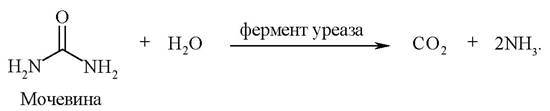
Without a catalyst, this process would take 3 million years.
In Tissues, enzymes are present in extremely small amounts, although certain proteins (such as Myosin) also exhibit enzymatic activity and are found in high concentrations within tissues.
Enzymes play a crucial role in the food industry (in sectors such as winemaking, brewing, alcohol production, baking, cheesemaking, and The production of fermented dairy products). The majority of
enzymes utilized in these industries are metabolic products of microorganisms (Yeasts, Bacteria).
Last update: 06/08/2026
Editorial and Educational Adaptation: This material has been compiled based on the primary/original source text. The project team performed an editorial review, corrected technical inaccuracies, structured sections, and adapted the content for an educational format.
What was processed:
- elimination of formatting defects (OCR errors, structural breaks, corrupted characters);
- editorial organization of content;
- standardization of terminology in accordance with academic sources;
- verification of factual statements against the original source text.
All mentions of the author, publication year, and origin of the primary text have been preserved in accordance with the source.