Vertebrate Zoology: A Textbook - T. A. Dauda 2014
Multicellular Animals
Infraclass Eutheria, or Placental Mammals
The infraclass Placentalia brings together the majority of modern mammalian species, which have spread widely across the globe and adapted to living in A wide variety of habitats (Fig. 62).
The primary distinguishing feature of these animals is the presence of a Placenta, through which nutrients and oxygen are supplied to the embryo from the mother's body. It is formed at the site where numerous projections (villi) on the outer surface of the embryo embed into the uterine mucosa, bringing a dense capillary network of the villi into close proximity with the uterine Blood Vessels. Due to this arrangement, nutrients and oxygen from the maternal Organism pass osmotically into the Vessels of the umbilical cord and further into the embryo's body, while Metabolic waste products are removed via the same pathway. The placenta allows the embryo to remain within the female's Uterus for a relatively long period. Consequently, placentals give birth to offspring capable of suckling milk from the mother's nipples independently. Other key diagnostic traits of placental mammals include the pronounced Development of the Forebrain, whose hemispheres are connected by the corpus callosum, as well as the presence of a consistently unpaired Vagina. Most species exhibit two generations of Teeth—milk and permanent (excluding true molars).
Class="center">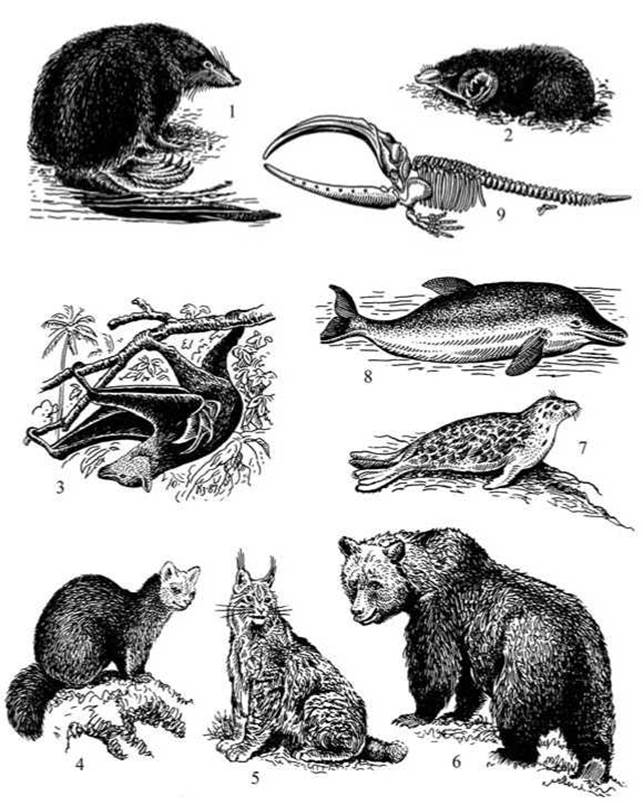
Fig. 62 Representatives of various orders of placental mammals:
1 — Russian desman (Order Insectivora); 2 — mole (order
Insectivora); 3 — flying fox (Order Chiroptera); 4 — sable (Order Carnivora); 5 — lynx (order Carnivora); 6 — brown bear (order Carnivora); 7 — seal (Order Pinnipedia); 8 — dolphin (Order Cetacea); 9 — Skeleton of a bowhead whale.
Last update: 13/08/2026
Editorial and Educational Adaptation: This material has been compiled based on the primary/original source text. The project team performed an editorial review, corrected technical inaccuracies, structured sections, and adapted the content for an educational format.
What was processed:
- elimination of formatting defects (OCR errors, structural breaks, corrupted characters);
- editorial organization of content;
- standardization of terminology in accordance with academic sources;
- verification of factual statements against the original source text.
All mentions of the author, publication year, and origin of the primary text have been preserved in accordance with the source.