GENERAL MICROBIOLOGY - T.P. Pyrog - 2004
7. PROKARYOTE SYSTEMATICS
7.1. APPROACHES (PRINCIPLES) TO BACTERIAL CLASSIFICATION
At various times, bacterial Classification has been based on practical data, principles, and patterns determined by the level of knowledge and the state of science at a given historical moment. Bacterial systematics developed rather spontaneously, as individual researchers introduced elements of subjectivity into the classification of specific groups of microorganisms. This depended on their scientific erudition, the Research Methods employed, and the specific Nature of the studied group. Consequently, classifications of different microbial groups are not equivalent in terms of the information they encompass.
Various research methods have been used to classify Bacteria, but the primary approach remains morpho-physiological, which relies on a combination of morphological, cultural, and physiological-biochemical characteristics.
Morphological and cultural characteristics include Cell Morphology (cocci, rods, spirilla, cell arrangement—single or in aggregates), the presence of endospores, capsules, and flagella along with their arrangement, Gram-staining properties, as well as growth patterns on Agar media (colony characteristics) and in liquid nutrient media.
PHYSIOLOGICAL AND BIOCHEMICAL (or simply physiological) characteristics include oxygen requirements, energy-generation mechanisms, growth dependence on Temperature and pH, assimilation of various nutrients (sources of carbon, nitrogen, etc.), The Need for specific growth factors, and antibiotic susceptibility.
The combination of morphological, cultural, and physiological-biochemical characteristics served as the basis for grouping bacteria into various taxonomic ranks, thus acting as the primary criterion for bacterial classification. This approach gave rise to the phenotypic Classification of Bacteria, which remains widely accepted today. A phenotype is the totality of all traits and properties of an Organism that develop during its individual ontogeny. The phenotype is determined by the interaction between the genotype and the environmental conditions in which the organism develops. The genotype, in turn, is the set of hereditary traits of an organism.
It should be noted that attempts have been made to build bacterial systematics upon alternative principles and approaches. These included serological methods, based on the principle that antigenic compounds bind more readily to Antibodies of closely related organisms than to those of more distantly related ones. However, serology has not found widespread application in bacterial classification due to the significant complexity of serological reactions, despite their high Specificity. Systematists have also attempted to utilize the Chemical Composition and metabolic features of bacteria to determine their taxonomic position. To this end, traits such as protein concentration, lipid and fatty acid composition, Cell wall Structure, outer membrane features (in Gram-negative bacteria), and cellular cytochrome profiles were analyzed. Nevertheless, these chemotaxonomic approaches have only resolved certain isolated issues in bacterial systematics.
In fact, there is no fundamental difference between classical systematics, based on the morpho-physiological approach, and chemical systematics. In both cases, bacterial classification relies on phenotypic traits.
Another approach to bacterial classification is the mathematical approach, specifically numerical analysis, or numerical Taxonomy. The principles of numerical taxonomy were developed in the 18th century by the French botanist M. Adanson and have been applied in microbiology since the 20th century following the advent of electronic computers. According to Adanson's principles, all scorable characters hold equal weight in characterizing an organism. For quantitative assessment, as many characters as possible are taken into account and selected in such a way that they are alternative—meaning their variants can be denoted by plus and minus signs. The evaluation of various combinations of traits is performed using a computer, where each character of a given strain is compared with the corresponding character of all other strains. It is generally accepted that the similarity between two studied strains is directly proportional to The ratio of matching characters to the total number of characters evaluated.
For pairwise comparison, the similarity coefficient (value S) is used:
Class="center">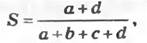
where a and d are the sums of characters in which strains A and B match (both strains are positive for a, and both are negative for d); b is the sum of characters for which strain A is positive and strain B is negative; and c is the sum of characters for which strain A is negative and strain B is positive.
The calculations yield values ranging from 0 to 1. S = 1 indicates 100% similarity (i.e., identity), whereas S < 0.02 signifies absolute dissimilarity. These resulting values can be represented in the form of a dendrogram. It is worth noting that the numerical approach is also based on the analysis of phenotypic traits and, much like the chemotaxonomic approach, can be regarded as a subset of phenotypic systematics.
A fundamentally new approach that departs from phenotypic systematics is bacterial genosystematics. The degree of genetic divergence among organisms can be assessed using indicators such as the GC content in DNA, DNA–DNA and DNA–RNA Hybridization, Amino acid sequences of Proteins, and nucleotide sequences of genes. It is precisely through the Application of Molecular biological and genetic research methods that bacterial systematics has experienced a surge in phylogenetic classification, which accurately reflects the evolutionary relationships among organisms.
Last update: 13/08/2026
Editorial and Educational Adaptation: This material has been compiled based on the primary/original source text. The project team performed an editorial review, corrected technical inaccuracies, structured sections, and adapted the content for an educational format.
What was processed:
- elimination of formatting defects (OCR errors, structural breaks, corrupted characters);
- editorial organization of content;
- standardization of terminology in accordance with academic sources;
- verification of factual statements against the original source text.
All mentions of the author, publication year, and origin of the primary text have been preserved in accordance with the source.