GENERAL MICROBIOLOGY - T.P. Pirog - 2004
14. TYPES OF FERMENTATION
14.8. FERMENTABLE AND NON-FERMENTABLE NATURAL COMPOUNDS
Most natural compounds composed of carbon, hydrogen, oxygen, and/or nitrogen can undergo Fermentation under anaerobic conditions. Fermentable substrates include Polysaccharides, hexoses, pentoses, polyhydric alcohols, organic acids, Amino Acids (except aromatic ones), Purines, and Pyrimidines.
Saturated aliphatic and aromatic Hydrocarbons, Steroids, and carotenoids cannot be fermented. One of the reasons is that these compounds can only be oxidized in the presence of molecular oxygen via the action of oxygenases. Apparently, it is this stability that allows hydrocarbons to persist in petroleum deposits for such long periods.
A generalized pathway of the major fermentation types is shown in Fig. 14.9.
Class="center">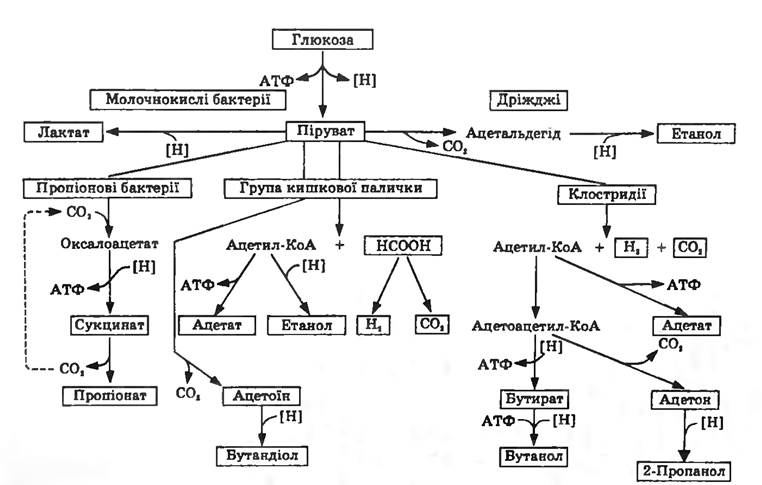
Fig. 14.9. GENERALIZED SCHEME OF the main Types of fermentation
Last update: 12/08/2026
Editorial and Educational Adaptation: This material has been compiled based on the primary/original source text. The project team performed an editorial review, corrected technical inaccuracies, structured sections, and adapted the content for an educational format.
What was processed:
- elimination of formatting defects (OCR errors, structural breaks, corrupted characters);
- editorial organization of content;
- standardization of terminology in accordance with academic sources;
- verification of factual statements against the original source text.
All mentions of the author, publication year, and origin of the primary text have been preserved in accordance with the source.