MEDICAL BIOLOGY, HUMAN ANATOMY, PHYSIOLOGY AND PATHOLOGY - Ya.I. Fedoniuk 2010
ANATOMY, PHYSIOLOGY, PATHOLOGY
CHAPTER 4. BLOOD SYSTEM
BLOOD TRANSFUSION
2. METHODS FOR DETERMINING BLOOD GROUPS
2.1. METHOD FOR DETERMINING Blood Groups IN THE ABO SYSTEM USING STANDARD SERA
Apply standard sera of the first, second, and third blood groups of two different batches onto a clean white tile. Using the corner of a clean Glass slide (changing it each time), mix an amount of blood approximately ten times smaller than each drop of serum (Fig. 4.6). Observe for the appearance of agglutination for 5 minutes, and then determine the blood group. If no agglutination occurs in sera of groups I, II, and III, the blood belongs to group I; if agglutination occurs in sera of groups I and III, it is group II; if agglutination occurs in sera of groups I and II and is absent in serum of group III, it is group III; if agglutination occurs in sera of groups I, II, and III, this indicates that the blood under study belongs to group IV. In this case, to rule out any error, perform an additional test using standard serum of group IV.
Class="center">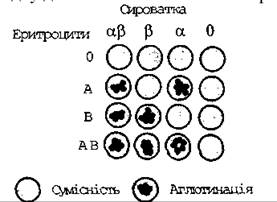
Fig. 4.6. Agglutination reaction and interaction of specific sera
Last update: 08/08/2026
Editorial and Educational Adaptation: This material has been compiled based on the primary/original source text. The project team performed an editorial review, corrected technical inaccuracies, structured sections, and adapted the content for an educational format.
What was processed:
- elimination of formatting defects (OCR errors, structural breaks, corrupted characters);
- editorial organization of content;
- standardization of terminology in accordance with academic sources;
- verification of factual statements against the original source text.
All mentions of the author, publication year, and origin of the primary text have been preserved in accordance with the source.