CYPRINID FISHES (CYPRINIDAE) OF UKRAINIAN WATER BODIES - V. V. Zamorov - 2015
GENUS DACE - LEUCISCUS CUVIER
Key for identification of species of the genus Leuciscus
1 (2). Lateral line with mostly 45-51 scales. Mouth inferior, common dace - L. leuciscus
2 (1). Lateral line with mostly 41-45 scales. Mouth semi-inferior, nearly
terminal. Seversky Donets basin, Danilevsky's dace - L. danilewskii
Common dace - Leuciscus leuciscus (Linnaeus)
Morphological features: D III 7; A III (7)8(9); P I 15-17; VI 8; l. l. (42-44) 45-51 (52-55); Squ1 7-8 (9), Squ2 4; vert. 40-44 (45); sp. br. 6-8 (9); d. f. 2.5-5.2 (92.4%), 2.5-5.3 (3.1%), 3.5- 5.3 (1.5%), 3.5-5.2 (1.5%), 1.5-5.1 (1.5%). Maximum length 15 cm, body weight up to 100 g, life span up to 8 years (Fig. 52).
Class="center">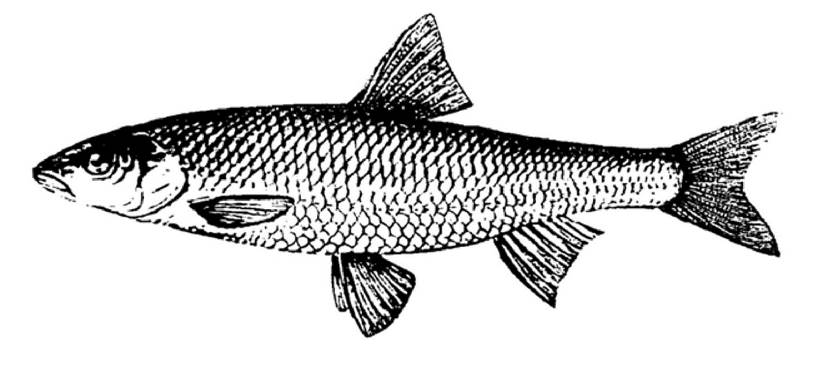
Fig. 52. Common dace Leuciscus leuciscus
Body elongated, not compressed laterally, almost cylindrical, its maximum depth averaging 20.0-25.5% (16.5-28.9%) of standard body length. Dorsal profile slightly convex, sometimes nearly straight, with a distinct hump immediately behind the HEAD that separates the back from the head. Ventral profile smoothly convex. Back and belly rounded. Caudal peduncle relatively short, accounting for 20.5-24.6% of body length. Dorsal fin short at the base, truncate at the apex, with a slight notch or none. Anal fin also short at the base, with a slight notch in young fish and usually a well-defined notch in older individuals. Paired fins rounded, caudal fin deeply notched, with both lobes generally of equal length and pointed at the tips. Dorsal fin origin located slightly posterior to the vertical line dropped from the midpoint of the pelvic fin base; anal fin base situated approximately midway between the pelvic and caudal fin bases. Pectoral fins relatively long, averaging more than half the pectroventral distance. An elongated scale is present on the outer side of the pelvic fin base. Scales of medium size, covering the body quite densely. Lateral line always complete, curving smoothly toward the belly, passing from the trunk onto the head anteriorly, where it forms several rows. Head small, its length usually exceeding the maximum body depth and very rarely slightly smaller. Snout of moderate size, rather blunt and massive, its length generally less than the interorbital width, constituting 20.0-37.0% of head length, and (accordingly) averaging 6.6-7.5% (5.0-8.8%) of body length. Mouth small, inferior, obliquely cut. Its tip lies on the level of the longitudinal diameter (midpoint) of the eye. The posterior margin of the upper jaw does not reach the vertical of the anterior margin of the eye, whereas the Articulation of the lower jaw with the cranium is positioned noticeably posterior to it. Eyes relatively small, their diameter generally less than the interorbital width. Interorbital space slightly convex, comprising 26.3-42.0% of head length. Gill rakers short, rather thick, sparsely set. Pharyngeal Teeth relatively robust, arranged in two rows, usually untoothed (smooth), without wrinkles, with a small hook at the tip. Abdominal cavity light-colored.
In Ukraine, it occurs in the basins of virtually all rivers, in large lakes and reservoirs, and has occasionally been recorded in estuaries. Absent from Crimea.
Danilevsky's dace - Leuciscus danilewskii (Kessler)
Morphological features: D III 7; A III 8(9); P I (14) 15-17; V I (7) 8; l. l. 41-45 (46, 47); Squ1 7(8), Squ2 3-4; vert. (38) 40-43 (44); sp. br. (5) 6-8 (9); d. f. 2.5-5.2 (98.4%), 2.4-5.2 (1.6%). Maximum length 20 cm, body weight up to 80 g, life span about 7 years (Fig. 53).
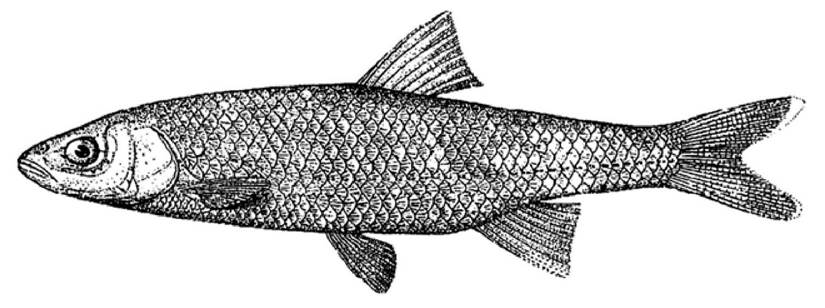
Fig. 53. Danilevsky's dace Leuciscus danilewskii
In Danilevsky's dace, the anal fin is straightly truncate at the apex and typically lacks a notch; the snout length is on average greater than the interorbital width (as a percentage of head length), averaging 7.6-7.8% of total body length. Its mouth is semi-inferior, nearly terminal, with its tip located below the longitudinal diameter of the eye, and the articulation of the lower jaw with the cranium situated on the vertical of the anterior margin of the eye or falling short of it.
In Ukraine, it is found exclusively in the main channel and certain tributaries, predominantly left-bank ones, of the Seversky Donets River.
Last update: 07/08/2026
Editorial and Educational Adaptation: This material has been compiled based on the primary/original source text. The project team performed an editorial review, corrected technical inaccuracies, structured sections, and adapted the content for an educational format.
What was processed:
- elimination of formatting defects (OCR errors, structural breaks, corrupted characters);
- editorial organization of content;
- standardization of terminology in accordance with academic sources;
- verification of factual statements against the original source text.
All mentions of the author, publication year, and origin of the primary text have been preserved in accordance with the source.