FISHES OF THE FAMILY CYPRINIDAE IN THE WATER BODIES OF UKRAINE - V. V. Zamorov - 2015
GENUS SCARDINIUS - SCARDINIUS BONAPARTE
Pharyngeal Teeth in two rows, typically 3.5-5.3, serrated, and hooked at the tips. Mouth terminal, directed upwards. Gill rakers short, usually 9-12. Belly behind the pelvic fins sharply compressed, with a distinct scaled keel.
D III (7)8-9 (10), А III 9-12 (13). Abdominal cavity pale.
The genus includes a single species distributed in Europe.
Common rudd - Scardinius erythrophthalmus (Linnaeus)
Morphological features: D III (7) 8 (9-10); А III 10-12 (13); Р І 13-15 (16); VII (7) 8; І. І. (37) 38-42 (43); Squ1 7-8 (9-10); Squ2 3-4; vert. 38-40 (41); sp. br. (8)9-12(13); d. f 3.5-5.3 (91,30%), 3.5-5.2 (2,17%), 3.5-4.3 (0,73%), 2.5-5.3 and 2.5-5.2 (2,90% each). Maximum length 3035 cm, body weight up to 1000 g, lifespan up to 10 years (Fig. 46).
Body moderately elongated, laterally compressed, and rather deep. Its maximum depth fits 2.6-3.6 (average 2.9-3.3) times into the body length. Dorsal profile moderately convex, with a well-defined hump behind the HEAD. Ventral profile convex, sometimes almost completely straight in the middle section (between P and А).
Class="center">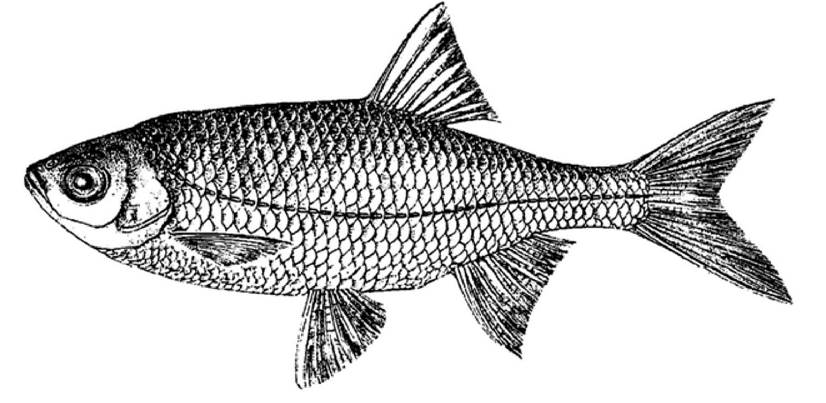
Fig. 46. Common rudd Scardinius erythrophthalmus
The belly, noticeably compressed laterally (like the back anterior to the dorsal fin), features a scaled keel posterior to the pelvic fins. Caudal peduncle short, averaging 16.6-20.1% of the body length. Dorsal fin truncated straight or slightly emarginate. Anal fin usually slightly emarginate. Paired fins rounded, pectoral fins sometimes slightly pointed at the tips. Caudal fin with a well-defined deep notch, both lobes pointed at the tips, with the lower lobe typically longer than the upper. The dorsal fin is located slightly posterior to the midpoint of the body and originates behind the vertical line of the posterior margin of the pelvic fin base; the anal fin is situated noticeably behind the vertical line of the posterior margin of the dorsal fin base. Pectoral fins are relatively long, exceeding half the pectroventral distance.
At the Base of the pelvic scales on the outer side, there is an elongated scale. Scales are medium-sized, firmly embedded in the Skin, and densely cover the body. Lateral line complete, curving in a gentle arc toward the belly. Head small, its length on average nearly 1/3 less than the maximum body depth. Snout relatively short, rather blunt. Mouth small, terminal, directed upwards. Its upper apex is located at the level of the longitudinal diameter of the eye or slightly lower.
Eyes of moderate size, their diameter usually one and a half times less than the postorbital distance. Forehead wide, indistinctly convex, its width half the height of the head at the nape. Gill rakers relatively short, sparsely spaced. Pharyngeal teeth fairly robust, laterally compressed in the upper part, arranged in two rows, serrated, and hooked at the tips. Abdominal cavity pale (yellowish).
In Ukraine, it occurs in the basins of virtually all rivers, in lakes and reservoirs, and is occasionally noted in brackish estuaries. It is absent in the mountain sections of the western regions.
Last update: 07/08/2026
Editorial and Educational Adaptation: This material has been compiled based on the primary/original source text. The project team performed an editorial review, corrected technical inaccuracies, structured sections, and adapted the content for an educational format.
What was processed:
- elimination of formatting defects (OCR errors, structural breaks, corrupted characters);
- editorial organization of content;
- standardization of terminology in accordance with academic sources;
- verification of factual statements against the original source text.
All mentions of the author, publication year, and origin of the primary text have been preserved in accordance with the source.