Plant Physiology - Musiyenko M.M. 2001
Physiology of Plant Reproduction
Methods of Plant Reproduction
Plant reproduction is the physiological process of generating offspring to ensure the continuity and heritage of specific plant species, as well as their dispersal across various ecological niches.
Traditionally, three main forms of reproduction are distinguished: asexual, sexual, and vegetative (Fig. 190). Asexual reproduction occurs without gamete formation, involving
Class="center">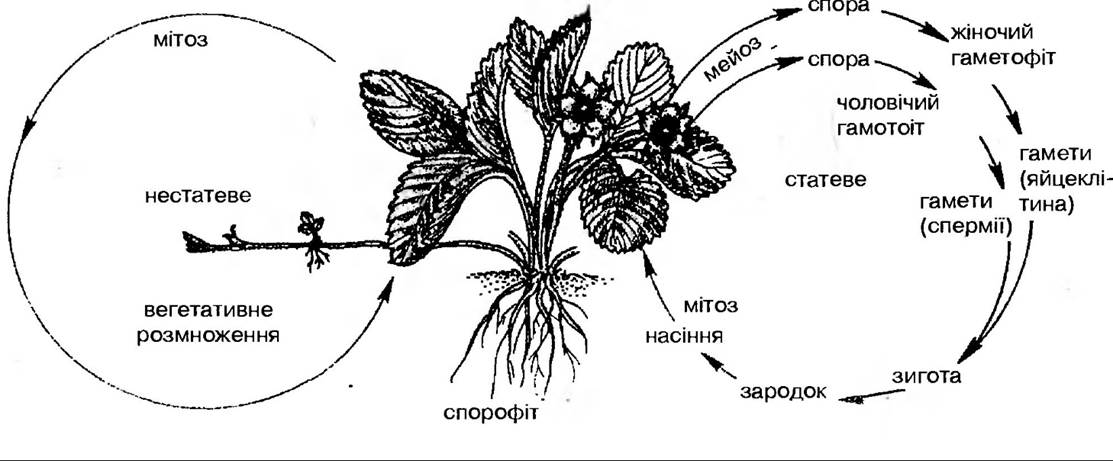
Fig. 190. Asexual and Sexual reproduction in strawberries
only a single Organism. The new organism develops from spores produced on the sporophyte. This method yields genetically identical offspring, with random Mutations being the sole source of genetic Variability. Asexual reproduction is characteristic of spore-bearing plants, featuring a well-defined Morphology/12.html">ALTERNATION OF GENERATIONS: an asexual, diploid generation (the sporophyte) and a sexual, haploid generation (the gametophyte). One of the unusual forms of asexual reproduction is budding in the succulent plant Bryophyllum. Miniature plantlets with their own ROOT systems develop along the margins of its leaves. At a certain stage, they detach and exist as independent plants (Fig. 191).
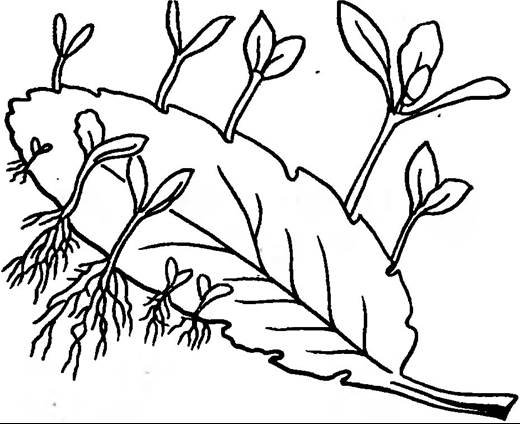
Fig. 191. Formation of daughter plantlets on a Bryophyllum leaf
In sexual reproduction, a new organism arises from the fusion of two sex Cells, or Gametes. Meiosis is a crucial stage in the life cycles of plants of this type. Gametes are of two types: male and female. Species that have separate male and female individuals are termed dioecious. Among flowering plants, there are monoecious and dioecious species. In monoecious plants, male and female flowers are borne on the same individual (e.g., cucumbers, hazel), whereas in dioecious plants, some individuals bear only male flowers while others bear only female flowers.
Vegetative Reproduction is a form of asexual reproduction in which a substantial, typically differentiated part detaches from the parent plant and develops into an independent organism.
From an Anatomical and morphological perspective, reproduction processes in most plant groups have been studied in considerable detail, whereas their physiological basis is far from fully understood. The transition of flowering plants from vegetative development and growth to the generative phase is a complex, multi-stage process.
Last update: 07/08/2026
Editorial and Educational Adaptation: This material has been compiled based on the primary/original source text. The project team performed an editorial review, corrected technical inaccuracies, structured sections, and adapted the content for an educational format.
What was processed:
- elimination of formatting defects (OCR errors, structural breaks, corrupted characters);
- editorial organization of content;
- standardization of terminology in accordance with academic sources;
- verification of factual statements against the original source text.
All mentions of the author, publication year, and origin of the primary text have been preserved in accordance with the source.