BIOLOGY Volume 3 - A Guide to General Biology - 2004
24. VARIATION AND GENETICS
24.7. Gene Interaction
24.7.4. Gene Complexes
It is extremely rare for a single Gene locus to contain a pair of alleles that completely controls a single phenotypic trait. Most traits are determined by the interaction of multiple genes forming a gene complex. For example, a trait may be controlled by two or more interacting genes located at different loci. Thus, the inheritance of comb shape in roosters is controlled by genes located at two loci on different Chromosomes; the interaction of these genes produces four distinct phenotypes known as pea, rose, walnut, and single combs (Fig. 24.26). The Development of pea and rose combs is determined by the presence of a dominant allele (P or R, respectively) in the absence of the other dominant allele. A walnut comb results from a modified form of incomplete dominance when at least one allele for both the pea and rose comb is present (i.e., with the PR genotype). A single comb develops only in individuals homozygous for both recessive genes (i.e., pprr). These phenotypes and genotypes are presented in Table 24.6.
Class="center">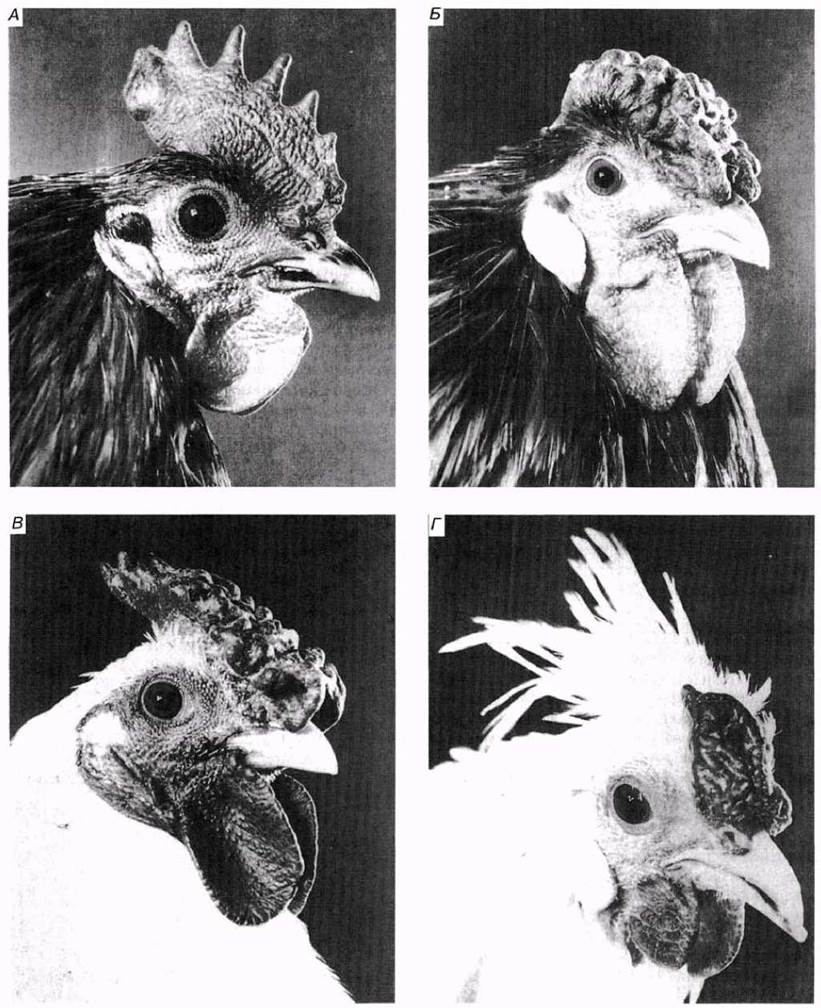
Fig. 24.26. Variation in comb shape in chickens. A. Single comb. B. Pea comb. C. Rose comb. D. Walnut comb.
Table 24.6. Phenotypes and possible genotypes of chickens with various comb shapes
Phenotype |
Possible genotypes |
Pea |
РРrr, Ррrr |
Rose |
RRpp, Rrpp |
Walnut |
PPRR, PpRR, PPRr, PpRr |
Single |
pprr |
The F2 genotypes and phenotypic ratios resulting from a cross between a purebred pea-comb hen and a purebred rose-comb rooster are shown in Fig. 24.27.
24.14. In chickens, the allele for white plumage (W) is dominant to the allele for black plumage (w). Allele P produces a pea comb, and allele R produces a rose comb. When both of these alleles are present simultaneously, a walnut comb is formed, while their homozygous recessive alleles result in a single comb. When a black rooster with a rose comb was crossed with a white hen with a walnut comb, the offspring exhibited the following phenotypes:
3 white with walnut comb,
3 black with walnut comb,
3 white with rose comb,
3 black with rose comb,
1 white with pea comb,
1 black with pea comb,
1 white with single comb, and
1 black with single comb.
Determine the genotypes of the parents. Provide a detailed explanation of how these phenotypes could have been produced.
Last update: 06/08/2026
Editorial and Educational Adaptation: This material has been compiled based on the primary/original source text. The project team performed an editorial review, corrected technical inaccuracies, structured sections, and adapted the content for an educational format.
What was processed:
- elimination of formatting defects (OCR errors, structural breaks, corrupted characters);
- editorial organization of content;
- standardization of terminology in accordance with academic sources;
- verification of factual statements against the original source text.
All mentions of the author, publication year, and origin of the primary text have been preserved in accordance with the source.