BIOLOGY Volume 2 - A Guide to General Biology - 2004
15. HEALTH AND DISEASE
15.5. Cardiovascular Diseases
15.5.3. Treatment of Cardiovascular Diseases
Pacemakers
In cases of cardiac rhythm disturbances (arrhythmias), the electrical activity of the myocardium can be managed using pacemakers, which essentially act as artificial natural pacemakers. These devices consist of two main units: an electronic pulse generator with a power source, and one or two leads running from it to The Heart, terminating in electrodes.
A pacemaker may be temporary or permanent. When long-term Regulation of Heart activity is required, the device is implanted under the patient's Skin. There are two most common operating modes for the device. In the first case, the pacemaker detects abnormalities in the endogenous heart rhythm and, when necessary, stimulates depolarization and, consequently, myocardial contraction; In the second case, contraction impulses are delivered at a fixed rate, regardless of the heart's own activity.
The electronic unit of the pacemaker is housed in a small metal case weighing between 30 and 130 g (Fig. 15.16). The power source is a lithium battery with a lifespan of up to 15 years. The device is implanted into the chest wall under local anesthesia.
Class="center">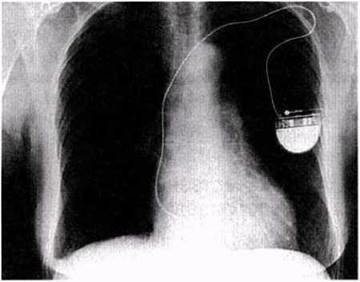
Fig. 15.16. X-ray showing an implanted pacemaker.
Heart Transplantation
When heart disease is so severe that all conventional treatments fail to yield the desired results, heart transplantation may be considered. The first such operation was performed in 1967 in South Africa. Initially, recipient survival rates were low, but advances in immunosuppressive drugs have extended post-transplant life expectancy to over five years today. The Procedure itself is relatively straightforward; the patient is supported by a heart-lung machine during surgery. The most challenging aspect is postoperative patient care, and not all clinics possess the necessary equipment for this. Although heart transplants are now performed quite frequently, finding a compatible donor remains a major challenge. For many years, attempts have been made to design an artificial heart, but these have not yet been successful. It has been proposed to use genetically modified pigs as a source of donor Organs; however, this poses a risk of cross-species disease transmission, which is a serious concern, especially in light of the controversy surrounding the transmission of "mad cow disease" (bovine spongiform encephalopathy) to humans via beef. Meanwhile, the current shortage of donor organs raises numerous ethical issues: for instance, which patients should be given priority for the operation? When it comes to heart transplantation, should non-smokers be given preference? Who should pay for such expensive Treatment?
Last update: 06/08/2026
Editorial and Educational Adaptation: This material has been compiled based on the primary/original source text. The project team performed an editorial review, corrected technical inaccuracies, structured sections, and adapted the content for an educational format.
What was processed:
- elimination of formatting defects (OCR errors, structural breaks, corrupted characters);
- editorial organization of content;
- standardization of terminology in accordance with academic sources;
- verification of factual statements against the original source text.
All mentions of the author, publication year, and origin of the primary text have been preserved in accordance with the source.