Protein Chemistry. Structure, Properties, Research Methods - Shendryk A.N. 2022
Methods for Experimental Study of Protein Structure
Methods for Determining Protein Molecular Weight
Determination of Molecular Weight by Sedimentation - Ultracentrifuge Design
The boundary between centrifugation and ultracentrifugation is rather arbitrary. Nowadays, it lies around 50,000 rpm (250 - 300 thousand g). Modern ultracentrifuges feature rotor speeds exceeding 100,000 rpm and generate extremely powerful gravitational fields.
The ultracentrifuge rotor is the core and highly precision-engineered component of its entire assembly. It must be meticulously centered and balanced. If, for instance, the static imbalance of the rotor is merely 1 mg, at accelerations of 400,000 g this imbalance will reach 400 g, causing severe vibration. For this reason, all ultracentrifuges employ a flexible shaft (wire), which allows the rotor to "find" the center of mass during rotation and spin around an axis passing through that center of mass. The rotor contains three holes: one for positioning the sample Cell, the second for placing a balancing weight, and the third is an index hole used to determine the distance from the center of rotation (see Fig. 4.1).
Class="center">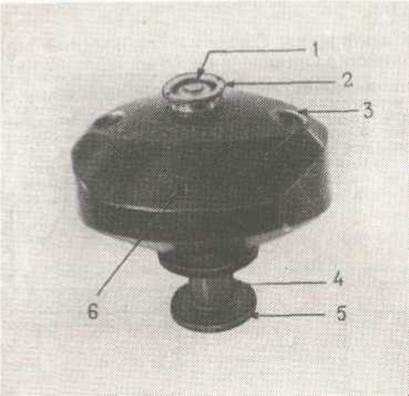
Fig. 4.1 Beckman analytical centrifuge rotor.
1 - coupling; 2 - supporting ring; 3 - cell hole with cuvette (the balancing hole is positioned symmetrically); 4 - thermistor sensor; 5 - rotor base; 6 - index hole.
The ultracentrifuge cell is a hollow metal cylinder containing an aluminum or plastic insert secured on both sides by quartz or sapphire windows.
The insert has the shape of an isosceles trapezoid, with sides parallel to the radii of the rotor's circle of rotation (see Fig.):
The volume of the solution placed in The Cell ranges from 0.1 to 1 ml. The cell design is detailed in Fig. 4.2.
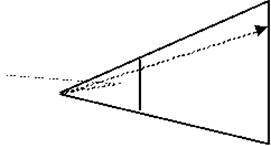
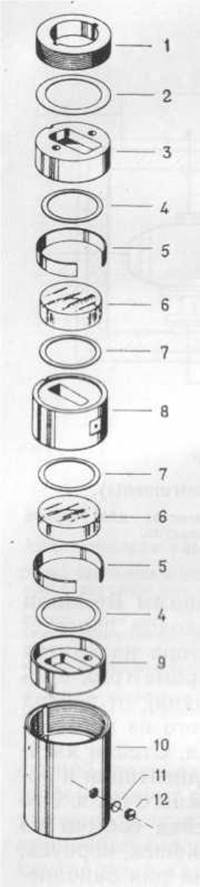
Fig. 4.2 Beckman analytical centrifuge cell assembly.
1. Screw-on ring
2. Ring gasket
3. Upper window holder
4. Sealing gasket
5. Window sleeve
6. Window (sapphire or quartz Glass)
7. Core gasket
8. Aluminum core with a trapezoidal cavity for the solution
9. Lower window holder
10. Cell body
11. Body screw gasket
12. Body screw
The ultracentrifuge rotor is housed in an armored, refrigerated vacuum chamber and suspended from a wire connected to the motor drive shaft. A thermistor Temperature sensor is mounted in the rotor tip. Upper and lower lenses are installed within the rotor chamber. The lower lens acts as a collimator, allowing parallel rays to enter the cell. The upper lens focuses the transmitted light onto a film. Thus, the distribution of suspended particles in colloidal solutions within the cell along the axis of rotor rotation can be monitored using an optical system. The schematic diagram of a Beckman analytical centrifuge is shown in Fig. 4.3.
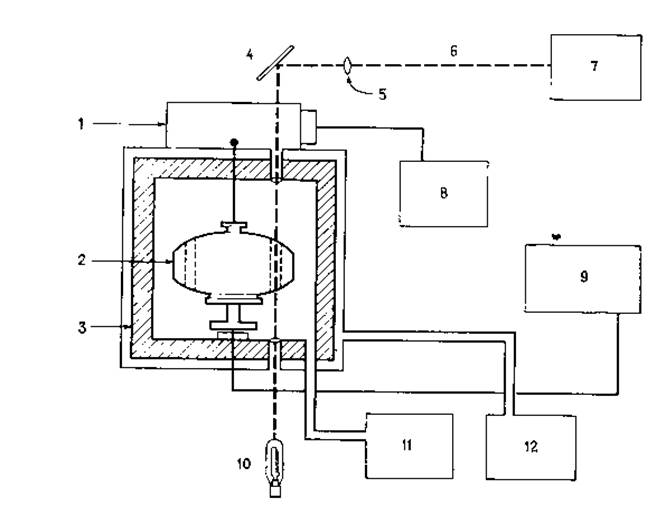
Fig. 4.3 Diagram of a Beckman analytical ultracentrifuge
1 - motor; 2 - rotor; 3 - armored chamber; 4 - mirror; 5 - chamber lens; 6 - light beam path; 7 - photographic film holder; 8 - rotation speed control panel; 9 - temperature control; 10 - light source; 11 - vacuum pump; 12 - cooling circuit.
Three variations of the sedimentation method are used for the experimental Determination of protein molecular weight:
> Sedimentation Velocity Method;
> Sedimentation Equilibrium method;
> approach to sedimentation equilibrium method.
Last update: 06/08/2026
Editorial and Educational Adaptation: This material has been compiled based on the primary/original source text. The project team performed an editorial review, corrected technical inaccuracies, structured sections, and adapted the content for an educational format.
What was processed:
- elimination of formatting defects (OCR errors, structural breaks, corrupted characters);
- editorial organization of content;
- standardization of terminology in accordance with academic sources;
- verification of factual statements against the original source text.
All mentions of the author, publication year, and origin of the primary text have been preserved in accordance with the source.