Protein Chemistry. Structure, Properties, Research Methods - Shendryk A.N. 2022
Protein Structure
Behavior of Proteins in Solutions
Protein solubility and factors determining it - Dependence of protein solubility on the ionic strength of the solution
As early as Fig. 2.7 shows, neutral salts have a noticeable effect on Protein solubility. At low concentrations, they generally increase solubility. In dilute electrolyte solutions, this effect is independent of The Nature of the salt. The only significant factors are the magnitudes and concentrations (activities) of the charges of the ions formed from the salt. Salts containing divalent ions are more effective at increasing solubility than salts with monovalent ions, such as NaCl, NH4Cl, and KCl.
The increase in protein solubility in the presence of salts is caused by a shift in the degree of dissociation of ionizable R-groups. As salt concentration increases, protein solubility passes through a maximum. The phenomenon of decreased protein solubility at high neutral salt concentrations is known as salting-out. The physicochemical mechanisms of salting-out are not yet fully understood.
Both effects—the increase in solubility and salting-out—are widely used to fractionate protein mixtures. This Separation is successful because the dependence of solubility on solution Ionic strength varies among different Proteins. Typically, this relationship is represented by an asymmetric curve with a maximum. As an example, Fig. 2.8 shows the curve of carboxyhemoglobin solubility ($L$, mg/mL) as a function of solution ionic strength in the presence of K2SO4. Measurements were performed at the isoelectric point. The ionic strength of the solution ($x$), by definition, is given by the expression:
Class="center">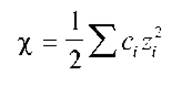
where $c_i$ and $z_i$ are the concentration and charge of each respective ion in the mixture.

Fig. 2.8 Dependence of the logarithm of carboxyhemoglobin solubility at the isoelectric point on the ionic strength of the solution in the presence of K2SO4
Last update: 06/08/2026
Editorial and Educational Adaptation: This material has been compiled based on the primary/original source text. The project team performed an editorial review, corrected technical inaccuracies, structured sections, and adapted the content for an educational format.
What was processed:
- elimination of formatting defects (OCR errors, structural breaks, corrupted characters);
- editorial organization of content;
- standardization of terminology in accordance with academic sources;
- verification of factual statements against the original source text.
All mentions of the author, publication year, and origin of the primary text have been preserved in accordance with the source.