Biochemistry: The Chemical Reactions of Living Cells, Volume 2 - D. Metzler 1980
Coenzymes: Specialized Natural Reagents
Coenzyme Forms of Vitamin B12
Three Reactions of Non-Enzymatic Cleavage of Vitamin B12 Coenzyme Forms
The 5'-deoxyadenosyl coenzyme readily decomposes under METABOLISM/18.html">The Influence of various agents. Irradiation under anaerobic conditions yields mainly vitamin B12 and cyclic 5',8-deoxyadenosine (whereas exposure to air produces a variety of different compounds). The latter appears to be formed via an intermediate radical:
Class="center">
Acid Hydrolysis of deoxyadenosylcobalamin (1 N HCl, 100°C, 90 min) affords hydroxycobalamin, adenine, and an unsaturated sugar:

The initiation step of the reaction is believed to be the protonation of the ribose ring oxygen. A similar Cleavage by an alkaline cyanide solution can be viewed as a nucleophilic substitution of the deoxyadenosyl anion by cyanide. The final reaction product is dicyanocobalamin, in which the loosely bound nucleotide containing dimethylbenzimidazole is displaced by a second cyanide ion. Methyl- and other alkylcobalamins are stable toward alkaline cyanide solutions.
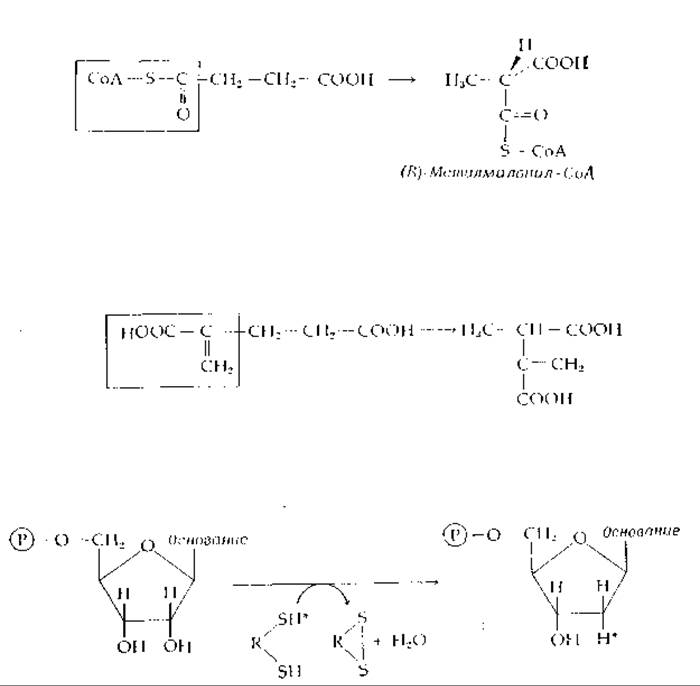
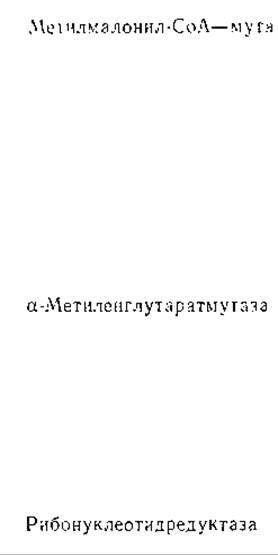
Table 8-6 Coenzyme B12-dependent reactions, including type 10 hydrogen transfer reactions

Last update: 06/08/2026
Editorial and Educational Adaptation: This material has been compiled based on the primary/original source text. The project team performed an editorial review, corrected technical inaccuracies, structured sections, and adapted the content for an educational format.
What was processed:
- elimination of formatting defects (OCR errors, structural breaks, corrupted characters);
- editorial organization of content;
- standardization of terminology in accordance with academic sources;
- verification of factual statements against the original source text.
All mentions of the author, publication year, and origin of the primary text have been preserved in accordance with the source.