Biochemistry, Vol. 2 - A. Lehninger 1985
Bioenergetics and Metabolism
Biosynthesis of Carbohydrates in Animal Tissues
The second bypass in gluconeogenesis is the conversion of fructose-1,6-diphosphate to fructose-6-phosphate
The second reaction of Glycolysis (the downward pathway), which cannot be used for Gluconeogenesis (the upward pathway), is the phosphorylation of fructose-6-phosphate catalyzed by Phosphofructokinase
Class="center">
In intact Cells, this reaction is irreversible. Therefore, gluconeogenesis employs A bypass pathway (Fig. 20-2) involving the enzyme fructose bisphosphatase, which catalyzes the virtually irreversible Hydrolysis of fructose-1,6-bisphosphate with the removal of the phosphate group at position 1, yielding fructose-6-phosphate
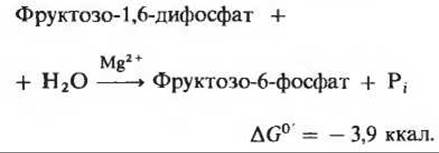
Fructose bisphosphatase has a Molecular Weight of 150,000 and requires Mg2+ ions for catalytic activity. This is also a regulatory enzyme; it is strongly inhibited by the negative modulator AMP, whereas ATP serves as its positive modulator.
Last update: 06/08/2026
Editorial and Educational Adaptation: This material has been compiled based on the primary/original source text. The project team performed an editorial review, corrected technical inaccuracies, structured sections, and adapted the content for an educational format.
What was processed:
- elimination of formatting defects (OCR errors, structural breaks, corrupted characters);
- editorial organization of content;
- standardization of terminology in accordance with academic sources;
- verification of factual statements against the original source text.
All mentions of the author, publication year, and origin of the primary text have been preserved in accordance with the source.