Principles of Biochemistry Volume 2 - A. Lehninger 1985
Bioenergetics and Metabolism
Metabolism: An Overview
NADPH transfers energy in the form of reducing power
There is another pathway for energy transfer from catabolic reactions to energy-requiring biosynthetic processes. In this case, transfer is mediated by hydrogen atoms or electrons. During The conversion of CO2 into glucose in Photosynthesis, and in the synthesis of Fatty acids from acetate in the animal Liver, reducing power in the form of hydrogen atoms is required to reduce double bonds. To function as sufficiently powerful reducing agents, these hydrogen atoms must possess a substantial store of Free energy. Such energy-rich hydrogen atoms are generated from cellular fuels through the action of dehydrogenases. Dehydrogenases strip hydrogen atoms from cellular fuel molecules and transfer them to specialized Coenzymes, notably the oxidized form of nicotinamide adenine dinucleotide phosphate (NADP+) (Fig. 13-13). The reduced form of this coenzyme (NADPH) then transfers energy-rich electrons from catabolic to biosynthetic reactions (Fig. 13-14), much in the same way that ATP transfers high-energy phosphate groups.
Class="center">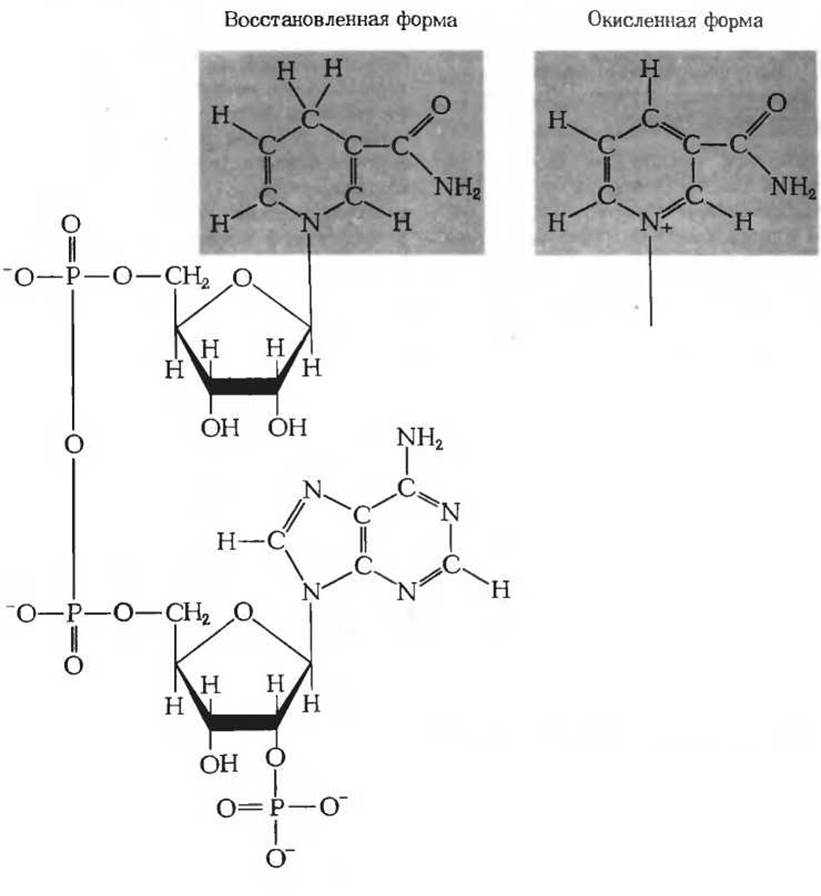
Fig. 13-13. Nicotinamide adenine dinucleotide phosphate in its reduced form (NADPH).
The red Background highlights the nicotinamide ring, which carries the energy-rich hydrogen atom and electrons. The nicotinamide portion of the molecule on the right is shown in its oxidized form.
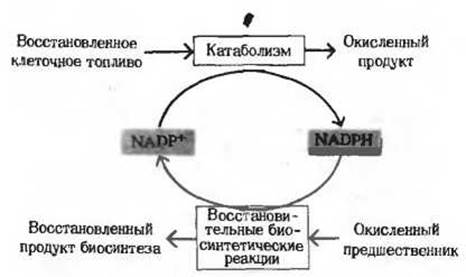
Fig. 13-14. The NADP+ ⇄ NADPH cycle, through which reducing power is transferred from catabolic to anabolic reactions.
Last update: 06/08/2026
Editorial and Educational Adaptation: This material has been compiled based on the primary/original source text. The project team performed an editorial review, corrected technical inaccuracies, structured sections, and adapted the content for an educational format.
What was processed:
- elimination of formatting defects (OCR errors, structural breaks, corrupted characters);
- editorial organization of content;
- standardization of terminology in accordance with academic sources;
- verification of factual statements against the original source text.
All mentions of the author, publication year, and origin of the primary text have been preserved in accordance with the source.