Practical Protein Chemistry - A. Darbre 1989
Enzymatic fragmentation of the polypeptide chain
Introduction
J. M. WILKINSON (Department of Biochemistry, Royal College of Surgeons of England, 35/43, Lincoln's Inn Fields, London WC2A 3PN, U.K.)
The presence of Proteolytic Enzymes with diverse specificities allows for various approaches to cleaving polypeptide chains in order to obtain specific sets of Peptides. This problem has been the subject of numerous reviews; some discuss the General Properties of these enzymes [7, 62, 76], while others focus primarily on the techniques of enzymatic polypeptide chain Cleavage [42, 50, 56, 99]. Information regarding recently discovered Enzymes can be found in [51].
With the advent of automated sequencing Methods, the primary objective for researchers has become the generation of a few large and readily accessible fragments of the protein under investigation. Consequently, interest in using highly specific enzymes has grown recently. Several such enzymes have found widespread application, and others will likely be used in the near future. However, currently known enzymes are often insufficient for obtaining sets of peptides with overlapping sequences, leaving the search for new highly specific enzymes an open question.
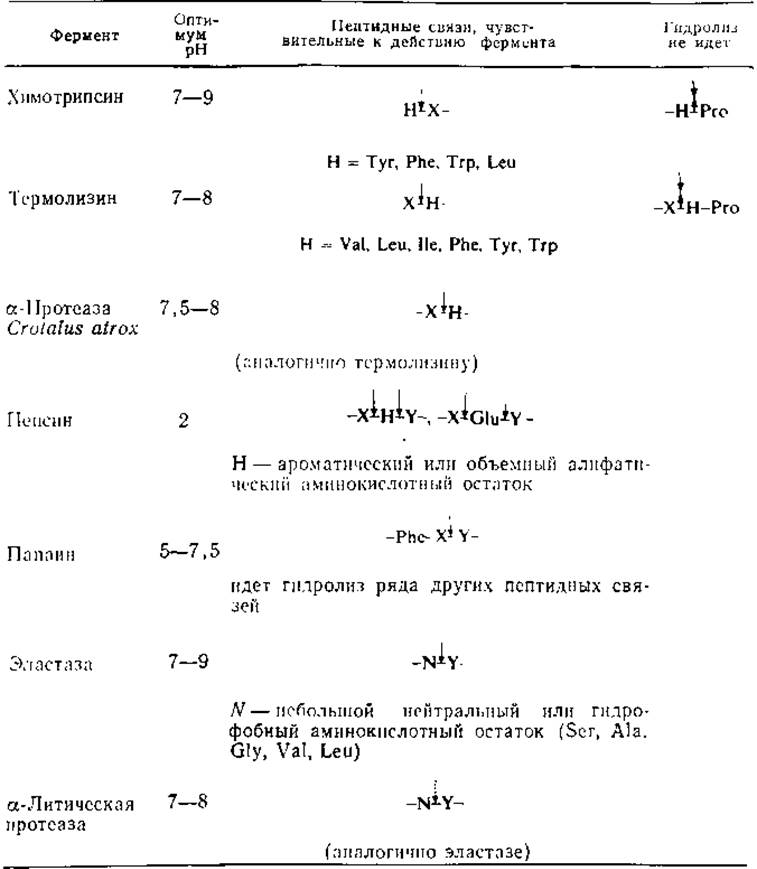
This chapter provides information on most of the enzymes that have gained widespread Structure/182.html">Practical Application, including potential sources for commercial preparations. Data on enzyme specificities are presented in Tables 3.1 and 3.2. Practical Applications OF Enzymatic Hydrolysis methods are also discussed in light of recent publications; methods for preliminary protein Treatment and chemical modification to restrict or broaden Enzyme Specificity are likewise outlined.
Typically, Protein Chemistry utilizes proteolytic enzymes available as highly purified commercial preparations. Preparing enzyme formulations in-house is generally unjustified. Unfortunately, many enzymes of undeniable interest are still not commercially available.
Class="center">Table 3.1. Proteases with high specificity
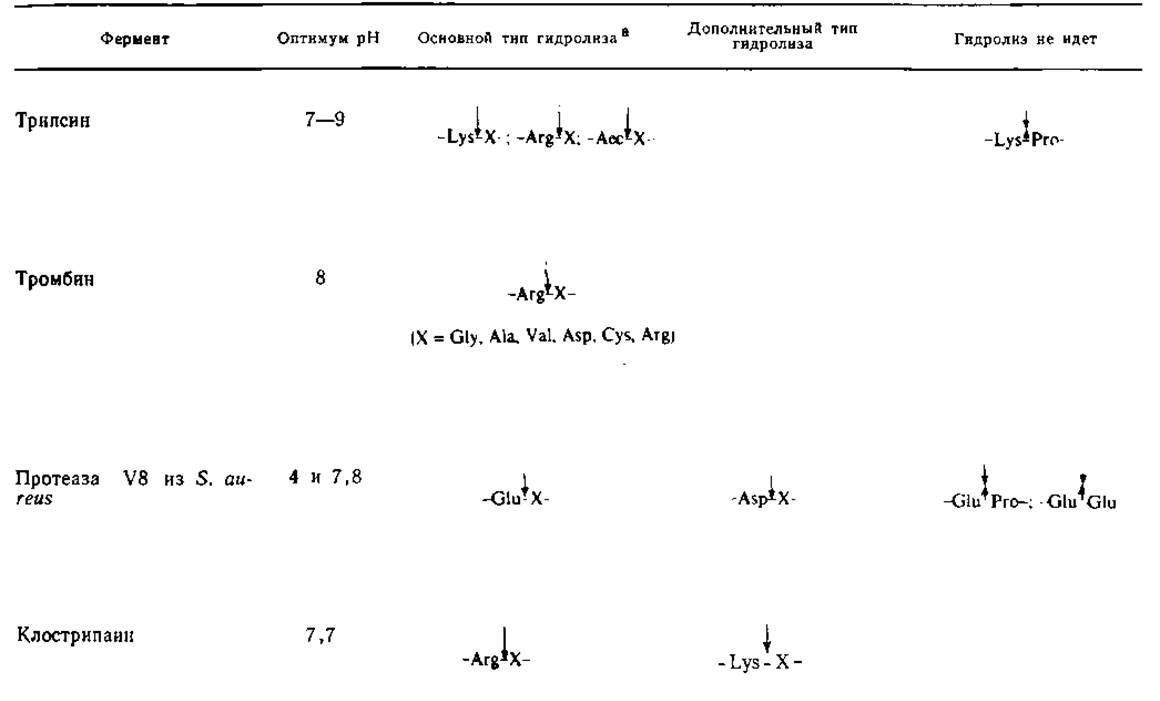


Table 3.2. Proteases with broader specificity
Nevertheless, Procedures for using some of these enzymes are given below in anticipation that the corresponding preparations will become available in the near future.
Last update: 06/08/2026
Editorial and Educational Adaptation: This material has been compiled based on the primary/original source text. The project team performed an editorial review, corrected technical inaccuracies, structured sections, and adapted the content for an educational format.
What was processed:
- elimination of formatting defects (OCR errors, structural breaks, corrupted characters);
- editorial organization of content;
- standardization of terminology in accordance with academic sources;
- verification of factual statements against the original source text.
All mentions of the author, publication year, and origin of the primary text have been preserved in accordance with the source.