Practical Protein Chemistry - A. Darbre 1989
Affinity Chromatography of Proteins
Methods for Preparation of Affinity Sorbent
Concept of Affinity Sorbent
Selecting a sorbent with appropriate characteristics is of paramount importance in Affinity Chromatography. An affinity sorbent consists of three components: a matrix, a spacer arm, and a Ligand. The presence of all three elements is not always strictly necessary; for instance, in the affinity chromatography of Lectins, the matrix itself (Sephadex G-75, containing glucose and mannose residues) serves as an effective ligand recognized by the lectin. Another example is the purification of anti-dextran Antibodies on Sephadex G-100. Typically, however, the ligand is immobilized on the matrix via an intermediate spacer arm, the function of which is to project the ligand away from the sorbent surface, thereby eliminating steric hindrance during its interaction with the target protein.
Class="center">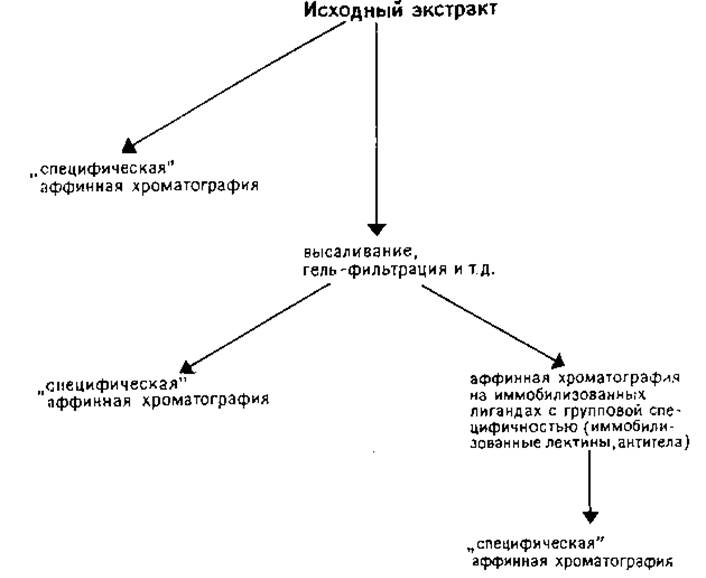
FIG. 5.2. Various Applications of Affinity Chromatography within a general Protein Purification scheme.
Last update: 06/08/2026
Editorial and Educational Adaptation: This material has been compiled based on the primary/original source text. The project team performed an editorial review, corrected technical inaccuracies, structured sections, and adapted the content for an educational format.
What was processed:
- elimination of formatting defects (OCR errors, structural breaks, corrupted characters);
- editorial organization of content;
- standardization of terminology in accordance with academic sources;
- verification of factual statements against the original source text.
All mentions of the author, publication year, and origin of the primary text have been preserved in accordance with the source.