Vertebrate Zoology - V. M. Konstantinov 2011
Chordates
Terrestrial, or Four-Legged, Vertebrates — Vertebrates with Embryonic Membranes
Class Birds — Subclass Fan-tailed Birds, or True Birds — Superorder Neognathae, or Typical Birds — Order Cuculiformes
Cuculiformes are predominantly arboreal and shrub-dwelling birds (Fig. 148), distributed mainly in the tropical zone. Of the 160 cuckoo species (with body weights ranging from 20 g to 1 kg), about half are monogamous. They build their own nests and incubate their eggs independently. Other species have lost the instinct for nest-building and egg incubation to varying degrees, becoming brood parasites.
The black-billed cuckoo (Coccyzus erythrophthalmus) only occasionally raises its own chicks, more often laying its eggs in the nests of other birds.
The spot-backed cuckoo (Coccyzus melanocoryphus) lays its eggs in the nests of only a few bird species. Notably, its chicks do not eject the host's nestlings.
The common cuckoo (Cuculus canorus) never builds its own nest and instead deposits its eggs in the nests of A wide variety of birds (over 125 species, though most frequently about 20). Cuckoo eggs are relatively small, weighing only about 3% of the adult bird's mass (for comparison, thrush eggs account for 7–8% of the adult's mass). A striking feature of cuckoos is the remarkable diversity of their egg coloration. It has been observed that the coloration of the eggs usually closely mimics that of the host species in whose nest they are laid. This is presumably explained by the existence of distinct biological races of cuckoos that differ in the color of the eggs they lay. Females of these specific races deposit their eggs in the nests of host birds whose eggs bear a relative resemblance in color.
The cuckoo deposits its egg directly into the host's nest while the parents are absent, or onto the ground and then carries it to the nest in its bill. The newly hatched cuckoo chick evicts the host's eggs or nestlings by positioning itself beneath them so that the victim ends up balanced on its back. Studies have shown that cuckoo embryos develop faster inside the shell than host nestlings. Upon hatching, the cuckoo chick typically bears a strong resemblance to the host's own young.
Parasitic cuckoo species are distributed predominantly in the Eastern Hemisphere.
Cuckoos are beneficial as they exterminate large numbers of hairy caterpillars, which most other birds typically avoid. Observations have recorded a cuckoo consuming about 100 caterpillars in a single hour. Hoatzins (Opistocomi) are classified into a separate family. These are highly distinctive arboreal birds native to the tropics of South America, inhabiting regularly flooded forests. The family contains a single medium-sized species, Opisthocomus hoazin (see Fig. 148): body weight is 700–900 g, with a total length including the tail of 70 cm. Hoatzins are poor flyers. The keel on the Sternum is poorly developed. Their crop is enormously enlarged, possessing powerful musculature that Functions similarly to a gizzard. They feed on coarse tree foliage. The Development of their chicks is highly specific. They hatch covered only in sparse embryonic down, yet from their very first days they are exceptionally adept at climbing branches. When climbing, they use not only their feet and bill but also their well-developed First and Second wing digits, which are mobile and equipped with claws. Furthermore, chicks are capable of swimming well. Nests are built on branches suspended over Water. The chicks, which remain in the nest for an extended period, are fed by their parents with regurgitated crop contents. When threatened, the chicks skillfully scramble through the branches to safety or dive into the water. Once the danger passes, they climb back up into the nest. Thus, hoatzin chicks represent an intermediate type between altricial and precocial birds. As they mature, their climbing and diving abilities gradually disappear.
Class="center">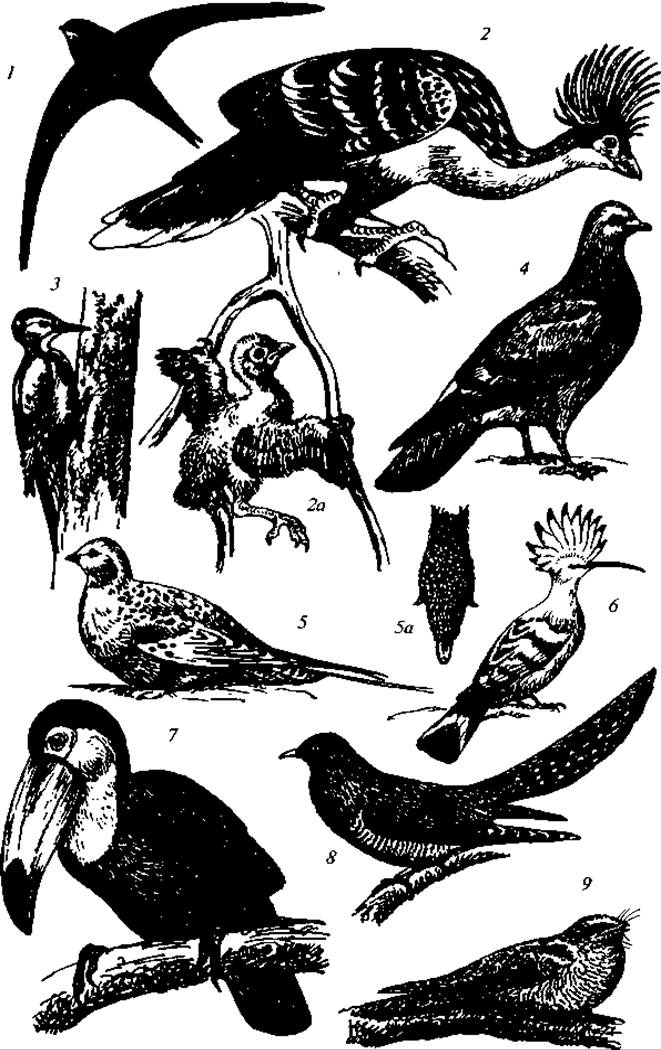
Fig. 148. Representatives of various avian orders:
1 — swift; 2 — hoatzin; 2a — hoatzin chick; 3 — great spotted woodpecker; 4 — rock dove; 5 — Pallas's sandgrouse; 5a — FOOT of Pallas's sandgrouse; 6 — hoopoe; 7 — toucan; 8 — cuckoo; 9 — nightjar
Last update: 13/08/2026
Editorial and Educational Adaptation: This material has been compiled based on the primary/original source text. The project team performed an editorial review, corrected technical inaccuracies, structured sections, and adapted the content for an educational format.
What was processed:
- elimination of formatting defects (OCR errors, structural breaks, corrupted characters);
- editorial organization of content;
- standardization of terminology in accordance with academic sources;
- verification of factual statements against the original source text.
All mentions of the author, publication year, and origin of the primary text have been preserved in accordance with the source.