Fundamentals of Molecular Biology - V.I. Rezyapkin 2009
DNA Repair
Recombinational (Postreplication) DNA Repair
Not all DNA damage may be repaired before Replication begins. Consequently, during replication, when a damaged parental DNA strand (such as one containing a thymine dimer) is copied, a gap may form in one of the newly synthesized daughter strands (Fig. 3.9). The second daughter DNA strand, however, is copied from the undamaged parental strand and is therefore flawless. To repair the lesion, The Cell utilizes a segment from the intact DNA strand to fill the gap. This recombination event results in a gap now appearing in the originally undamaged strand, which can subsequently be filled by DNA polymerase and sealed by DNA ligase (Fig. 3.9).
Class="center">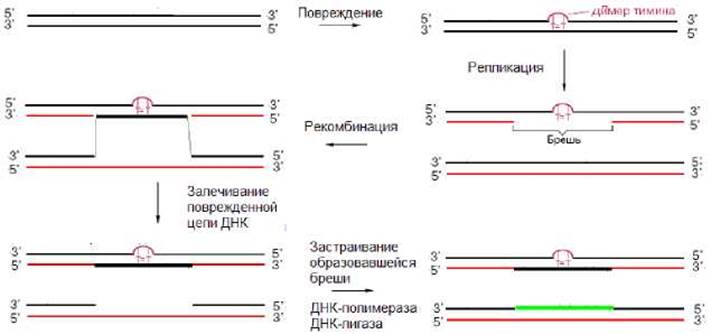
Fig. 3.9. Recombinational (postreplication) DNA Repair
Last update: 12/08/2026
Editorial and Educational Adaptation: This material has been compiled based on the primary/original source text. The project team performed an editorial review, corrected technical inaccuracies, structured sections, and adapted the content for an educational format.
What was processed:
- elimination of formatting defects (OCR errors, structural breaks, corrupted characters);
- editorial organization of content;
- standardization of terminology in accordance with academic sources;
- verification of factual statements against the original source text.
All mentions of the author, publication year, and origin of the primary text have been preserved in accordance with the source.