BIOTECHNOLOGY - V. H. Gerasymenko - 2006
Part II. Special Biotechnologies
Chapter 23. BIOTECHNOLOGY OF ORGANIC WASTE UTILIZATION BY VERMICULTIVATION
23.1. GENERAL INFORMATION AND BIOLOGICAL CHARACTERISTICS OF EARTHWORMS
Earthworms belong to the Class Oligochaeta of the phylum Annelida. Most species distributed in the former Soviet Union belong to the family Lumbricidae, which comprises about 180 species, with 15–16 of them being the most widespread.
Among all earthworm species, only a few can be bred artificially. These include red worms, particularly the red Californian hybrid, which has acquired a unique trait through Selection: it does not leave its habitat even under adverse conditions. This makes it possible to breed them in open-air ridges without the risk of losing the population.
The red worm is dark red in color and inhabits temperate regions. An adult specimen reaches a length of 8–10 cm, a diameter of 3–5 mm, and a mass of 0.8–1 g (Fig. 23.1). Its body Temperature is 19–20 oC. Per day, it consumes an amount of feed roughly equal to its own weight (about 1 g), after digesting which it excretes 0.8–0.9 g of coprolites. The largest particles a worm can swallow are up to 1 mm in size.
The lifespan is nearly 16 years (compared to 4 years for wild forms). They are highly prolific. Sexual maturity is reached at three months of age, and under optimal conditions, a single individual can produce an average progeny of 1,500 offspring per year.
This worm is a hermaphrodite. Each individual possesses both male and FEMALE REPRODUCTIVE Organs, but cannot self-fertilize. Sexually mature specimens mutually fertilize each other (Fig. 23.2, a). The fertilized eggs detach from the worms' bodies and are enclosed in a protein ring, or capsule (cocoon), which is initially yellow and later turns brown (Fig. 23.2, b, c).
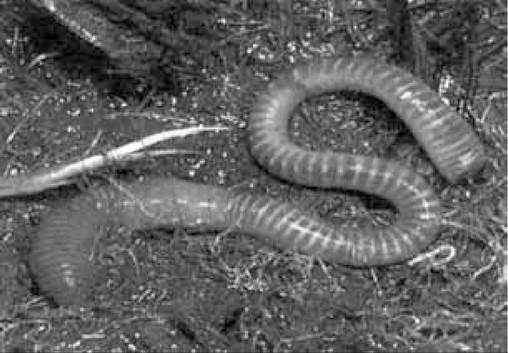
Fig. 23.1. General appearance of the red Californian hybrid
(according to Sulzberger R., 1998)
Starting from the 90th day, it mates regularly every 7 days. As a result of the mating of two individuals, 2 eggs or capsules are formed (1 per individual), which mature and hatch within 14–21 days, depending on maintenance conditions. Each capsule contains from 2 to 20 worms. The cocoons contain a fluid that nourishes the young until hatching. The young worms are white in color (Fig. 23.2, c).
The optimal temperature is 20–22 oC, while critical temperatures are below 0 oC and above 42 oC. At a temperature of +7 oC, they enter a state of anabiosis—meaning the worm is alive, but motionless and does not feed. The optimal humidity is 75–88 %, with critical levels below 60 % and above 90 %.
Practice has shown that cultivated worms do not fall ill and are not susceptible to any epizootics. They can perish only if the breeding technology is violated. Most commonly, the death of worms is caused by protein poisoning due to incomplete substrate Fermentation. As a result, the worm becomes "acidic" and releases harmful gases that are fatal to other worms.
Natural predators of earthworms include moles, hedgehogs, frogs, snakes, and birds that feed on them.

Fig. 23.2. Reproduction of earthworms:
a — mating of earthworms; b — young cocoons; c — older cocoons and a young earthworm.
Last update: 11/08/2026
Editorial and Educational Adaptation: This material has been compiled based on the primary/original source text. The project team performed an editorial review, corrected technical inaccuracies, structured sections, and adapted the content for an educational format.
What was processed:
- elimination of formatting defects (OCR errors, structural breaks, corrupted characters);
- editorial organization of content;
- standardization of terminology in accordance with academic sources;
- verification of factual statements against the original source text.
All mentions of the author, publication year, and origin of the primary text have been preserved in accordance with the source.