Orthopedics - Oleksa A.P. 2006
Pathophysiology of Joints
Skeletal Malformations and Congenital Anomalies
Ribbing-Miller Type
The proportional form of enchondral dysostosis, known as "Dysplasia epiphysealis multiplex", occurs most frequently compared to Other forms of dysostosis. Due to impaired epiphyseal osteogenesis of the limb bones and spine, proportional body growth decreases with symmetrical involvement of the articular ends, their deformation, and restricted range of motion in the joints. Although short in stature, dwarfism does not occur (Fig. 60).
Children may be born normal, and the disease manifests at any age, starting from the first years of life, most commonly during preschool and school age. The older the patient, the milder the course of the disease and the lesser the degree of limb involvement.
The disease presents with short stature, shortened limbs with deformed (coarser) joints that have restricted mobility. Flexion contractures of the lower extremities may occur, accompanied by a stiff gait. The spine is normal in some patients, but in most cases, There is a mild Kyphosis or a flattened and shortened trunk. The chest retains its normal shape. Furthermore, all patients exhibit normal facial features, HEAD Structure, and intellectual development. Internal Organs show no deviations from the norm.
Class="center">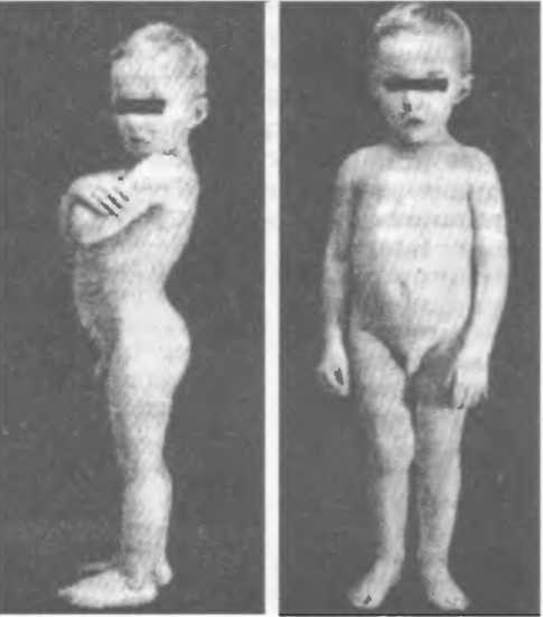
Fig. 60. Proportional enchondral dysostosis of the Ribbing-Meyer type in a 6-year-old patient (Sturm V.A., 1968).
Children with this form of enchondral dysostosis may experience vague pain in the limbs, general weakness, rapid fatigue, restricted mobility in the hip joints, and gait disturbances.
X-ray Examination reveals broad and flat epiphyses; the acetabulum is also flattened and resembles dysplastic coxarthrosis. The length of the limb bones is reduced, while the width is nearly normal, though the cortical layer is thinner than usual and the medullary cavities are wider.
Ossification centers appear delayed; they are smaller in size and hypoplastic.
Radiologically (Fig. 61), the spine reveals flattened vertebral bodies that are lower and broader, resembling platyspondyly. Occasionally, the vertebrae are deformed, contributing to The Development of kyphosis.
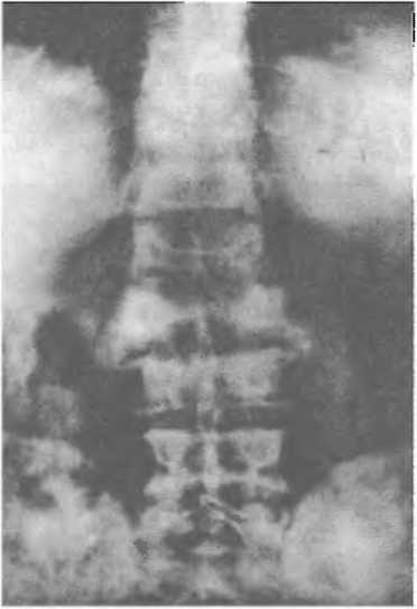
Fig. 61. Slight flattening of the vertebral bodies in enchondral dysostosis of the Ribbing-Meyer type.
Last update: 10/08/2026
Editorial and Educational Adaptation: This material has been compiled based on the primary/original source text. The project team performed an editorial review, corrected technical inaccuracies, structured sections, and adapted the content for an educational format.
What was processed:
- elimination of formatting defects (OCR errors, structural breaks, corrupted characters);
- editorial organization of content;
- standardization of terminology in accordance with academic sources;
- verification of factual statements against the original source text.
All mentions of the author, publication year, and origin of the primary text have been preserved in accordance with the source.