Orthopedics - Oleksa A.P. 2006
Congenital and Acquired Defects of the Lower Limb
Orthopedic Foot Deformities
Congenital Longitudinal Split Foot
Congenital cleft FOOT is an extremely rare congenital anomaly, typically associated with other malformations (adactyly, hypodactyly, hypophalangia, absence of Metatarsal Bones, etc.; Fig. 201).
The degree of clefting varies, sometimes extending as far as the Tarsal Bones, giving the foot a crab-claw appearance.
Weight-bearing capacity is not severely impaired, but surgery is performed to correct the cosmetic deformity and improve foot function.
The surgical technique depends on The Nature of the foot cleft and associated anomalies. The operation is performed under general anesthesia with a tourniquet applied to the lower leg. Incisions through the Skin, subcutaneous tissue, and fascia are made along the medial aspect of the cleft. The wound edges are retracted, marginal fibrous tissue is excised, and skin-fascia flaps are fashioned from the dorsal and plantar surfaces of the foot. Careful dissection is essential to avoid damaging the a.dorsalis pedis and other abnormally positioned vessels.
Class="center">
Fig. 200. Gigantism of the second toe of the left foot.
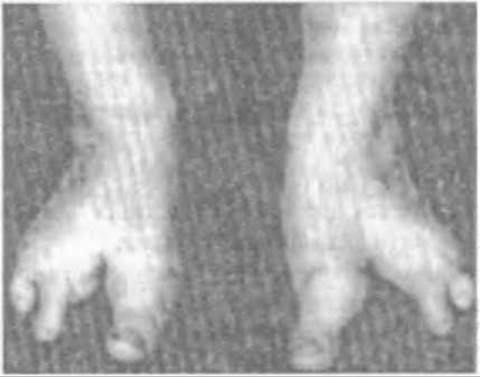
Fig. 201. Congenital cleft of both feet.
Next, the adjacent metatarsal bones are approximated and secured at the neck level using a heavy Mersilene (polyester) suture or tape.
The surgeon may encounter difficulties when bringing the metatarsal bones together, as the congenital anomaly and prolonged diastasis of their distal ends cause fixed alterations in the tarsometatarsal joints. In such cases, a proximal osteotomy of the lateral metatarsal bone should be performed to allow apposition of the metatarsal heads. The approach is individualized in each case to achieve optimal functional and cosmetic correction of the foot. The wound is closed in layers and drained for 24–48 hours. A plaster cast is then applied.
If the cleft foot is combined with other foot malformations, patients undergo either single-stage or two-stage surgical correction depending on The complexity of the condition.
Last update: 10/08/2026
Editorial and Educational Adaptation: This material has been compiled based on the primary/original source text. The project team performed an editorial review, corrected technical inaccuracies, structured sections, and adapted the content for an educational format.
What was processed:
- elimination of formatting defects (OCR errors, structural breaks, corrupted characters);
- editorial organization of content;
- standardization of terminology in accordance with academic sources;
- verification of factual statements against the original source text.
All mentions of the author, publication year, and origin of the primary text have been preserved in accordance with the source.