Human Anatomy, Part 1 - K. A. Diubenko, A. K. Kolomiitsev, Yu. B. Chaikovsky 2002
Special Part
Appendicular skeleton, sceleton appendiculare — Bones of the upper limb, ossa membri superioris
Free part of the upper limb, pars libera membri superioris — Ulna
The ulna, os ulna, consists of a shaft, corpus ulnae, and two extremities: upper and lower (Fig. 64B). The triangular-shaped shaft presents three surfaces—anterior, facies anterior, posterior, facies posterior, and medial, facies medialis—as well as three borders: anterior, margo anterior, posterior, margo posterior, and interosseous, margo interosseus.
Two processes project from the upper extremity: the olecranon and the coronoid process, processus coronoideus. On the anterior surface, between the shaft and the upper extremity, lies the ulnar tuberosity, to which the tendon of the brachialis Muscle attaches.
On the upper surface of the olecranon, the anterior aspect features a trochlear notch, which is bounded inferiorly by the coronoid process, processus coronoideus. On the lateral surface of the coronoid process is the radial notch, incisura radialis.
Class="center">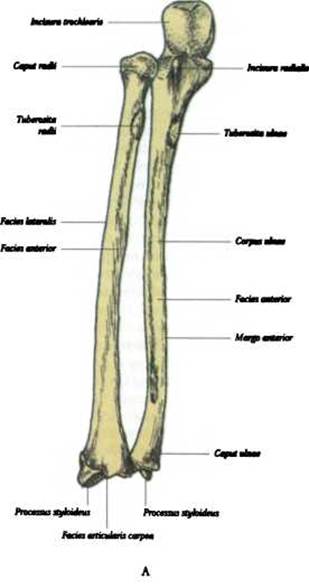
Fig. 64. Radius and ulna, os ulna et radius: A - anterior surface, facies anterior
The lower extremity presents the HEAD of the ulna, caput ulnae, featuring an articular circumference, circumferentia articularis, which articulates with the ulnar notch of the radius. Medially and posteriorly, the head extends into the styloid process, processus styloideus.
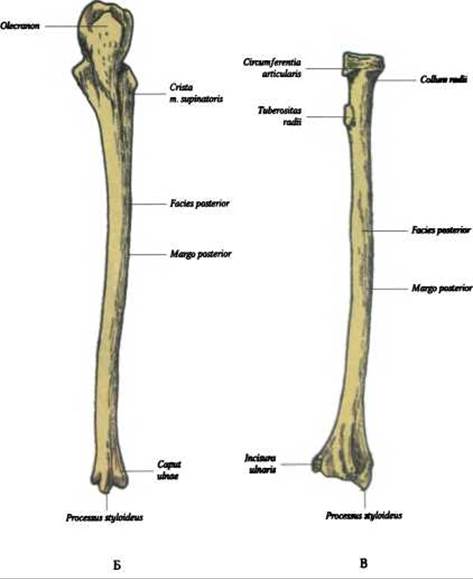
Fig. 64. Radius and ulna, os ulna et radius (Continued): B - posterior surface, facies posterior
Ossification. The primary ossification center appears in the diaphysis during the 7th–8th weeks of development. In the olecranon, a center emerges at 8–10 years of age, fusing with the shaft at 18–20 years. In the distal epiphysis, the center develops at 4–8 years of age and fuses with the diaphysis at 20–24 years.
Last update: 08/08/2026
Editorial and Educational Adaptation: This material has been compiled based on the primary/original source text. The project team performed an editorial review, corrected technical inaccuracies, structured sections, and adapted the content for an educational format.
What was processed:
- elimination of formatting defects (OCR errors, structural breaks, corrupted characters);
- editorial organization of content;
- standardization of terminology in accordance with academic sources;
- verification of factual statements against the original source text.
All mentions of the author, publication year, and origin of the primary text have been preserved in accordance with the source.