MEDICAL BIOLOGY, HUMAN ANATOMY, PHYSIOLOGY AND PATHOLOGY - Ya.I. Fedonyuk 2010
BIOLOGY
CHAPTER 2. BIOGEOCENOTIC LEVEL OF LIFE ORGANIZATION AND HUMAN PLACE IN IT
2.4. MEDICAL HELMINTHOLOGY
K.I. Skryabin's Teachings on Dehelminthization and Devastation
Class="center">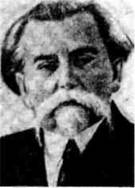
Konstantin Ivanovich Skryabin (1878–1972)
K.I. Skryabin was a prominent Russian helminthologist, the founder of the Soviet school of helminthology, and the organizer of the world's first specialized institute of helminthology in Moscow, which has borne his name since 1939. He authored a unique 25-volume monograph, "Trematodes of Animals and Man," the first 12 volumes of which were awarded the USSR State Prize (1957). Together with his students, he also produced the 25-volume series "Fundamentals of Nematology." He was named a Hero of Socialist Labour in 1958.
K.I. Skryabin developed the fundamental Methods for combating helminthiases: THE PRINCIPLE OF dehelminthization (1925) and the principle of devastation (1944). Anti-helminthic measures comprise both therapeutic and preventive strategies. Therapeutic measures are carried out through dehelminthization—the administration of special medicinal products (anthelmintics) that rid the human or animal body of helminths. Rational Prevention of helminthiases involves not only mass and systematic dehelminthization of the population, but also the Structure/175.html">Implementation of comprehensive environmental protection measures against contamination by invasive material. The success of these public health measures largely depends on the sanitary awareness of the population, the adoption of hygienic habits in daily life, and a conscious approach to personal prophylaxis. Devastation is a system of measures aimed at the eradication of helminths at all stages of their development and across all habitats (both within the host Organism and in the external environment). Total devastation refers to the complete eradication of specific helminth species in a given territory. An example is the complete elimination of the dracunculiasis pathogen in Uzbekistan (Old Bukhara) under the leadership of L.M. Isaev between 1923 and 1932. Partial devastation involves a drastic reduction in the incidence of certain helminthiases in specific areas rather than complete eradication, such as the elimination of an ancylostomiasis focus in a mine.
Last update: 08/08/2026
Editorial and Educational Adaptation: This material has been compiled based on the primary/original source text. The project team performed an editorial review, corrected technical inaccuracies, structured sections, and adapted the content for an educational format.
What was processed:
- elimination of formatting defects (OCR errors, structural breaks, corrupted characters);
- editorial organization of content;
- standardization of terminology in accordance with academic sources;
- verification of factual statements against the original source text.
All mentions of the author, publication year, and origin of the primary text have been preserved in accordance with the source.