CYPRINID FISHES (CYPRINIDAE) OF UKRAINIAN WATER BODIES - V. V. Zamorov - 2015
THE GENUS WHITE-FINNED GUDGEONS - ROMANOGOBIO BANARESCU
Key for the identification of species of the genus Romanogobio
1 (4). Dorsal fin typically with 8 branched rays.
2 (3). Eyes very small, their diameter 4.0-5.5% of standard body length.
4 scales situated between the lateral line and the Water/144.html">Origin of the pelvic fin. Lower Danube Antipov's gudgeon - R. antipai
3 (2). Eyes relatively large, their diameter 5.5-5.9% of standard body length. 3 scales situated between the lateral line and THE ORIGIN OF the pelvic fin. Basins of the Danube, Dniester, and Vistula Dniester gudgeon - R. kesslerii
4 (1). Dorsal fin typically with 7 branched rays.
5 (8). Dorsal fin located behind the midpoint of the body. The distance from the tip of the snout to the origin of the dorsal fin base is greater than the distance from the end of the dorsal fin base to the origin of the caudal fin.
6 (7). Anal opening situated midway between the origin of the pelvic fin and the origin of the anal fin, or slightly closer to the latter Danube basin Danube gudgeon - R. vladykovi
7 (6). Anal opening situated closer to the origin of the pelvic fin than to the origin of the anal fin. Basins of the Dnieper, Southern Bug, Dniester, and Vistula Dnieper gudgeon - R. belingi
8 (5). Dorsal fin located at the midpoint of the body. The distance from the tip of the snout to the origin of the dorsal fin base equals the distance from the end of the dorsal fin base to the origin of the caudal fin. Siverskyi Donets basin Don gudgeon - R. tanaiticus
Antipov's gudgeon - Romanogobio antipai (Banarescu)
Morphological features: D III 8; A II 6; l. l. (40) 41-43 (44); Squ1 5-5.5, Squ2 3-4. Maximum body length up to 7.5 cm (Fig. 14).
Class="center">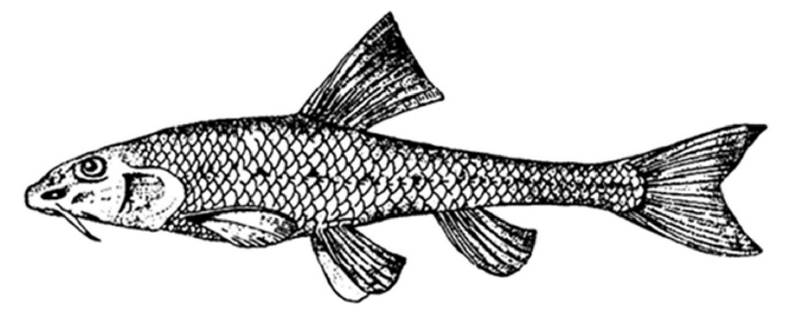
Fig. 14. Antipov's gudgeon Romanogobio antipai
Body elongate, relatively low (maximum body height in fish 4.0-5.5 cm long is 18.6 [17.9-20.7]% of standard body length), slightly laterally compressed, covered with medium-sized scales. Eyes very small, their diameter 5.4% (4.9-5.8) of body length. Dorsal fin predominantly with 8 branched rays. 4 scales located between the lateral line and the origin of the pelvic fin. General Background coloration light, yellowish-gray. Sides of the body feature 7-8 rounded dark spots.
The biology (as well as morphological features and distribution) of this species in the water bodies of Ukraine has not been studied. It is known that this freshwater benthic resident fish prefers the deepest sections of rivers. It inhabits sandy bottoms. Feeds on benthic invertebrates. Of no commercial value, a rare species. Requires special study.
In Ukraine, it has been recorded only once in the lower Danube (Odesa Region, Kiliia District, Danube River, April 1961, 2 specimens, SL 69-74 mm). Over the past 40-45 years, there have been no reports of new findings, which raises questions about the presence of this gudgeon in our waters.
Dniester gudgeon - Romanogobio kessleri (Dybowski)
Morphological features: D III (7) 8 (9); A II-III (5) 6 (7); P I 13-16; VI 6-7; C I 17 I; l. l. 38-42; Squ1 5-7; Squ2 5-7; vert. 37-40; sp. br. 7-10; d. f. 3.5-5.3. Length of the largest specimen 11 cm, body weight 30 g, lifespan 4-5 years (Fig. 15).
Body fusiform, streamlined, slender, low, and thin. Its maximum height in various regions averages within 18.4-20.6% of body length l and is 1.3 times greater than its maximum thickness. Dorsal and ventral body margins rounded, especially the latter. The upper body margin extends in a very gentle arc from the nape to the beginning of the C base, peaking at the origin of the D base; the lower margin is curved downward in an almost identical arc, peaking below the P base. Caudal peduncle long, low, narrow, slightly flattened laterally. Its length slightly exceeds 1/5 l and is 3.0-3.5 times greater than the minimum body height. The origin of the D base is located slightly anterior to the V base. Antedorsal distance constitutes 45.5-47.0% l. Anteventral distance is nearly equal to half of l.

Fig. 15. Dniester gudgeon Romanogobio kessleri
The P - V distance is slightly greater than 1/4 l; V - A length is almost equal to the caudal peduncle. P - V and V - A are 1.3 times longer than P and V. The length of the D base constitutes 14.2-14.3% l, and the height of D is nearly equal to 1/5 l. The length of the A base constitutes about 1/10 l, and the height of A equals the length of the D base. D has a subtle notch, while C has a rather deep one. The length of the lower lobe of C equals V - A, and the upper lobe equals the length ofkes of other fins without notches. The tips of all fins are neither pointed nor rounded. The anal opening is positioned closer to V than to A. The body is covered with medium-sized scales except for the space between the pectoral fins and the lower margin of the gill covers. An elongated scale is present at the base of V. The lateral line extends almost straight along the middle of the body, rising only slightly anteriorly toward the apex of the gill opening. The HEAD is somewhat elongate and high, its length equal to 1/4 l. Its height averages 58-63% of head length. Snout long, its length almost equal to the postorbital distance. Eye of medium size, its diameter noticeably less than a quarter of the head length, located in the middle of the head, very close to the upper margin. Interorbital width quite large, averaging 1/3 of head length. Mouth of medium size, subinferior, semi-lunar from below. Jaws slightly longer than 1/3 of head length. Long barbels are present at the corners of the mouth, almost reaching the posterior margin of the preopercle and equal in length to the lower jaw.
In Ukraine, it occurs in the Danube basin, specifically recorded in the Tysa basin in Transcarpathia (in the Uzh and Rika rivers), the Prut and Seret rivers in Bukovyna, and the Dniester (in the upper reaches of the main channel, as well as the Strviazh, Lukva, Strypa, Lomnytsia, Zbruch rivers, and others). It is a rather rare, low-Abundance fish, listed in the Red Data Book of Ukraine.
Danube white-finned gudgeon - Romanogobio vladykovi
Morphological features: D III 7 (8); A II-III 6; P I 13-15; V II 7 (8); l. l. (39) 40-43 (44); Squ1 5-6, Squ2 4-5; sp. br. 8-11; d. f. 3.5-5.3, 2.5-5.2. Maximum body length up to 11 cm, weight up to 30 g, lifespan up to 4-5 years (Fig. 16).
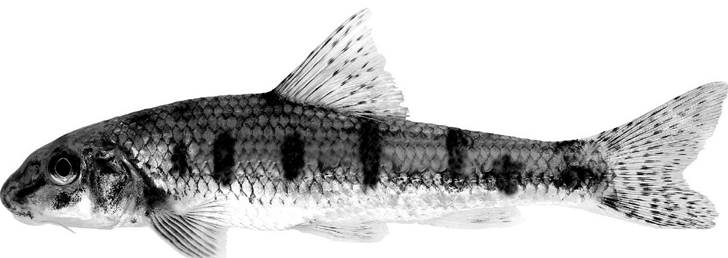
Fig. 16. Danube white-finned gudgeon Romanogobio vladykovi
The body is relatively low, slightly compressed laterally. The dorsal fin is located behind the midpoint of the body. The caudal peduncle is elongated and slightly compressed laterally. The snout length is usually less than or equal to the postorbital distance. The anus is located midway between the origins of the pelvic and
anal fins, or slightly closer to the origin of the latter. The dorsal scales are rough; in adults, they bear prominent longitudinal epithelial keels. The general background coloration is light, greenish- or brownish-gray in the upper third of the body, and lighter, grayish with a silvery sheen on the sides. Along the lateral line, there are up to 10 small, often indistinct rounded dark spots, which sometimes merge into a continuous dark stripe in the posterior part of the trunk. Indistinct dark spots are also frequently present on the back. The iris is sometimes yellowish. The dorsal and caudal fins feature vague dark spots or dashes, though all fins are often unicolorous, grayish and translucent, without dark markings. During the spawning season, the anterodorsal region of the males becomes covered with small whitish cornified tubercles.
Of no commercial value. The fish is scarce in numbers and requires further study.
In Ukraine, it inhabits the Danube basin, with specific records in the Tysa and Prut basins.
Dnieper white-finned gudgeon - Romanogobio belingi (Slastenenko)
Morphological features: D III 7; А II-III 6; Р I 13-16; VII 7; І. І. 40-42; Squ1 5-6, Squ2 4-5; sp. br. 8-10; d. f. 3.5-5.3. Maximum body length 11 cm, weight up to 30 g, lifespan up to 4-5 years (Fig. 17).
The body is relatively low, slightly compressed laterally. The dorsal fin is situated behind the midpoint of the body. The distance from the tip of the snout to the origin of the dorsal fin base is greater than the distance from the end of the dorsal fin base to the origin of the caudal fin. The snout length is typically greater than or equal to the postorbital distance. The anus is positioned closer to the origin of the pelvic fins than to the anal fin origin. The caudal peduncle is elongated, slightly compressed laterally. The dorsal scales are rough, featuring prominent longitudinal epithelial keels in adults. The coloration is similar to that of the Danube white-finned gudgeon.
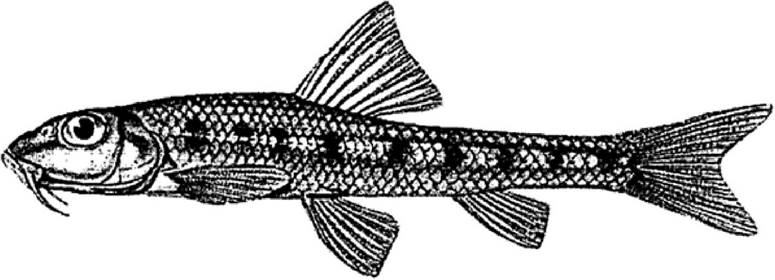
Fig. 17. Dnieper white-finned gudgeon Romanogobio belingi
Its biology is poorly studied, but in many respects closely resembles that of the Danube white-finned gudgeon. Of no commercial value. Low in numbers. Requires additional research.
In Ukraine, it occurs in the Dnieper basin (recorded in the Prypiat, Desna, Seym, Ros, Trubizh, Vorskla, Psel rivers, and others, as well as in the Kyiv and Kremenchuk reservoirs), the Southern Bug, the Dniester (in the Bystrytsia, Strypa, Zbruch rivers, and others), and the Vistula basin (Western Bug).
Don white-finned gudgeon - Romanogobio tanaiticus (Naseka)
Morphological features: D III 7 (8); A II-III 6; P I 13-15; VII 8; l. l. 39-43; Squ1 5-6, Squ2 4-5; sp. br. 8-11; d. f. 3.5-5.3, 2.5-5.2. Maximum body length 11 cm, weight up to 30 g, lifespan up to 4-5 years (Fig. 18).
The dorsal fin is located at the midpoint of the body. The distance from the snout tip to the origin of the dorsal fin base equals the distance from the end of the dorsal fin base to the caudal fin origin. The snout length is usually shorter than or equal to the postorbital distance. The caudal peduncle is elongated, slightly compressed laterally. The scales on the back are quite rough, with prominent longitudinal epithelial keels in adult specimens. The coloration resembles that of the Danube white-finned gudgeon, perhaps being slightly lighter.
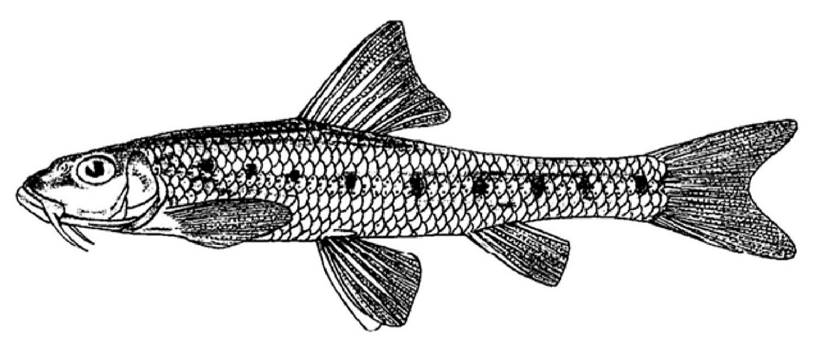
Fig. 18. Don white-finned gudgeon Romanogobio tanaiticus
Its biology is virtually unstudied, though largely analogous to that of the Danube white-finned gudgeon.
Of no commercial value. Low in numbers. Requires further study.
In Ukraine, it is found in the Siverskyi Donets basin (recorded in both the main river channel and its tributaries, the Luhнь and Aidar).
Last update: 07/08/2026
Editorial and Educational Adaptation: This material has been compiled based on the primary/original source text. The project team performed an editorial review, corrected technical inaccuracies, structured sections, and adapted the content for an educational format.
What was processed:
- elimination of formatting defects (OCR errors, structural breaks, corrupted characters);
- editorial organization of content;
- standardization of terminology in accordance with academic sources;
- verification of factual statements against the original source text.
All mentions of the author, publication year, and origin of the primary text have been preserved in accordance with the source.